In light of the ongoing policy debate surrounding funding issues, delayed wage payments and employment guarantees, the Mahatma Gandhi National Rural Employment Guarantee Act (MGNREGA) has once again become the center of governance discussions as a new bill was introduced during the ongoing Winter Session of Parliament. The bill is titled the Viksit Bharat Guarantee for Rozgar and Ajeevika Mission (Gramin) (VB-G RAM G) Bill, 2025, and it seeks to replace MGNREGA.
What is the MGNREGA scheme?
Advertisement
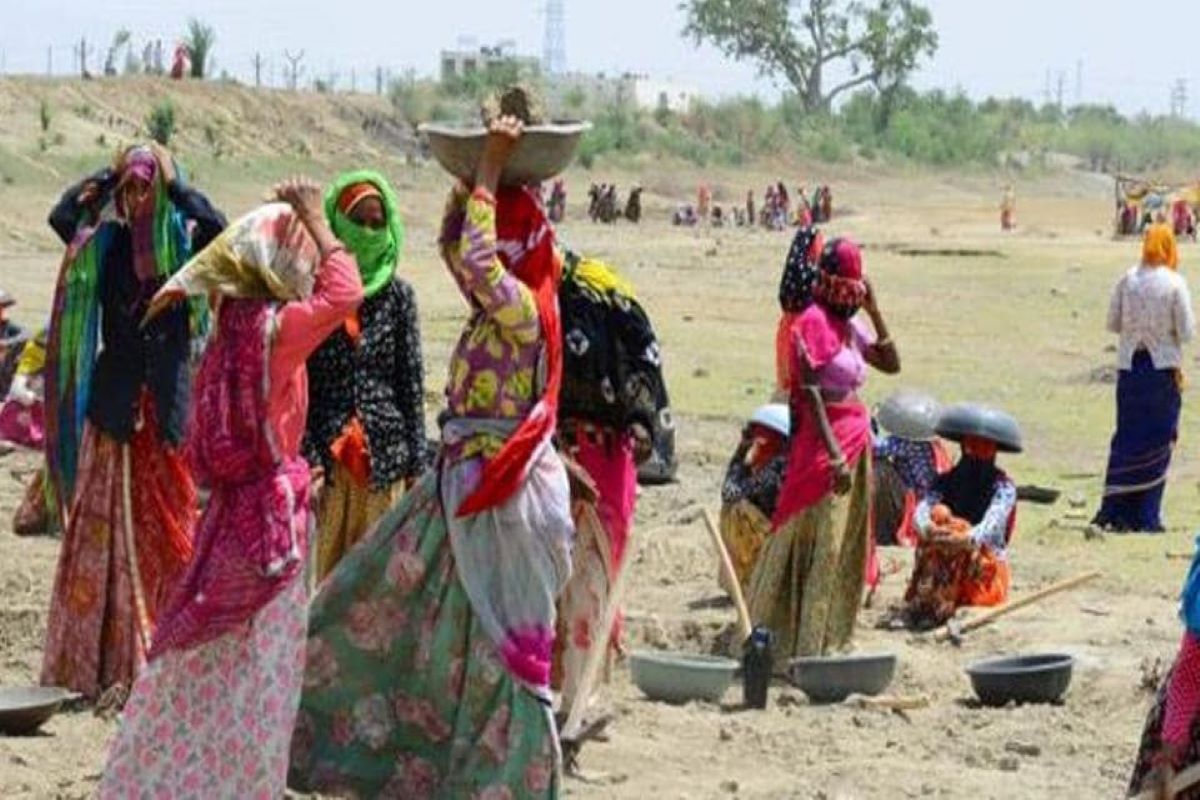
As an affirmative action undertaken by the Government, MGNREGA is a landmark legislation that provides 100 days of unskilled wage employment per year to the rural household on demand to alleviate poverty and boost social security; thereby ensuring work-guarantee, timely wage payments (within 15 days), empowering rural poor, especially women and advancing the idea of a legal right to work in India.
MGNREGA was initially enacted as National Rural Employment Guarantee Act (NREGA) in 2005 and was a flagship program of the United Progressive Alliance (UPA) government. The scheme has its intellectual and policy roots in the earlier efforts of the 1990s that aimed to bridge the widening gap between the upper and lower class of rural India.
Since its inception nearly two decades ago, the Act has undergone various expansions, reforms and administrative changes to address the evolving needs of the rural population.
Timeline of Mahatma Gandhi National Rural Employment Guarantee Act (MGNREGA)
- September 5, 2005: Act passed by Parliament in its 2005 Monsoon Session
- February 2, 2006: Phase I of NREGA 1.0 launched in 200 districts
- April 1, 2007: Phase II extended 130 additional districts
- April 1, 2008: Scheme expanded to all rural districts, marking nationwide implementation
- October 2, 2009: NREGA renamed as MGNREGA on the occasion of Gandhi Jayanti to honor the Father of the Nation
- September 2011: Reforms proposed to ensure timely payments, proper grievance redressal, asset creation, and to make the employment program more demand-driven by using Management Information Systems (MIS)
- May 2012: MGNREGA 2.0 launched with the addition of skill development with semi-skilled work and limited use of machinery. It also saw convergence with other ministries, work on private lands and better provision for an ombudsman for grievance redressal
- January 2014: Collaboration with different schemes like the Nirmal Bharat Abhiyaan (NBA), expansion of social audit, as well as working towards implementation of National Electronic Fund Management System (Ne-FMS) to ensure timely payments
- 2018: Incorporation of Aadhar enrollment extensions and guidelines into the scheme framework
- December 2019: Project UNNATI launched to extend employment days (above 100 days) in drought/flood-affected areas and enhance skill development of MGNREGA workers
- 2020: The Covid-19 pandemic led to a wage hike and guidelines were announced to converge with other ministries for activities such as horticulture, medicinal plants and nutrition gardens.
- 2022: Attendance monitoring system introduced on mobile through the National Mobile Monitoring System (NMMS) app for workers, and guidelines revised for ombudsman and launch of Amrit Sarovar Mission.
- December 16, 2025: Introduction of new bill named Viksit Bharat Guarantee for Rozgar and Ajeevika Mission (Gramin) (VB-G RAM G) Bill that seeks to address the gaps in MGNREGA so as to align rural employment and development with the national vision of Viksit Bharat 2047
With the proposed VB-G RAM G Bill introduced in Parliament, it is now essential to see how India’s rural employment framework will evolve to address emerging livelihood and governance challenges.