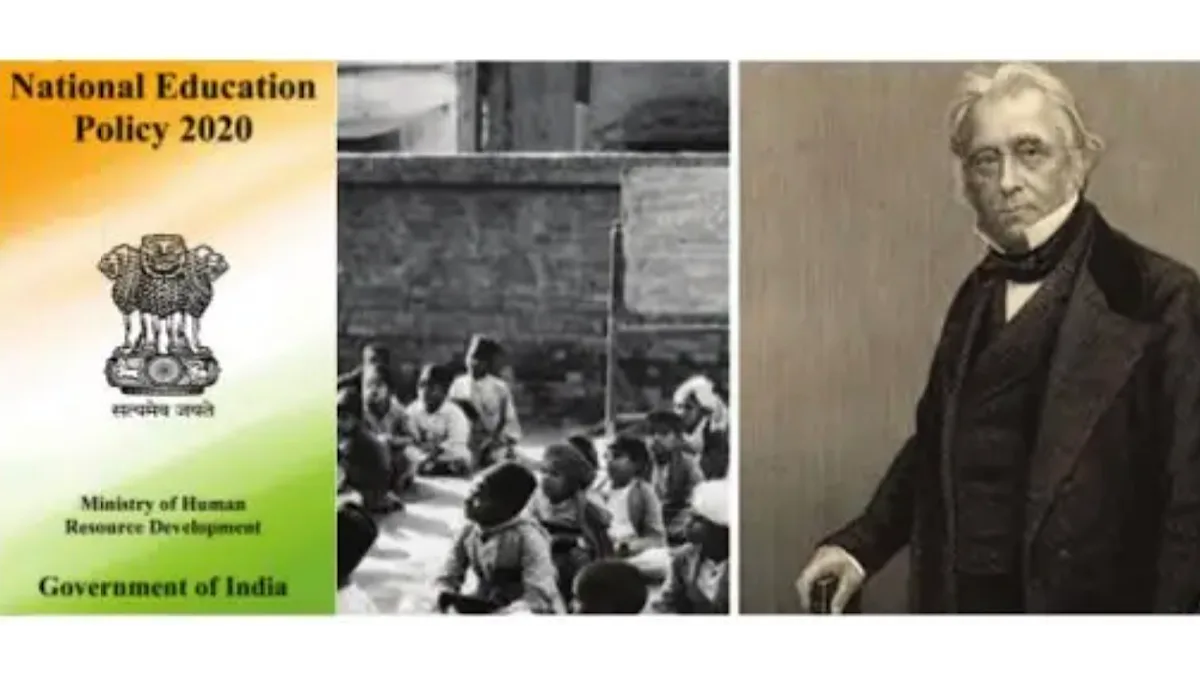
Recently, there has been a public debate around the “Macaulay mindset”. English again has found a central place in India’s education discourse. Some argue that criticising Macaulay’s mindset is nothing but displaying an adversarial stance towards English itself. Others believe that Indians are increasingly using English to communicate with one another nowadays. They support India not shifting away from English-medium schooling to prevent India from isolating itself from modernity. India’s National Education Policy (NEP) 2020, however, presents a more coherent multilingual policy framework.
Cognitive science and comparative policy findings recognise this multilingual approach as socio-culturally grounded, scientifically sound and economically prudent. Let us examine how. UNESCO has often indicated that instruction through the mother tongue is “a key factor for inclusion and quality learning”, especially in the early years. Research findings from RTI International also conclude that the attainment of comprehensive linguistic and cognitive development in a child is possible when the child becomes literate in their mother tongue first.
Advertisement
Such research findings are in consistent with NEP 2020’s recommendation that “wherever possible” the medium of instruction until at least Grade 5, but preferably till Grade 8 and beyond, will be the home language/mother tongue or local language. Early education, therefore, should be in the language the child acquires in the home environment and thinks, dreams, and asks questions. It is natural that when a child learns foundational concepts in her own language, her brain does not have to incur additional cognitive load on decoding grammar and can focus more on conceptual understanding. NEP 2020’s model recommends that begin with the home language for foundational learning, gradually add another Indian language, and in later years teach English as a subject. This method aligns with current recommendations in cognitive science. There are empirically measurable cognitive benefits that the bilingual and multilingual brains exhibit.
Marian, a professor of Communication Sciences and Disorders at Northwestern University in the USA, and her colleagues have found that, compared to monolinguals, bilingual individuals often exhibit better attention control and task-switching abilities. Additionally, recent studies suggest that multilingualism enhances cognitive flexibility, problem-solving skills, creativity, and social cognition. Will reducing the hegemony of English-medium schooling marginalise India globally? Such a fear ignores the experience of many high-performing education systems. Schooling in their own languages has not stopped Japan, South Korea, Germany and France from building advanced economies.
Even if some of their universities have English-medium programmes, they supplement, not replace, national-language instruction. Their and many other countries’ experiences suggest that better engineers, scientists, or managers are not due to making English the classroom language. What matters more is conceptual clarity, which research suggests comes through learning in a familiar language. What is the rationale to assume that Indians can acquire global competitiveness only through English-medium schooling? A language is not just a communication tool. Languages are a repository of memory, cultural creativity, and shared experiences. Multilingualism is “both a fundamental human characteristic and an essential educational approach”, according to the most recent UNESCO guidance on multilingual education. For a civilisational nation like India, where people use multiple languages, this recognition is significant.
When the Macaulay mindset pushes English as the primary marker of aspiration, are they not transmitting sociocultural signals to our young that success belongs to those who move away from their own languages? From their own heritage? This signalling will weaken their cultural confidence. The Macaulay mindset’s intended goal appears to be creating a linguistic hierarchy by making it seem as if knowledge expressed in Manipuri, Tamil, or Marathi is less modern than that described in English. NEP 2020’s emphasis on the Indian language medium attempts to reverse this hierarchy without creating a new one. It asks us why universities and professional institutions cannot offer high-quality programmes in Indian languages while continuing to teach English as any other foreign language. In such a system, a student can read Shakespeare and Kalidasa, Plato and the Upanishads, as part of a wider civilizational dialogue available in multiple languages. Are there equity implications of language choice? Data from OECD’s Programme for International Student Assessment (PISA) show that students underperform when they face a language barrier compared to peers with similar abilities.
In India, the language barrier falls most disproportionately on rural students and first-generation learners. They usually learn English as a subject while their home and local environment language is different. The only instrument for achieving educational equity is therefore mother- tongue – based multilingual education. When we expand access to higher education in Indian languages, knowledge of English becomes a valuable skill, rather than a gatekeeping mechanism of exclusion. Will multilingual education undermine India’s global competitiveness? Fortunately, the empirical evidence suggests the contrary and is reassuring. The European Commission observed that learners’ memory, attention, and problem-solving skills are positively impacted by multilingual education.
Such an education also helps societies preserve their linguistic heritage. Yale researchers also emphasise that multilingualism enhances cognitive capacities and cultural awareness. Aren’t cognitive flexibility, socio-emotional competence, and intercultural communication the very skills the global knowledge economy requires? For India, the adoption of multilingual education will lead to deeper conceptual learning and stronger foundational literacy and numeracy skills. If that happens, we can then bring in more young people in STEM and vocational fields regardless of their first language. Why should a future software engineer who learns basic coding logic in Tamil and later reads documentation in English be at any inherent disadvantage? Research findings have repeatedly confirmed that a robust conceptual foundation in the mother tongue often makes learning another language easier. NEP 2020’s stress on “conceptual understanding rather than rote learning” aligns well with this insight. An inherent advantage India has is that its Gen Z is already multilingual. In their everyday life, millions of young Indians use their mother tongue at home and use a different language at work.
On social media and podcasts, many Indian languages are widely used. For this generation, speaking more than one Indian language is a normative component of identity. Surprisingly, and not commonly discussed in these debates, are the cognitive-health benefits of multilingual capability. Research shows that being multilingual slows cognitive ageing and builds greater resilience against decline. Multilingualism is, in fact, a form of intellectual and even neurocognitive capital. A policy question, therefore, arises. Should India structure its education system around a single language equating it to modernity, or should it design an ecosystem in which each child’s full linguistic repertoire becomes an asset? NEP 2020 takes the second route. It treats every Indian language as a carrier of knowledge and imagination, while positioning English as one of the foreign language skills rather than the only road to success. Even if the benefits of multilingual education are well understood, we need to adopt a strategic implementation framework for its successful implementation.
The first task is to have a well-designed learning material development, teacher training, and digital content in Indian languages that match the quality available in English. Therefore, we must ensure significant, coordinated investments in textbook writing in Indian languages, translation, terminology standardisation, open educational resources and teacher capacity-building. The second task is to mitigate any possible disparities between states or boards that rapidly adopt high-quality multilingual education and those that lag. To avoid this, national and state-level bodies will need to establish harmonised standards, interoperable platforms, and continuous monitoring of learning outcomes across languages. The third task is to continuously promote awareness about the benefits of mother tongue and multilingual education among students, parents and institutions.
Finally, we must deconstruct the colonial framework that equates English with intelligence and modernity. The ongoing discussion about English in India should evolve into an informed policy dialogue about how languages serve learners, rather than devolving into a language-based contestation. As India is determined to move away from Macaulay’s legacy, a more meaningful question we should ask is: how can we ensure our children emerge as competent multilingual learners anchored in their cultural contexts yet globally prepared? Answering that question with evidence and imagination will honour not only the spirit of NEP 2020 but also the aspirations of young Indians.
(The writer is a former Professor of Electrical Engineering, IIT Delhi, Vice-chancellor, JNU and Chairman, UGC. Views are personal)