Double-engine govt to provide subsidised solar pumps to farmers in UP
To avail this benefit, farmers must apply on the Agriculture Department's website, www.agriculture.up.gov.in, by December 15.
In new initiative backed by the Office of Principal Scientific Adviser, Government of India, is rethinking how rural innovations should be designed, evaluated and scaled, not as a trickle-down of urban solutions, but as a locally grounded process shaped by village realities.




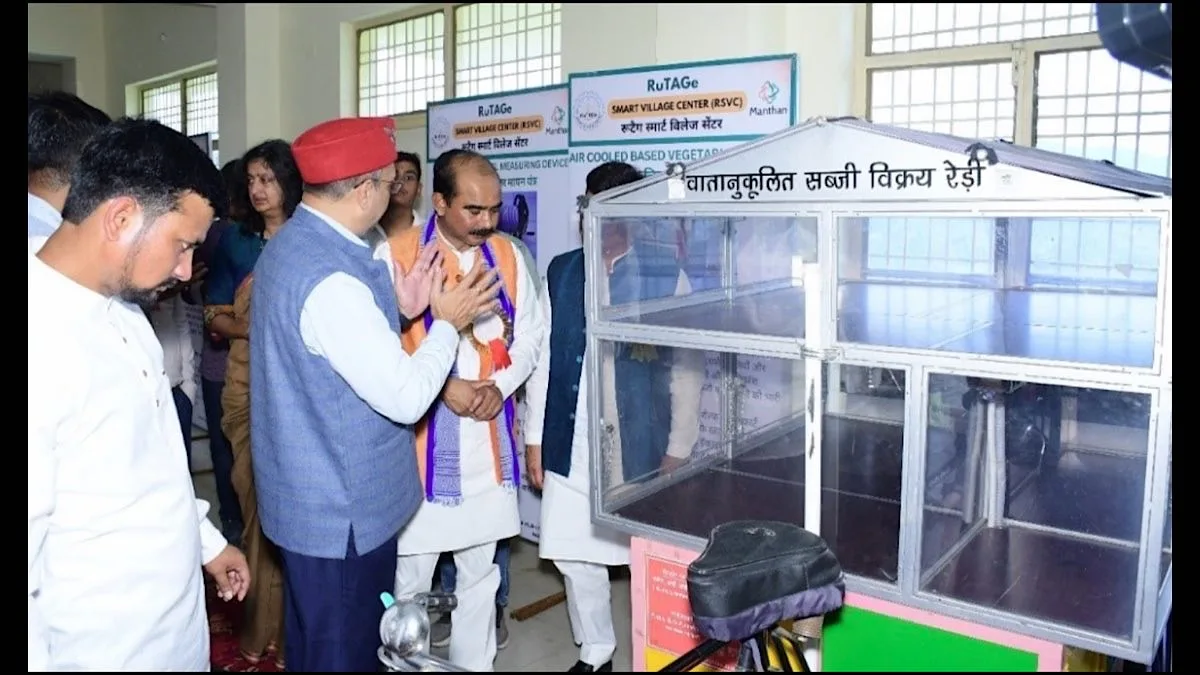
(Photo:IIT-Roorkee)
In new initiative backed by the Office of Principal Scientific Adviser, Government of India, is rethinking how rural innovations should be designed, evaluated and scaled, not as a trickle-down of urban solutions, but as a locally grounded process shaped by village realities.For decades, India’s rural development story has been haunted by a familiar paradox. Technologies that work brilliantly in cities or pilot projects often falter when deployed in villages. Solar pumps lie unused. Water purification plants break down. Digital platforms struggle to find users.
The problem is rarely ambition or investment. More often, it is a failure of fit. A new approach is needed. At the heart of this re-imagination are two ideas: RuTAGe Smart Village Centers and a new assessment tool called the Village Readiness Level, or VRL.Together, they challenge the dominant assumption that if a technology is”ready” in engineering terms, it must be ready for rural India.That assumption has long been misleading.
Advertisement
Advertisement
Conventional benchmarks such as Technology Readiness Levels, originally developed in the US, measure whether a technology or innovation is ready to be taken to market. But, they say little about whether the innovations can survive in rural markets with erratic electricity, limited skills, fragile ecosystems or deeply embedded social practices. A reverse-osmosis water plant, for example, may score high on technical maturity yet fail spectacularly in drought-prone villages due to cost, water waste and maintenance needs.
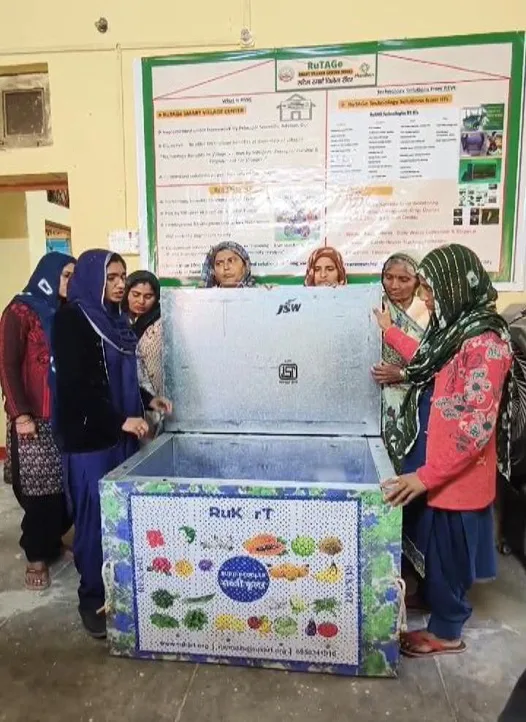
The RuTAGe Smart Village Center model, led by the Office of the Principal Scientific Adviser to the Government of India, begins from the opposite premise. Instead of asking how villages can adapt to technology, it asks how technology must adapt to villages.Each Smart Village Center operates as a decentralized hub, typically serving a cluster of 15 to 20 villages.
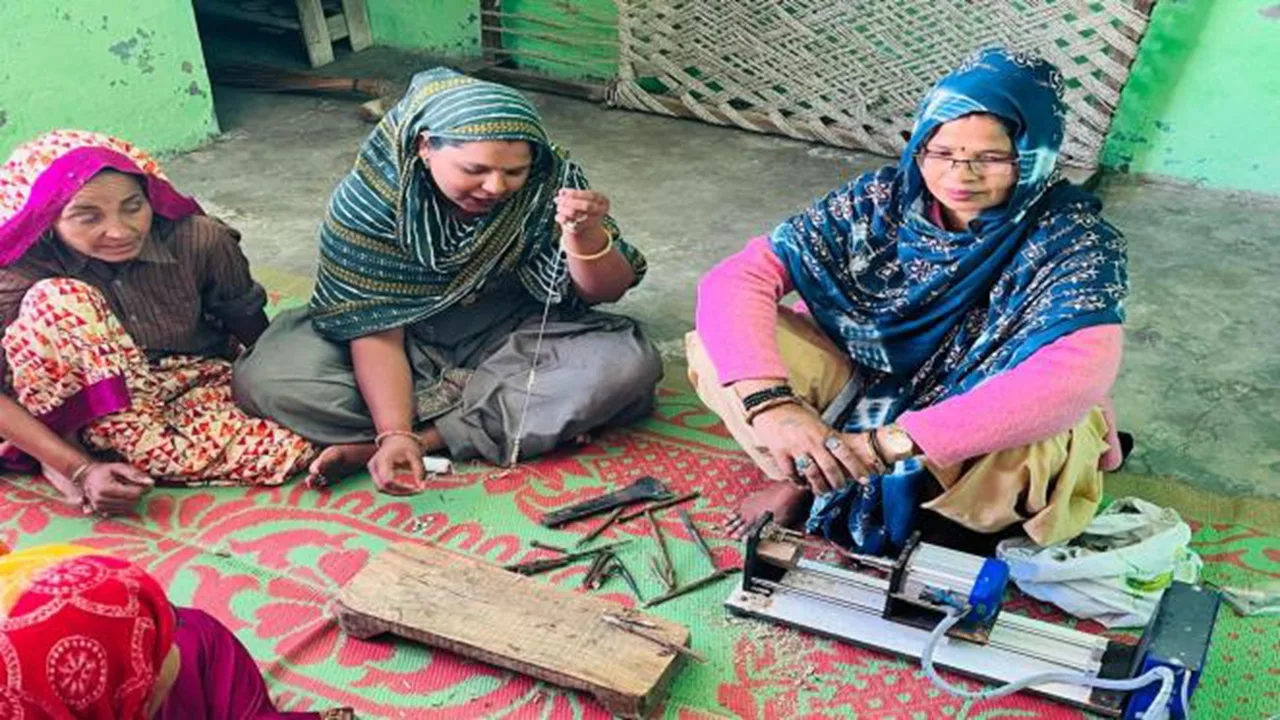
These centers are not mere service kiosks. They combine local entrepreneurship, training, technology deployment and feedback loops, supported by national research institutions and digital platforms. The goal is not just access, but agency – enabling villagers to participate in innovation rather than consume it.
The more radical shift, however, lies in how technologies are evaluated. The Village Readiness Level framework expands the lens beyond engineering to four equally weighted dimensions: Nature, Economy, Society and Technology, collectively known as NEST. A technology’s success is judged not only by performance, but by sustainability, affordability, livelihood creation, social acceptance and ease of local operation.
This approach may sound intuitive, but its implications are profound. When applied in practice, it reveals why some modest, locally tailored interventions outperform more sophisticated imports.Consider agriculture in Chhattisgarh’s tribal belt, where a data-driven farming service was introduced through Smart Village Centers. Instead of pushing expensive machinery, the model offered affordable soil testing, satellite-based advisories and simple decision tools priced at a few hundred rupees per acre.The technology was advanced, but the interface was human – advisories explained in familiar metaphors, delivered through local intermediaries.
The result was higher yields, lower chemical use and improved incomes. Under the VRL framework, the service scored high not just on technology, but on environmental sustainability, cost-benefit balance and community ownership.A similar pattern emerged in rural Haryana, where digital sanitation logistics were adapted for villages that lacked formal waste bins and relied on informal dumping grounds. Rather than imposing urban waste systems, the solution evolved around existing practices, managing “open depots,” hiring local workers and running awareness campaigns in local dialects.
The technology enabled transparency and efficiency, but its success depended on social trust and behavioural change. Again, high village readiness translated into durable outcomes: cleaner surroundings, better health and new livelihoods.Perhaps the most telling example comes from organic fertilizer production in rural Uttar Pradesh. Instead of transporting bulky inputs from distant factories, a decentralized model allowed villages to manufacture fertilizer locally using cow dung and agricultural waste.
With minimal infrastructure and short training cycles, farmers and women’s collectives became producers, not just users. The economic logic was compelling – quick break-even points and steady income – but the social logic was even stronger. Ownership stayed within the village, reinforcing resilience rather than dependency.What these cases suggest is that rural innovation succeeds when it behaves less like a product and more like a relationship. Technologies that score high on village readiness tend to be those that respect ecological limits, embed themselves in local economies, strengthen social ties and remain operable without constant external intervention.This lesson matters far beyond India.
As governments worldwide pour money into digital public infrastructure, climate technologies and rural transformation, the temptation is to scale fast and standardize. India’s experience suggests that scale without suitability is a recipe for disaster.The Village Readiness Level is not a silver bullet. It will not eliminate political bottlenecks or funding gaps. But it offers something rarer in development policy: a disciplined way to listen to villages before co-creating with them.In an era when innovation is often equated with complexity, India’s rural experiment is quietly making the opposite case – that the future belongs to technologies that have a “human face” and are deeply local. If that lesson takes root, it could reshape not just rural policy, but how innovation itself is defined.
(Dr Poti is Director of Strategic Alliances, Office of the Principal Scientific Adviser; Krishnan is the Co-founder and President of itihaasa Research and Digital. Views are personal.)
Advertisement