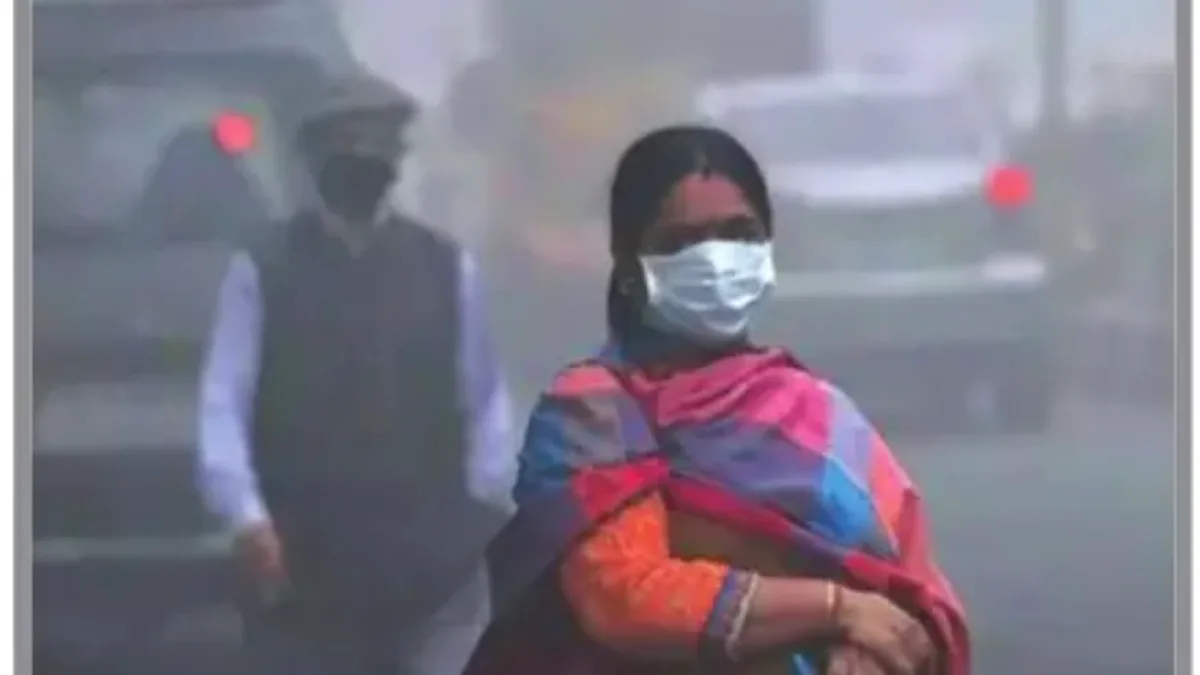
It is with great pleasure I would like to announce that I am now a father. Both mother and child are fine. Thank you to anyone who sends their blessings and keeps us in their prayers. But as I hold my newborn in the sterile safety of the hospital room, looking out at the grey haze of Delhi, my joy is tempered by a terrifying reality. For the past few days, my world has shrunk to these corridors, and while awaiting this miracle, I have been haunted by what I see in the wards around me. I watch doctors rush to attend to newborns who are too small, too fragile, and struggling too hard for every breath.
I see parents, their eyes hollow with exhaustion, peering into incubators where their babies are fighting a battle they did not choose. It is a stark realization: in Delhi, our children are not just born into a polluted world; they are being shaped by it in the womb. The Silent Emergency in the Womb: We often talk about air pollution as a “winter menace” or a “respiratory irritant.” But standing here with my baby, I see it for what it truly is: an obstetric emergency. Recent reports and medical experts confirm what is unfolding before my eyes—air pollutants are crossing the placental barrier, impacting foetal development in real-time. The statistics are no longer just numbers on a page; they are the tiny faces I see in the nursery. Studies indicate a 70 per cent increase in the chance of premature birth when pregnant women are exposed to high levels of air pollution, with North India faring the worst.
Advertisement
These are babies born before their lungs are fully developed, forcing them into longer, agonizing stays in the nursery just to survive. We are seeing a generation entering the world with a deficit, their biological start compromised by the very air their mothers breathed. A Legacy of Vulnerability: The damage does not stop at birth. The medical consensus is chilling: exposure to fine particulate matter (PM2.5) during pregnancy is linked to low birth weight and restricted growth. These are not temporary setbacks. Low birth weight is a harbinger for a lifetime of health challenges, from reduced lung function to an increased risk of chronic diseases later in life. As a new father, this terrifies me. We did everything right – we followed the diet charts, we attended the check-ups, we took the vitamins.
But how do we protect our children from the air? We cannot ask our wives to stop breathing. The “gas chamber” of Delhi is not just an outdoor hazard; it is infiltrating our biology. We are witnessing a slow-motion health catastrophe where the most vulnerable – the unborn and the newborn – are paying the highest price. A Demand for Accountability: This is not a plea for sympathy; it is a demand for a radical shift in how we handle this crisis. We can no longer treat air pollution as a seasonal inconvenience to be managed with “odd-even” schemes or temporary construction bans. We need a Health Action Plan that treats this as the medical emergency it is. First, we must demand accountability from our healthcare systems. Just as blood pressure and sugar levels are recorded, air quality exposure data should be integrated into prenatal and patient medical records.
Doctors need to treat respiratory distress in newborns not just as a clinical symptom, but as a direct result of environmental toxicity. Second, we need immediate, strictly enforced Low Emission Zones (LEZs) around hospitals and schools. It is unconscionable that the very places where life begins and thrives are engulfed in idling exhaust and road dust. Our hospitals should be sanctuaries of clean air, not islands in a sea of smog. A Father’s Promise: They say a parent’s instinct is to protect. Right now, holding my child, I feel a fierce resolve rising above the helplessness. We, the parents of India, are done waiting for “better AQI days” that never come. We are done listening to politicians make vague promises while our children struggle to breathe.
We demand city-specific clean air action plans that are executed, not just announced. We demand a future where “survival” does not depend on how many air purifiers you can afford. To the policymakers, I say this: Do not come to us for votes if you cannot promise our children the basic right to breathe. To my fellow parents, I say: Wake up. This fight is for their survival. I look at my newborn, and I make a promise: I will not be silent. I will fight for your blue skies. Because if I don’t fight for your breath, who will?
(The writer is Director – Strategic Partnerships, Mrikal (Data/AI Center) and a Young Alumni Member, Govt. Liaison Task Force, IITKharagpur.)