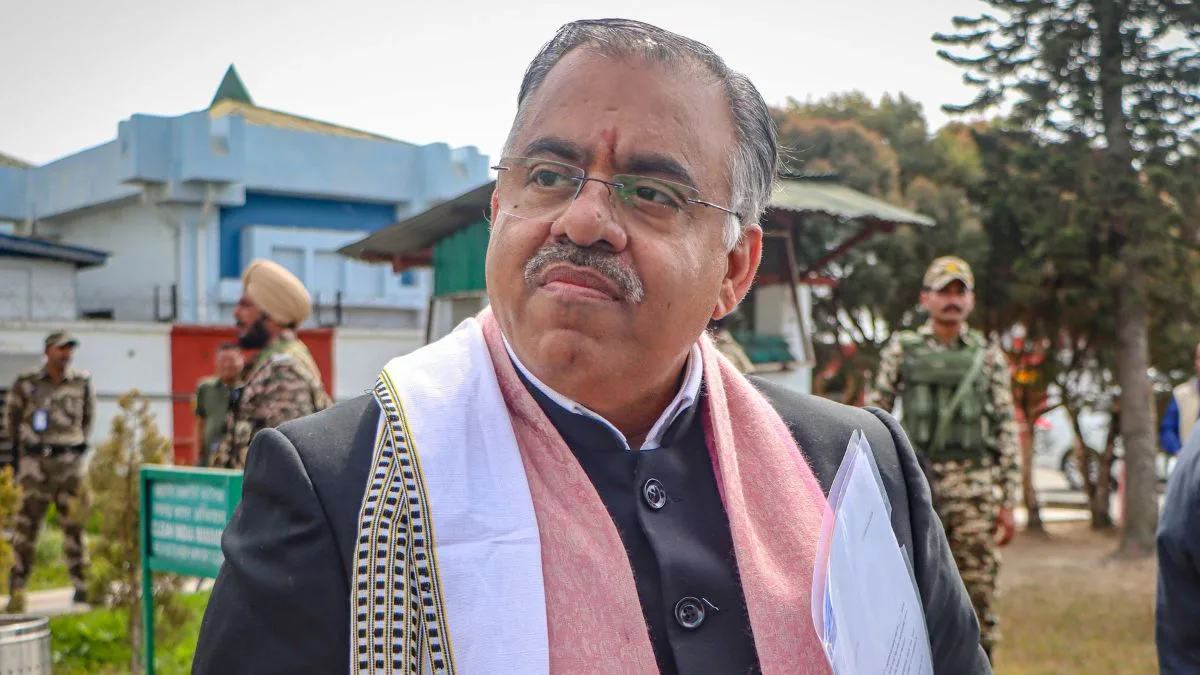
India’s emission intensity has declined by over 36% since 2005 and non-fossil sources now account for more than half of its total electric power installed capacity—an NDC target achieved five years ahead of the 2030 goal, Environment Minister Bhupender Yadav has said
Delivering India’s National Statement at the High-Level Segment of CoP 30 at Belém, Yadav said India would be declaring its revised NDCs till 2035 and urged developed nations to demonstrate greater climate ambition and honour their commitments. Climate technology must be free from restrictive intellectual property barriers, the Environment Minister also said, adding that COP 30 should be remembered as a ‘COP of Implementation’ and a ‘CoP of Delivery on Promises’
Advertisement
India has demonstrated successfully that development and environmental stewardship can advance in tandem, he added. Highlighting that India’s emission intensity has declined by over 36% since 2005, and non-fossil sources now account for more than half of our total electric power installed capacity (currently around 256 GW)—an NDC target achieved five years ahead of our 2030 goal—Yadav said India would also give the first Biennial Transparency Report on time.
Developed nations must “reach net zero far earlier than current target dates and deliver new, additional, and concessional climate finance at a scale of trillions, not billions”, he said, stressing on affordable, accessible climate technology
Conveying India’s appreciation to Brazil for hosting the key UNFCCC in the heart of the Amazon—“a living symbol of our planet’s ecological wealth”.
India’s global leadership is demonstrated through initiatives such as the International Solar Alliance and Global Biofuel Alliance, he said, underscoring the momentum created by the Nuclear Mission and Green Hydrogen Mission in advancing India’s path to Net Zero by 2070. “In line with the objectives of the Paris Agreement regarding conservation and development of carbon sinks and reservoirs, over 2 billion plants were planted under the community led initiative in just sixteen months. It is indeed a testament to the power of collective climate actions, he added.
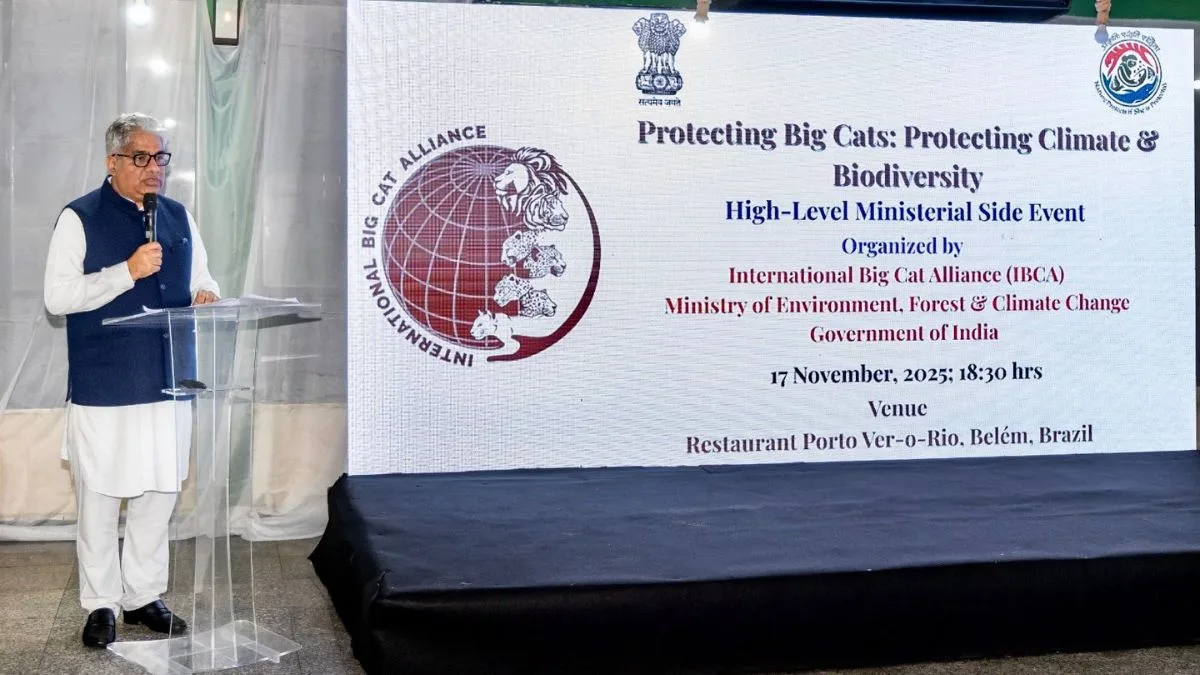
India also announced it will host the Global Big Cats Summit at New Delhi in 2026 and invited all countries to share their experiences and strategies to save big cats and their habitats. “We must collaborate, not compete. We must find strength not in isolation, but in solidarity….Protecting big cats is protecting our shared planet. Protecting big cats is protecting our future,” he said, addressing the High-Level Ministerial Segment on the International Big Cat Alliance (IBCA)
“Where big cats thrive, forests are healthier, grasslands regenerate, water systems function, and carbon is stored efficiently in living landscapes”. He also highlighted that declines in big cat populations lead to destabilized ecosystems, weakened resilience to climate change, and loss of natural carbon sinks,” he said
India’s role as home to five of the world’s seven big cat species, has “doubled its tiger population ahead of the target timeline and our Asiatic lion population continues to grow well”, the Minister stated. He noted that India has built one of the world’s most comprehensive wildlife databases through nationwide population assessments of tigers, lions, leopards and snow leopards, while expanding protected areas, securing corridors, and partnering with local communities for conservation and eco-based livelihoods.
Meanwhile, addressing the LeadIT Industry Leaders’ Roundtable, Yadav underscored India’s commitment to collaborative, technology-driven and sustainable industrial transitions under the Paris Agreement.