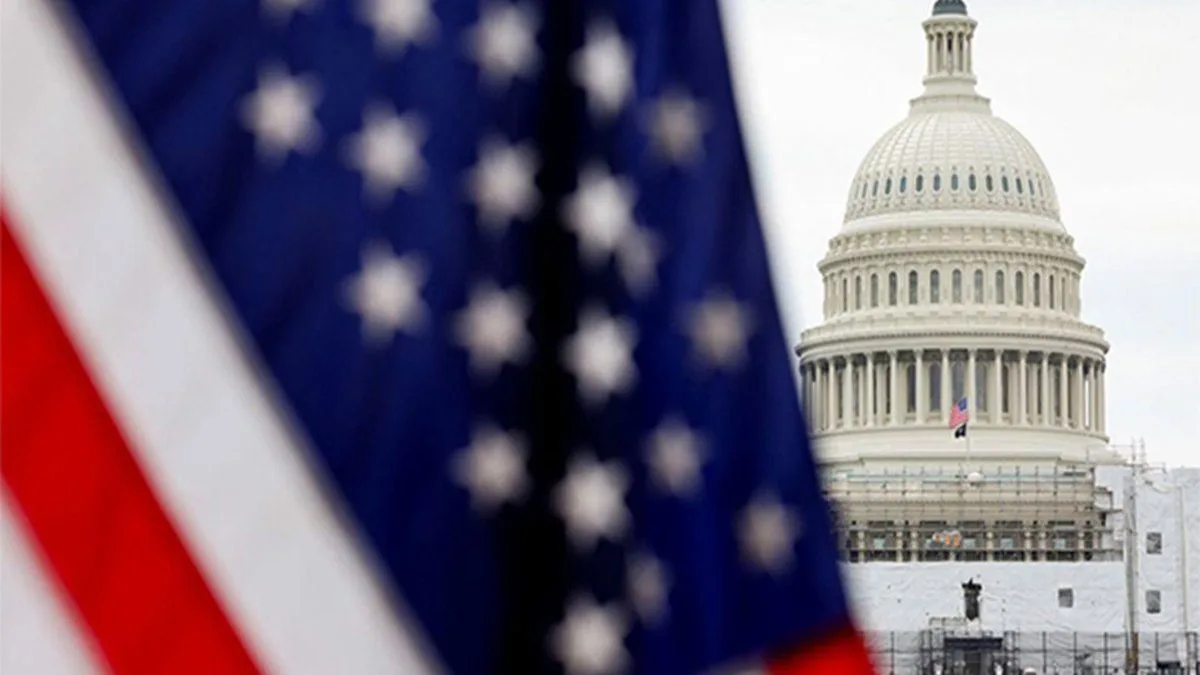
The reopening of the United States government after the longest shutdown in its history offers little cause for celebration. It marks not so much a resolution as it does a temporary truce ~ a pause in a political war that has left both sides weakened and the public disillusioned. While federal workers will finally receive back pay and government operations resume, the broader damage, to governance, credibility, and civic trust, will linger long after the pay cheques clear. At the heart of the shutdown was a struggle less about policy and more about power.
What began as a standoff over healthcare subsidies for low-income Americans became a symbol of Washington’s deeper dysfunction. Senate Democrats triggered the shutdown to press their case, but after six weeks of national disruption, they settled for a vague promise of a vote on the issue ~ a concession too minor to justify the scale of the crisis. For a party that had projected renewed confidence after local electoral wins, the retreat felt like strategic confusion dressed as pragmatism. President Donald Trump, on the other hand, emerges not as a victor but as the chief architect of a political culture defined by brinkmanship.
Advertisement
His insistence on assigning blame, rather than building consensus, reflects the unstatesmanlike and transactional nature of leadership that values optics over outcome. The temporary funding bill he signed restores normalcy only until the end of January, virtually ensuring that this episode will replay in some form. The pattern has become familiar: a crisis manufactured, a compromise claimed, and no durable progress achieved. Beyond the halls of Congress, the shutdown was a reminder of how fragile the machinery of governance has become. Around 1.4 million federal workers went without pay for several weeks. Essential services, from food aid to air safety, were disrupted. Families living pay cheque to pay cheque found themselves at the mercy of partisan posturing.
The American state ~ vast, complex, and indispensable ~ was treated as a bargaining chip in a game of ideological poker as a bemused world looked on. The deeper cost of the shutdown lies in the erosion of trust. Each such episode chips away at the notion that politics can serve the common good. Citizens are left to conclude that their government functions only intermittently, contingent upon the ambitions of those in power. This cynicism may prove harder to repair than any budgetary shortfall. For Democrats, the internal fissures exposed during the standoff may prove lasting.
Progressives are furious at what they see as capitulation, while moderates plead for pragmatism. For Republicans, the illusion of victory may mask their own drift toward a politics of perpetual confrontation. In the end, the shutdown closes without a winner ~ only a weary nation left to reckon with the cost of a dubious kind of leadership defined by spectacle. The government may have reopened, but governance itself remains in lockdown.