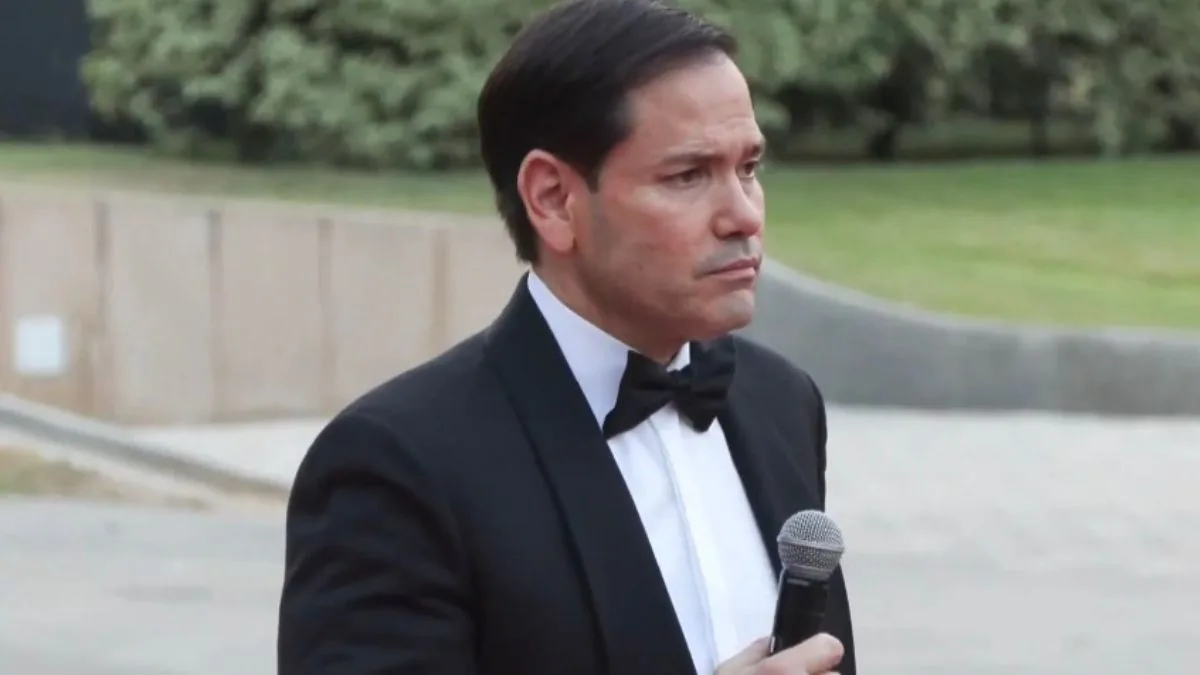
Seeking to allay concerns in New Delhi over Washington’s expanding engagement with Islamabad, US Secretary of State Marco Rubio on Sunday asserted that America’s relations with Pakistan would not come “at the expense” of its strategic alliance with India, stressing that the India-US partnership remains strong, steady and poised to deepen further in the years ahead.
Responding to a pointed media query during a joint press interaction in New Delhi, along with External Affairs Minister S Jaishankar, that referenced US-Pakistan relations and allegations linked to military support for terrorist groups, Rubio declined to be drawn into military matters but firmly defended Washington’s broader diplomatic approach in South Asia.
Advertisement
“We have relations, and we work at the tactical level, for example, and in many other ways with countries all over the world. So does India. That’s what the responsible nation-states do,” Rubio said, underlining that engagement with multiple countries was a standard feature of global diplomacy rather than a signal of shifting strategic loyalties.
Making a direct effort to reassure India amid growing scrutiny of Washington’s outreach to Islamabad, Rubio added, “But I don’t view our relation with any country in the world as coming at the expense of our strategic alliance with India for the reasons I’ve outlined here already earlier today.”
The remarks assumed significance against the backdrop of recent regional tensions and concerns in sections of India’s strategic community over the United States maintaining active channels with both Pakistan and China while simultaneously attempting to deepen ties with New Delhi.
Rubio, however, repeatedly emphasized that India-US relations had not weakened and rejected suggestions that the partnership required any form of revival or reset. “Relations between the two countries have not lost momentum,” he said, expressing confidence that ties between Washington and New Delhi would emerge “much stronger in the coming years.”
The Secretary of State also struck an optimistic note on the long-pending bilateral trade agreement between the two countries, saying the United States hoped the deal could be concluded soon. He further noted that India and the United States remained “strategically aligned” on nearly all major global issues, reinforcing the broader geopolitical convergence that has increasingly defined ties between the world’s two largest democracies.
At one point during the interaction, Rubio appeared visibly reluctant to engage with the military-related allegations embedded in the question directed at him. “That was a long question and said a lot of things I don’t agree with, and I’m not going to speak to the military,” he remarked, sidestepping direct comment on sensitive security concerns involving Pakistan.
Even so, Rubio acknowledged that Washington’s ties with Islamabad were evolving beyond traditional counterterrorism cooperation. He indicated that the United States saw opportunities to expand engagement with Pakistan into areas such as trade and critical minerals, while insisting that such efforts did not dilute America’s “deep, historic, and important” friendship with India.
Significantly, Rubio also praised India’s diplomatic maturity, suggesting that New Delhi understood the practical realities of global power engagement. According to the US Secretary of State, India recognizes that major powers often maintain layered relationships across regions to preserve stability and strategic flexibility.
Rubio’s visit to India—his first official trip to the country as Secretary of State—comes at a delicate moment in regional geopolitics. Washington has recently been involved in intense diplomatic activity across South Asia and West Asia, including outreach involving Pakistan during negotiations linked to Iran. The visit is also widely seen as part of a broader effort to reinforce the India-US Comprehensive Global Strategic Partnership after a period marked by friction over tariffs and evolving regional alignments.
Despite these undercurrents, Rubio’s messaging in New Delhi was unmistakably aimed at reaffirming India’s centrality in US strategic thinking. By publicly declaring that ties with Pakistan would not undermine America’s partnership with India, Rubio appeared intent on signaling continuity, reassurance and long-term commitment at a time of heightened geopolitical uncertainty.