Education Rooted in Character-Building
Computer education and robotics are taught to students. Cultural programmes are held to develop students’ confidence. These functions help shy students overcome their inhibitions and participate actively.
In 1929, when Romain Rolland’s “La Vie de Ramakrishna” emerged from Parisian publishing houses, it carried within its pages something far more radical than mere biographical scholarship.




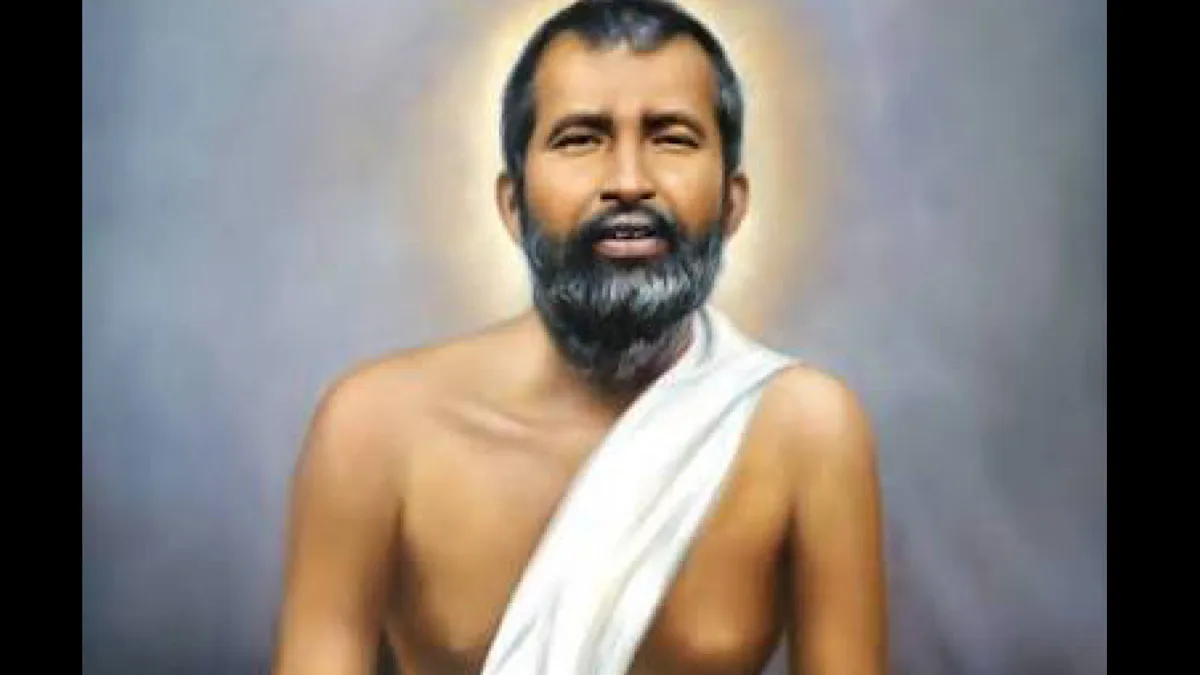
Ramakrishna Paramhans
In 1929, when Romain Rolland’s “La Vie de Ramakrishna” emerged from Parisian publishing houses, it carried within its pages something far more radical than mere biographical scholarship. Here was a Nobel laureate, a towering figure of European letters, bending his considerable intellectual apparatus not to explain away the ecstasies of a Bengali mystic, but to render them comprehensible ~ even necessary ~ to a Western world stumbling blindly toward the abyss of its second great war.
The book was an act of translation in the deepest sense: not merely linguistic, but civilizational. Rolland came to Ramakrishna through the labyrinthine pathways of his own searching. By the 1920s, the author of “Jean-Christophe” had evolved from celebrated novelist into something more urgent: a conscience in exile. His uncompromising pacifism during the First World War had made him anathema in France, yet prescient everywhere. When the guns finally fell silent, leaving ten million dead and European humanism in tatters, Rolland was among those rare intellectuals willing to admit that Western civilization had catastrophically failed some fundamental test of its own values.
Advertisement
It was in this spiritual crisis that India appeared to him ~ not as the exotic periphery of colonial imagination, but as a repository of wisdom that might yet redeem humanity’s squandered inheritance. Through his correspondence with Rabindranath Tagore, and later with Gandhi himself, Rolland perceived in Hindu philosophy something that Christianity, bloodied by its complicity with nationalism and militarism, seemed incapable of providing: genuinely universal ethics grounded in the radical unity of all existence. What distinguishes Rolland’s treatment of Ramakrishna from earlier Western encounters with Hindu spirituality is his refusal to domesticate the saint’s strangeness.
Advertisement
Victorian orientalists had either dismissed yogic practice as primitive superstition or attempted to extract from Vedantic philosophy a pallid reasonableness that would satisfy Unitarian sensibilities. Rolland did neither. Instead, he presented Ramakrishna’s God-intoxication in all its scandalous particularity ~ the trance states lasting for days, the tears streaming at the mention of the Divine Mother, the utter dissolution of ego-boundaries that left this priest of Dakshineswar unable to handle money or maintain conventional social proprieties. Yet Rolland’s genius lay in demonstrating that this apparent madness encoded a sophisticated epistemology.
Ramakrishna’s mysticism was not an escape from reality but a more penetrating engagement with it. His famous dictum ~ “As many faiths, so many paths” ~ emerged not from liberal tolerance but from direct experiential knowledge. Ramakrishna had systematically practiced Islam and Christianity alongside multiple Hindu traditions, and found in each the same ineffable One. This was universalism earned through radical particularity, not abstract theorizing.
For Rolland, writing in the shadow of nationalist hatreds that had weaponized religious identities, this testimony carried explosive political implications. Ramakrishna had lived the solution to the very sectarianism tearing Europe ~ and increasingly India ~ apart. His spiritual experiments demonstrated that religious differences were not barriers but pathways, different dialects of the same ultimate vocabulary. The deepest affinity between Rolland and Ramakrishna, however, resided not in comparative religion but in their shared vision of non-violence as ontological truth rather than tactical choice. Rolland’s pacifism was no mere political preference; it flowed from his conviction that the recognition of human unity must preclude the possibility of organized slaughter.
When he was reviled as a traitor for refusing to sanction the First World War, Rolland understood himself as defending a more fundamental patriotism: allegiance to humanity itself. Ramakrishna’s ahimsa operated at an even more foundational level. His inability to cause suffering to any creature stemmed from his perception of the divine presence in all forms. The famous incident where he could not swat a mosquito because he felt its pain in his own body was not sentimentality but the logical consequence of his mystic vision. If all apparently separate beings are manifestations of one underlying reality, then violence against another is violence against oneself ~ and against the divine.
Rolland grasped that this was not primitivism but a more evolved consciousness than modernity had yet achieved. The mechanized warfare of his era was possible only because of a profound disconnection: the ability to categorize whole populations as Other, as less than fully human. Ramakrishna’s mysticism dissolved precisely this fatal capacity for othering. In his radical empathy, Rolland perceived the antidote to the nationalism poisoning his age. One of the most daring aspects of Rolland’s portrait was his serious engagement with Ramakrishna’s devotion to Kali, the Divine Mother in her most terrifying aspect.
Western audiences, steeped in patriarchal Christianity, found in Kali only confirmation of Hinduism’s supposed barbarism ~ a bloodthirsty goddess demanding sacrifice. Rolland saw deeper. He understood that Ramakrishna’s relationship with Kali represented a profound theological alternative to the Abrahamic God of power and commandment. Kali, simultaneously creator and destroyer, tender mother and fierce warrior, embodied the totality of existence in a way that transcended moral dualism. She was reality itself, not sanitized or made comfortable for human preferences. Ramakrishna’s ecstatic devotion to her was an embrace of life in its terrifying fullness – including death, dissolution, and the ultimate groundlessness of all phenomena.
This was spirituality without illusions, mysticism that did not flinch from the world’s pain. For Rolland, this had immediate relevance. The facile optimism of 19th-century progress had exploded in the trenches. Any spirituality adequate to the 20th century would have to incorporate tragedy without succumbing to nihilism. Ramakrishna’s Kali-worship modelled precisely this: a fierce joy that was not naive, a love that encompassed destruction. Moreover, the centrality of the feminine divine in Ramakrishna’s experience offered an implicit critique of the aggressive masculinity that dominated both European imperialism and emerging fascism. The colonizers justified their dominion through narratives of masculine vigour conquering feminine passivity.
Ramakrishna’s submission to the Mother reversed this entire symbolic order. Strength lay not in domination but in surrender; wisdom came through receptivity rather than conquest. Rolland’s timing was impeccable, if inadvertent. His biography appeared just as the limitations of scientific materialism were becoming apparent even to scientists. The quantum revolution had undermined mechanistic certainty; psychoanalysis had revealed the unsuspected depths beneath rational consciousness. The modern world was ready ~ or desperate ~ for alternative modes of knowing. Yet Rolland was no anti-modernist. He did not present Ramakrishna as representing a return to pre-rational enchantment. Rather, the Bengali mystic exemplified a trans-rational wisdom that incorporated but transcended both scientific method and religious dogma.
Ramakrishna’s empiricism ~ his insistence on direct experience over received doctrine ~ resonated with the experimental spirit of modernity even as his conclusions challenged materialist assumptions. This paradox makes Rolland’s work perpetually relevant. He was not trafficking in exoticism for jaded Western palates, nor was he suggesting Indians possessed some racial-spiritual superiority. Instead, he demonstrated that the mystical traditions preserved in the East represented humanity’s common heritage, as available to a Parisian intellectual as to a Bengali priest ~ if one was willing to undertake the necessary disciplines. Both men possessed what can only be called prophetic vision, though neither would have claimed such a title.
Ramakrishna foresaw the catastrophic communal violence that would accompany India’s independence, repeatedly warning against religious hatred. Rolland predicted the rise of fascism and the Second World War with uncanny accuracy, understanding that the unresolved spiritual crisis of Europe must culminate in further horror. Their prophecies derived from the same source: a clarity about human nature unclouded by ideological wishful thinking. Ramakrishna’s mysticism did not make him naive about the ego’s capacity for self-deception and cruelty. Indeed, his own spiritual struggles with lust, anger, and pride gave him intimate knowledge of the obstacles to realization.
Similarly, Rolland’s idealism was tempered by his unflinching analysis of nationalism’s psychological appeal and the intoxication of collective violence. What united them was faith ~ not in human perfectibility through progress, but in the possibility of transformation through expanded consciousness. They believed that individuals could awaken to their essential unity with all existence, and that such awakening naturally produced compassion, humility, and the renunciation of violence. This was not optimism but something sterner: a conviction that humanity possessed resources for transcendence it had barely begun to access. Nearly a century after Rolland’s biography, its central insight remains urgent. We live in an age of resurgent nationalism, religious extremism, and environmental catastrophe born of humanity’s alienation from nature.
The illusion of separation that Ramakrishna spent his life dissolving has produced global warming, nuclear arsenals, and a pandemic of loneliness in prosperous nations. Rolland’s gift was to show Western readers that the solution to modernity’s crisis existed not in some new ideology or technological fix, but in the mystic realization of unity that traditions like Ramakrishna’s had preserved. This was not regression but the recovery of a future ~ a way of being human that integrated scientific knowledge with spiritual wisdom, individual freedom with cosmic interdependence. The book’s influence rippled far beyond its immediate readership. It helped shape Aldous Huxley’s perennial philosophy, inspired Thomas Merton’s inter-faith explorations, and provided intellectual legitimacy for the post-war interest in Eastern spirituality.
Yet Rolland would likely insist that his work’s value lay not in spawning academic discourse but in transmitting something of Ramakrishna’s living realization ~ the possibility of joy, the reality of the divine, the obligation of compassion. The bridge Rolland built between Ramakrishna’s ecstatic devotion and European philosophical tradition remains incomplete. We have not yet achieved the synthesis of East and West, mysticism and reason, spirituality and activism that both men embodied. The forces of division, violence, and materialism have not been vanquished. Yet the bridge stands, inviting crossing. In an era when civilizational dialogue has never been more necessary or more fraught, Rolland’s portrait of Ramakrishna offers a template: how to honour difference while recognizing unity, how to preserve particular traditions while discovering universal truths, how to be rooted in one’s own culture while belonging to the whole human family.
Both men understood that peace ~ whether inner or outer ~ cannot be achieved through force or ideology. It requires the slow, difficult work of transformation: learning to see the divine in all beings, to feel others’ suffering as one’s own, to renounce the ego’s claims in favour of a larger belonging.
This is mysticism as the ultimate pragmatism, spirituality as political necessity. Romain Rolland’s luminous act of cultural translation reminds us that humanity’s wisdom traditions are not competing claims but complementary revelations. In Ramakrishna’s God-intoxicated life, carefully rendered for Western understanding, he offered not an Eastern solution to Western problems but a human solution to human problems ~ one that honours both the particular path and the universal destination, both the ecstatic cry of the individual mystic and the silent ground of being that unites us all.
(The writer is a retired civil servant)
Advertisement