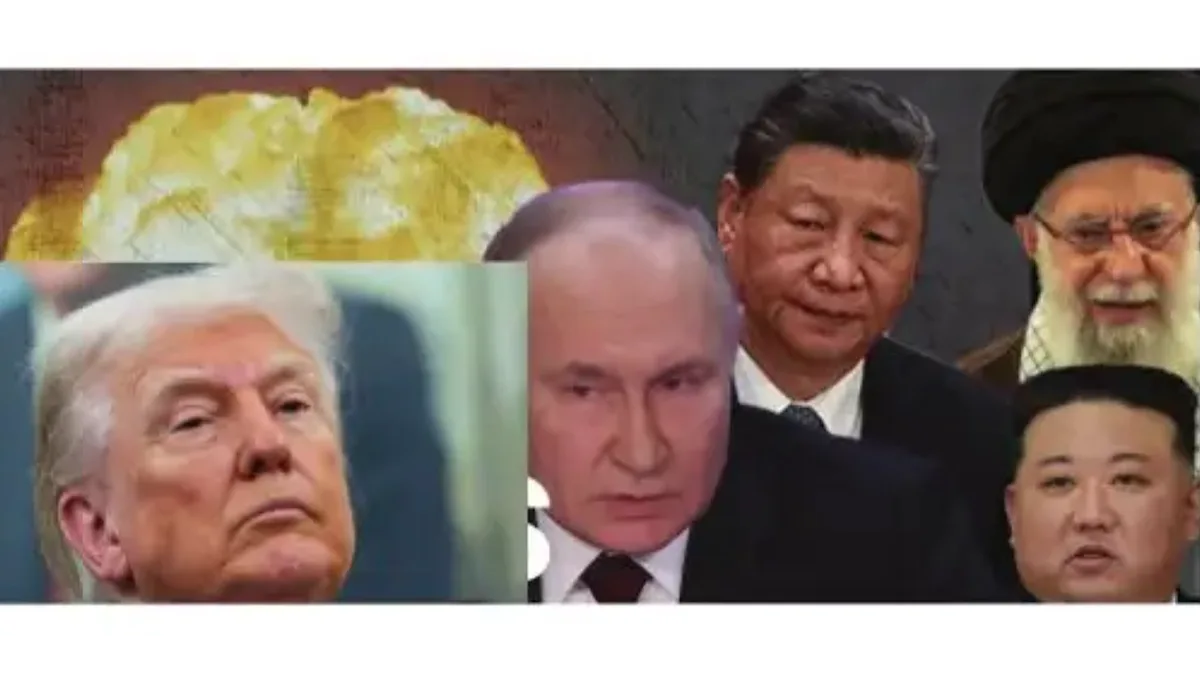
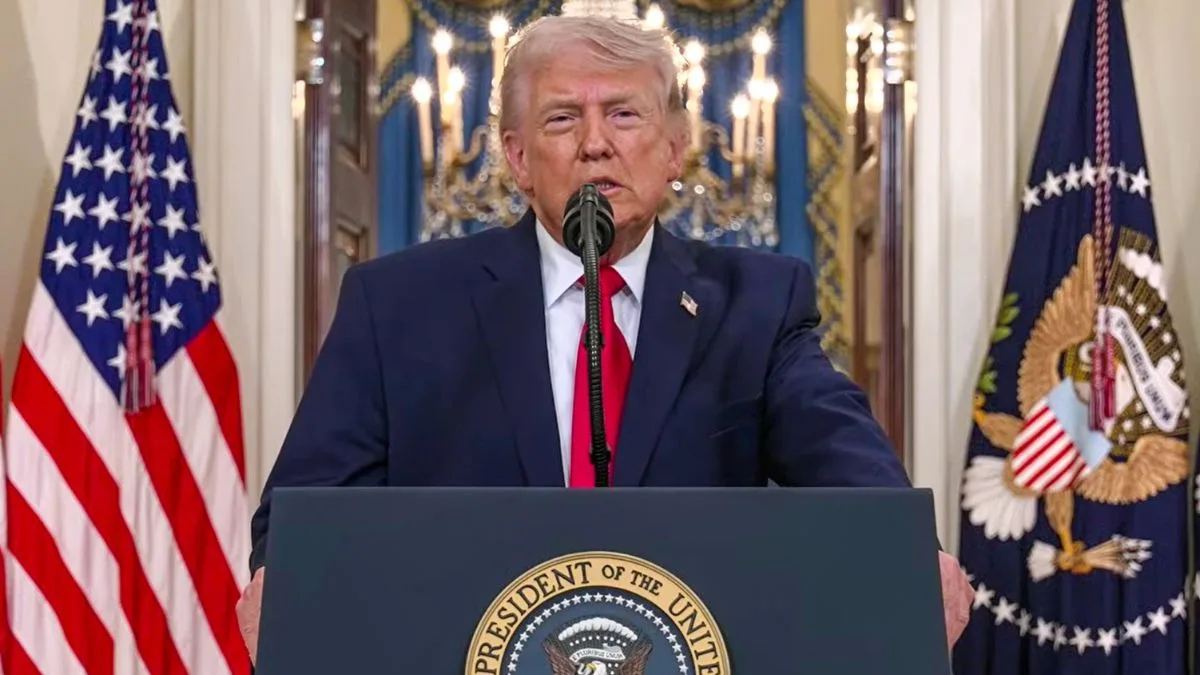
Our present plight ~ having to choose between the CRINKs (China, Russia, Iran and North Korea) and the US, led by the megalomaniacal Donald Trump ~ is strikingly similar to that of the ancient Greek mariner, Odysseus, who had to traverse the straits of Messina, which had the six-headed monster Scylla on one side, and the deadly whirlpool of Charybdis, on the other. Our dilemma is compounded by the fact that we are probably the most hated country in our neighbourhood; Western powers, whom we assiduously courted, are busy playing Trump’s tune ~ silently witnessing, if not applauding Trump’s depredations. The CRINKs ~ except Iran ~ are not particularly welcoming.
Our erstwhile friend and protector, Russia, supports us to spite the US, and more importantly, because we are the second-biggest market for its oil. China is making the right noises in our support, but it has a long history of stabbing us in the back ~ in 1962, 2020, and numerous other occasions. Till recently, we had a blazing territorial dispute with China, which is being brushed under the carpet by our leadership, pointedly ignoring the fact that China openly supported Pakistan with logistics and weapons in the recent Indo-Pak showdown. Also, China has consistently thwarted two of our major foreign policy goals, viz. securing membership of the UN Security Council (UNSC) and Nuclear Suppliers Group (NSG).
Advertisement
Sceptics have cast doubt on the terms of our recent disengagement with China ~ fuelled by the Government’s insistence on not making the terms public, and evading discussion in Parliament. As of now, China is planning to build a 60 GW mega-hydropower dam across the Yarlung Zangbo (Brahmaputra) at the Great Bend region of the Medog county in the Tibetan Autonomous Region in China, which will have serious implications for downstream riparian States, including India. Protests from India have been met with bland denials.
However, with a newly minted transactional foreign policy, we have continued with China as our largest trading partner, even when our soldiers were eyeball to eyeball with theirs. During the recent Indo-Pak stand-off, the Government took offence to expressions of support to Pakistan from Azerbaijan and Turkey, and downgraded relations with them. However, showing a lack of consistency, similar outrage against China was nowhere to be found. Courting China, in these fraught circumstances, only exposes our weakness to the international community.
Our look East and friendly neighbourhood policies lie in tatters partly because of intemperate statements by our leaders, aimed at domestic audiences. For example, calling Bangladeshis termites, and labelling all kinds of Muslims as Rohingyas, does not add to our popularity in our predominantly Muslim neighbourhood. Certain unrestrained comments by a BJP spokeswoman against the Prophet in a TV show, amplified by social media, snowballed into a major international controversy. In a more recent instance, after the Adani Group was charged by SEC in the US, the BJP alleged that the U.S. State Department was behind targeted attacks on PM Modi, the ruling party, and attempts to ‘destabilise India.’
Sadly, we are unable to counter the realpolitik practiced by the West, particularly the USA, which has always been an unreliable ally, failing to provide material support to us when we were attacked; by Pakistan in 1965 and 1999 and by China in 1962 and 2020. During the Indo-Pak war of 1971, the US actively supported Pakistan. Victory over Pakistan in the recent confrontation soured when Trump took full credit for the Indo-Pak ceasefire, and made it amply clear that we had to desist from punishing Pakistan further. Shorn of rhetoric, the main interest of the US vis-à-vis India, is to sell us highly priced, defanged military equipment, and prevent us from buying arms and oil from alternative sources. Despite President Trump’s belligerent outpourings against China, the formation of AUKUS ~ a military alliance between the UK, US and Australia, which is QUAD minus Japan and India ~ has pre-empted the possibility of QUAD evolving as a counterweight to China in the Indo-Pacific region.
According to the then US Secretary of State, Antony Blinken, AUKUS is a military alliance, while the Quad was created for trade and commerce, which is perfidy at its worst, because AUKUS was formed with the immediate aim of snatching a US $60 billion submarine deal from France. Now, after imposing tariffs of fifty per cent on Indian goods ~ effectively pricing them out of the US market ~ Trump is threatening India with fifty per cent more, should India continue buying Russian oil. Also, the US has asked G7 countries to impose punitive tariffs on buyers of Russian oil, i.e., India and China.
Trump’s antagonism towards India, which he masks by random conciliatory posts, is surprising ~ Trump’s ascension to the US Presidency was widely welcomed in India, as he was perceived as a personal friend of PM Modi. Some other factors may be at play; mis-steps like targeting Sikh separatists in US and Canada, supporting individuals accused of financial fraud in the US, and bombastic statements by some Indian leaders may have antagonised Trump, who would not like India to emerge as a power centre in world politics.
Our foreign policy in earlier days had its shortcomings; we carried forward old British policies which were singularly unsuited to our limited military and economic capabilities; we lost no chance to cock a snook at the US, whose largesse kept us afloat. But, at all times our policies were consistent, and had significant moral underpinnings. Sadly, our recently formulated muscular foreign policy, ignoring our limitations, has cost us tons of international goodwill. After the murder of a Khalistani activist, allegedly at the behest of the Indian Government, relations with Canada, home to a large number of ethnic Indians, and a favourite destination of job-seekers and students, touched rock bottom. Significantly, some Indian officials have been charged in US with a similar crime.
Foolishly, for electoral advantage, during the recently concluded Lok Sabha elections, some blustering Indian politicians, all but admitted to the Indian Government’s involvement. Harping on a mythical past, most Indian politicians have a marked tendency to talk down to foreigners. Additionally, Indian politicians see all foreign investors and businessmen as supplicants, or worse still, as cash cows. An example is the reaction of the Commerce and Industry Minister, to Amazon’s announcement of US $1 billion investment in India. Lambasting Amazon, the minister said that Amazon was not doing a favour to India by its investment, and for good measure, accused Amazon of predatory pricing.
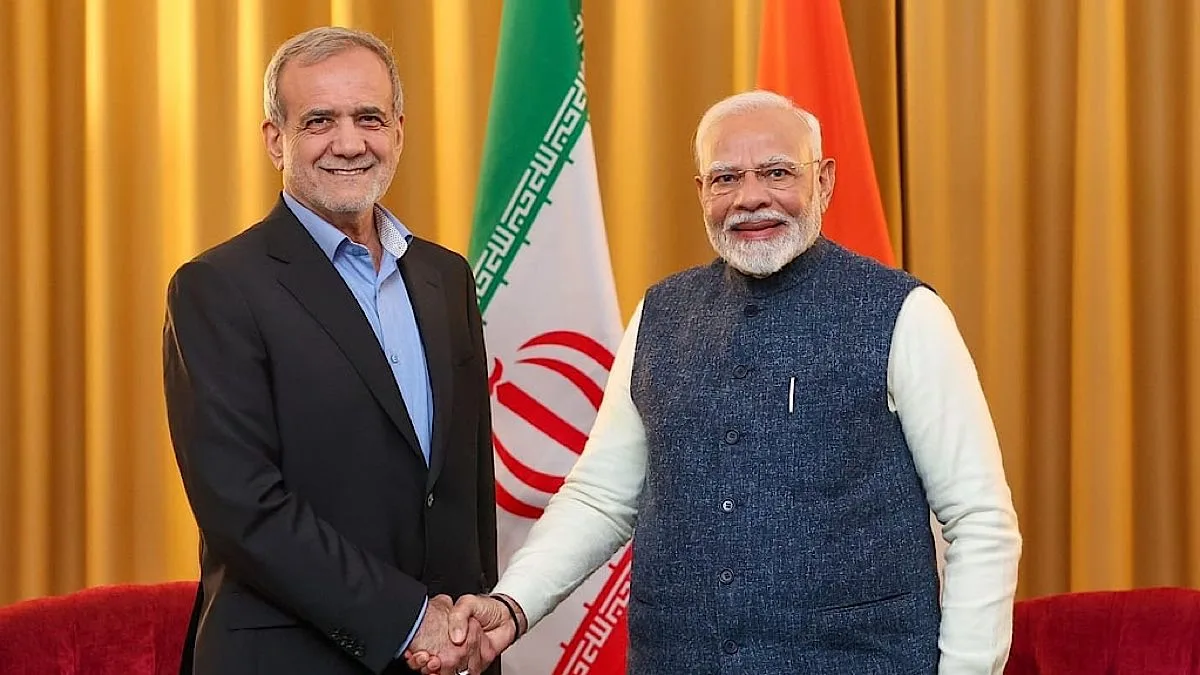
Similarly, the former Law and IT Minister got into a number of ugly spats with Facebook and Twitter, that only ended with his ouster from the Union Cabinet. Probably, the ministers were ignorant of the fact that business and politics are closely aligned in the West, and Governments there view attacks on home-grown businesses very seriously. Our earlier idealistic foreign policy was based on the principles of truth, non-violence and Panchsheel, which we could not sustain, in face of the realpolitik practised by other countries. Gravitating between transactional and moral extremes, we have not been able to evolve a stable foreign policy. At the present critical juncture, India has to navigate a path that preserves her long-time interests. Walking into the CRINK camp, because of a US rebuff, could be a short-term solution but a long-time pain.
Similar would be the outcome of succumbing to Trump’s pressure tactics. De-hyphenating foreign policy from foreign trade could be the first step in our revised foreign policy. We may have to plough a lonely furrow, but then our own economic and military strength is not inconsiderable – India is undoubtedly the fourth pole in today’s multipolar world. Realistically speaking, a lesser volume of foreign trade may slow down our economic growth by a point or two, but it would be a small price for not getting embroiled in super-power rivalry.
Along with equidistance, a neighbourhood first policy would definitely help; we may start by providing food and other kinds of aid to our neighbours, who are all facing economic headwinds and food shortages. Then, we have to tone down our rhetoric, and not let domestic compulsions affect foreign relations. Cultivating friendly relations with neighbouring countries, even at some cost, would considerably lessen the threat from China and Pakistan. A well thought-out, balanced foreign policy is essential for us; US President John F. Kennedy hit the nail on the head when he said: “Domestic policy can only defeat us; foreign policy can kill us.”
(The writer is a retired Principal Chief Commissioner of Income-Tax)