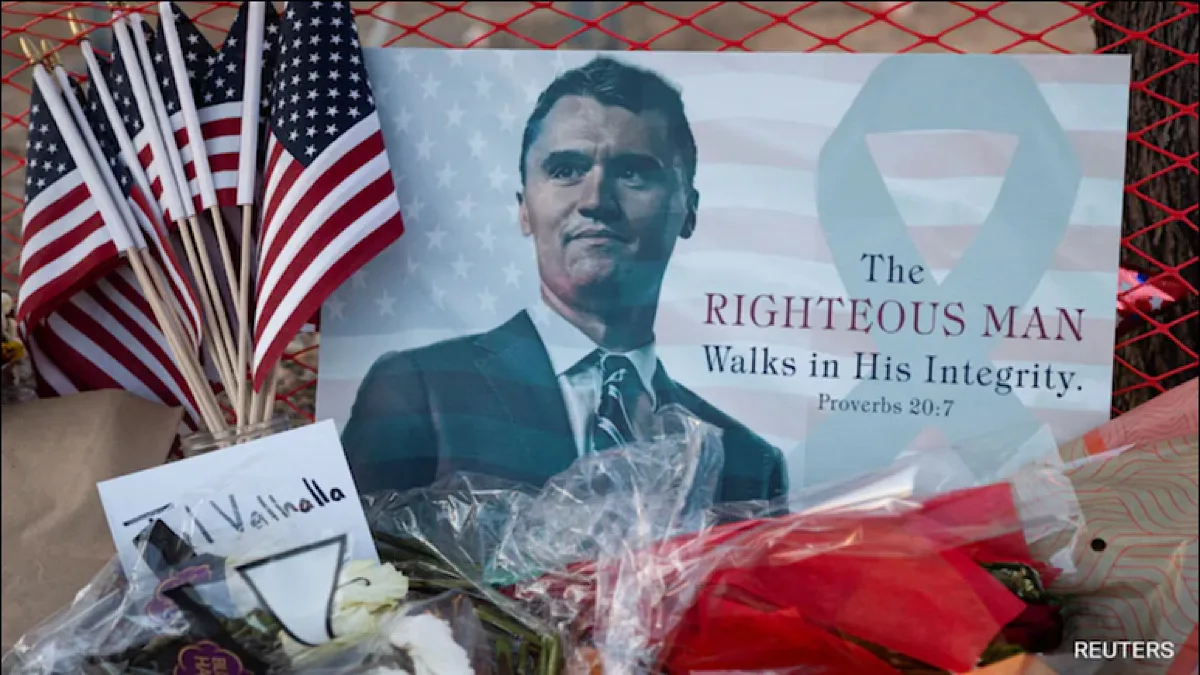
The killing of conservative activist Charlie Kirk on a university campus in Utah is a chilling reminder of how violence has seeped into the bloodstream of American politics. What should have been an afternoon of debate and dissent among students ended in chaos, with thousands fleeing in terror as a single bullet cut through the noise. Kirk’s death is not just the silencing of one controversial figure.
It is the latest symptom of a political culture where rhetoric is so overheated, grievances so entrenched, and firearms so readily available that disagreement increasingly risks crossing the line into bloodshed. The FBI has now released images of a young man described as a person of interest, believed to be of college age. A six-figure reward has been announced, underscoring the urgency with which authorities are pursuing the case. But no amount of money or security footage can undo the damage already done. For the students who witnessed the killing, the image of civic debate interrupted by gunfire will remain seared into memory. The symbolism of the attack is striking.
Advertisement
Kirk had built his reputation on being willing to enter spaces where his brand of politics was unwelcome, challenging liberal orthodoxy on campuses that leaned the other way. He embraced confrontation, often warning that critics might resort to violence. In death, his warnings have become prophecy, and his followers are already casting him as a martyr for their cause. The risk now is that his assassination becomes another accelerant in America’s cycle of rage. Already, the reaction from political leaders has been predictable: one side blaming ideological opponents, the other side counter-blaming, both sides amplifying the very divisions that create the conditions for violence.
The shouting match that followed a Congressional moment of silence spoke louder than any official statement about how fractured America truly is. The deeper problem is structural. A country awash with firearms, locked in the grip of polarised media echo chambers, and governed by leaders who profit politically from outrage, is primed for tragedy. To describe public life as a “blood sport” no longer feels like metaphor. Politicians, activists, and ordinary citizens alike now wonder whether attending a rally, hosting a town hall, or even engaging in protest might make them a target.
As America nears 250 years of independence, the question is not whether violence will shape its politics, but how deeply it will corrode democratic life. If assassination attempts and shootings become the expected cost of civic engagement, then the very foundation of free exchange is at risk. Kirk’s murder must, therefore, be seen not just as the loss of one voice, but as a brutal warning. A democracy that cannot guarantee safety in its public spaces cannot endure indefinitely. Unless America reins in its rhetoric and its weapons, politics itself will remain hostage to the gun.