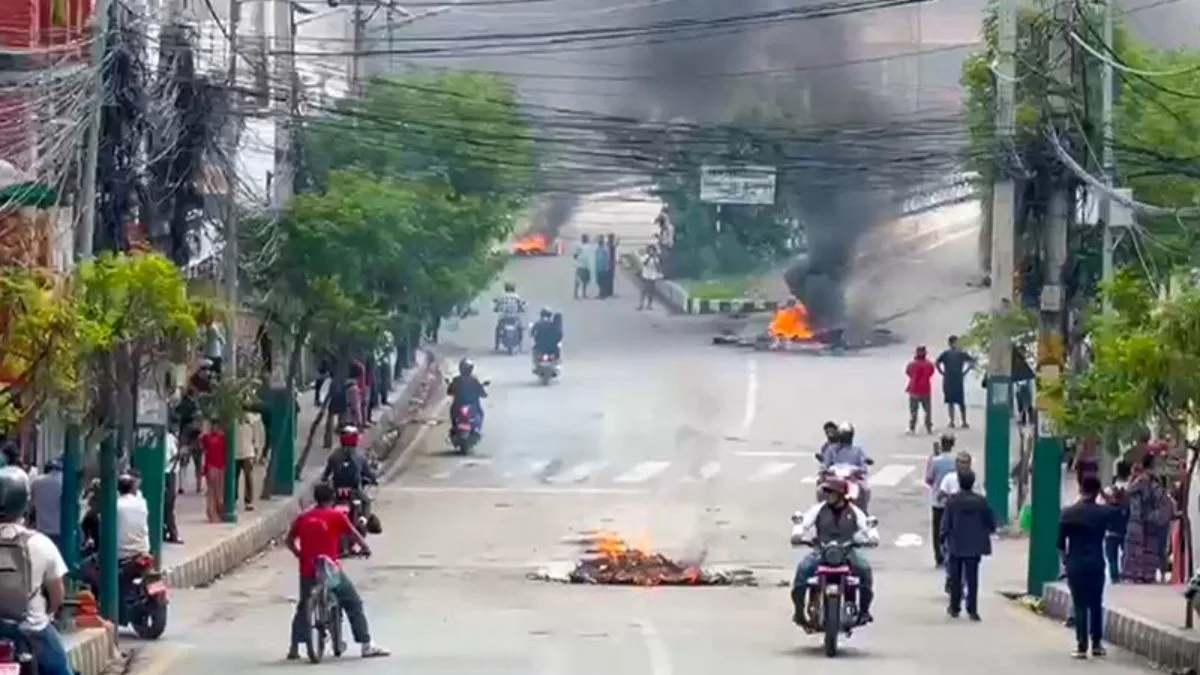
Kathmandu has been gripped by chaos for two days as mass protests, largely driven by young citizens, have shaken the nation’s political establishment. On Tuesday, Prime Minister KP Sharma Oli resigned from his post, following widespread unrest that has left the country in shock.
The protests began after police cracked down on youth-led demonstrations on Monday. The demonstrators, mostly students and young activists from what is being called the “Gen Z movement,” had gathered to demand an end to corruption and failures in governance.
Advertisement
The crackdown on the first day turned violent when police opened fire on the crowds, killing at least 19 people and injuring more than 400.
The deaths triggered a much larger wave of protests across the country on the second day. In Kathmandu and several other cities, protesters stormed government buildings, vandalised political offices, and set fire to the private residences of leaders.
Among the damaged sites were the Parliament building, Singha Durbar, which houses key ministries, and the Supreme Court. Even the Kathmandu District Court and several government quarters in Lalitpur were targeted.
The violence did not stop with political institutions. The protesters also attacked private properties, including the residences of former prime minister Sher Bahadur Deuba and Foreign Affairs Minister Arzu Deuba Rana.
Kantipur Publications, Nepal’s largest media house, was set ablaze. Its offices in Thapathali, which house Kantipur Daily and The Kathmandu Post, suffered major damage.
The list of sites set on fire or vandalised includes the President’s residence, the Prime Minister’s residence, the Nepali Congress party office, Hotel Hilton, the home of senior leader Gagan Thapa, Ullens School, and ministers’ quarters.
The political fallout has been swift. Several ministers have already stepped down, including Teju Lal Chaudhary, Minister of Youth and Sports; Pradip Paudel, Minister of Health and Population; and Satish Kumar Singh, Chief Minister of Madhesh Province.
The unrest also forced authorities to release Rabi Lamichhane, the former Home Minister and a prominent leader of the Rastriya Swatantra Party, from prison. Police admitted they could not ensure his safety amid the ongoing turmoil.
Despite Oli’s resignation, the protests have not calmed. Anger remains high, especially after fresh reports from Kathmandu on Tuesday evening confirmed that two more people had been killed by gunfire from police.
Adding to the uncertainty, former king Gyanendra issued a rare statement urging young protesters to remain peaceful while continuing their demand for change. It remains unclear how much influence he still holds in the country’s politics, but local reports suggest he may want to return to power.