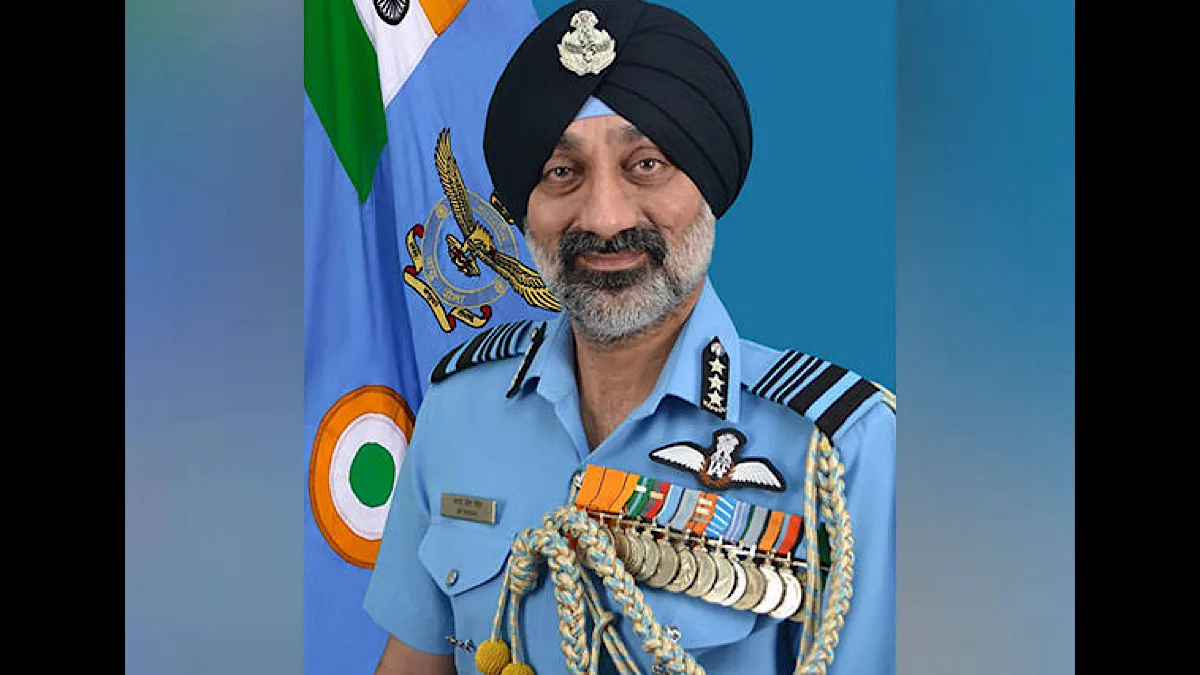
Amid the ongoing discussions over the proposed creation of theatre commands, Indian Air Force Chief Air Chief Marshal AP Singh, voiced reservations about the concept, stressing the need for a more practical and cohesive planning structure.
He also credited the success of Operation Sindoor to seamless coordination and joint-planning among the Chief of Defence Staff and heads of the three-armed services.
Advertisement
The Chief of Air Staff was speaking at the Fire-Side Chat organised on the first of Ran Samwad 2025, underway at Mhow, Madhya Pradesh. The session was attended by the CDS General Anil Chauhan, serving officers, defence attaches of friendly foreign countries and think tanks.
The IAF Chief said every entity had its own requirements and emphasized the need to carefully consider what was truly needed before taking action. He warned that acting without such consideration could lead to mistakes. He also cautioned against succumbing to pressure to implement something hastily, stressing that it should not be done merely for the sake of doing it.
“You cannot have a theatre commander sitting somewhere and now whom they talk to, where from they get direction. Phones are available but generally that does not work like that,” he said, underlining the operational challenges such a structure might pose in real-time conflict scenarios.
“I feel having joint planning and coordination at the apex level is what is required. If directions go form it, things will work out. We don’t really actually need another structure at the lower level. But yes, we can start with this first, implement it and see how it pans out. If we need any more structure, we can think about it. But disrupting everything and making one structure now at this time, I do not think it is a very good idea. I think theatre commands; we cannot pick up from any other country,” he said.
Offering an alternative, the IAF Chief advocated a centralized joint planning system. “I personally feel that having a joint planning and coordination centre in Delhi is what is required. Keeping it under the Chiefs of Staff Committee so that it gets directions jointly. And thereafter, the executing centrally planned and decentralized execution is what is needed. That will work out the best.”
Speaking about the use of air power during the recent skirmish, the Air Chief said until now we were always scared that if we use air power it will be an escalation. “This is one myth which has been broken this time that actually turned out to be the other way round. We had reached conflict termination criteria in the first state itself. But we could also impose our will on that other side to say that I want to stop because we used the aircraft.”
Adding that there are instances globally wherein the land forces weren’t able to move at all, the IAF chief said that he always thought the first thing one needs to do is clear his (enemy) sky so that nobody interferes with your forces. “Unless you do that, unless you take down his air, his ability to launch his air power against any force, whether it’s air, land or sea, you cannot be sitting around or going in,” he added.
“What we are going to build in future, we all are aware, but within this operation, within two, three days, we were able to enhance our capabilities significantly, almost twice or thrice than when you started,” he added further.
Stressing the need for electronic warfare during the conflicts, Singh said that it can help jam the enemy radars, enemy systems and save your aircraft. “The EW is one field where no nation actually shares technology easily. So this is one field where you actually need to be self-reliant. You should be able to program your own systems. But that can only happen if you have the capability in house. If you have imported systems where you require some special help or you require to send it somewhere, or don’t have the labs with you. That is not going to happen. So the Air Force had recognized this requirement quite some time back,” said the Air Chief.
Dubbing Operation Sindoor as “Yesterday’s War”, the Air Chief said that we need to prepare for tomorrow’s war lessons that we have learned.