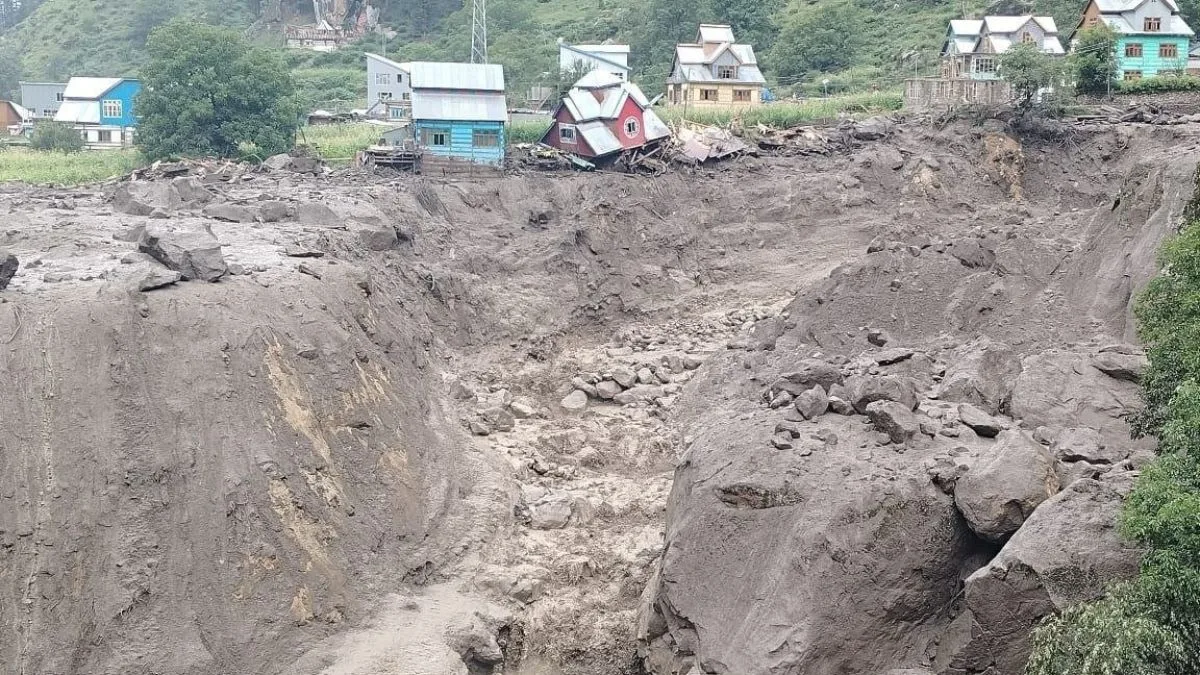
The tragedy in Kishtwar last week is a grim reminder that the Himalayan landscape, for all its beauty, is an increasingly fragile theatre for human life. In a matter of minutes, what began as an ordinary day on a sacred pilgrimage route to the Machail Mata shrine turned into an unrelenting wave of water, mud, and debris that tore through lives and livelihoods. At least 60 people are gone, many more remain missing, and countless families are left with the unbearable weight of not knowing.
Cloudbursts are not new to the region, but their frequency and destructiveness are intensifying. What sets this disaster apart is its setting ~ along a congested pilgrim route where thousands pass each season, many stopping at Chositi before making the steep climb to the shrine. Here, geography conspires with faith: narrow valleys, fragile slopes, and rudimentary infrastructure stand alongside large gatherings of people whose focus is spiritual, not situational awareness. When the sudden fury came, there was neither time nor space to escape.
Advertisement
Survivor accounts capture the shock: a loud blast-like sound, a surge of sludge in the drains, and the sickening realisation that the ground itself was turning lethal. Some were rescued by security personnel posted for the shrine, others by sheer luck. But for too many, there was simply no path out. The official rescue effort, brave as it is, has been hampered by a lack of resources. Reports from the site speak of a single earth mover working through the debris while the clock ticks on survivors’ chances. This is not a reflection of the courage of the responders ~ it is a reflection of systemic under-preparedness for disasters in our mountainous districts. We have known for years that cloudbursts and flash floods will become more frequent as climate patterns shift and the monsoon grows more erratic. Yet, preparedness remains piecemeal.
Remote areas often lack basic early-warning systems, resilient shelters, and rapid deployment equipment. Pilgrimage routes, in particular, are rarely designed with disaster mitigation in mind, though they attract large, temporary populations in some of the most hazard-prone terrain in the country. There is an urgent need to rethink how we plan for such events. Early-warning infrastructure should be standard along all high-density Himalayan routes. Local communities must be trained in rapid evacuation and first response, for they are the true first responders when disaster strikes. Rescue teams should be pre-positioned with adequate equipment during peak pilgrimage or tourist seasons.
The human loss in Kishtwar is devastating, but its lesson should not be lost in mourning alone. We cannot control when and where the next cloudburst will strike, but we can control how prepared we are when it does. If the mountains are to remain places of faith and livelihood, they must also become places of safety. Anything less will be a betrayal of those who call them home, and those who journey there seeking something higher.