Patience First
The temptation to settle on a convenient explanation after a major aviation disaster is understandable.
The AAIB on early Saturday released its 15-page preliminary report of the probe into the tragic Air India plane crash resulting in the deaths of 260 individuals, including 229 passengers, 12 crew members, and 19 people on the ground in Ahmedabad on June 12.




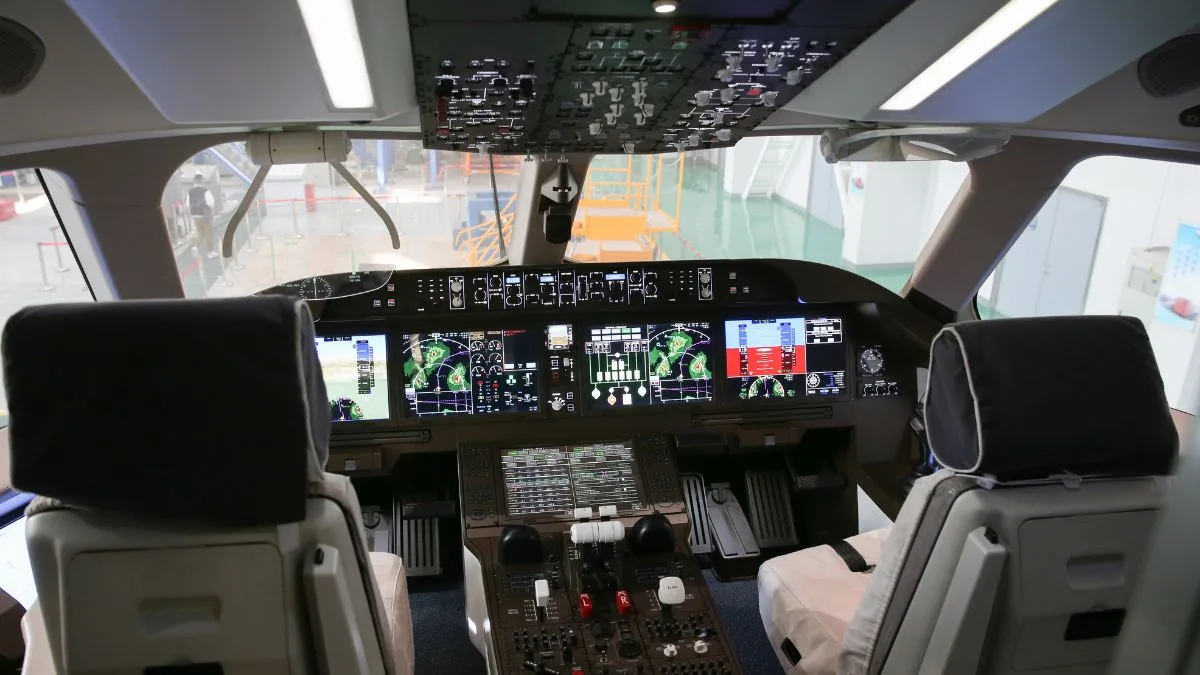
Representative Image (IANS)
Both fuel control switches supplying fuel to the engines of Air India flight 171 were turned off in quick succession, shutting down both the engines, before the plane crashed in Ahmedabad seconds after taking off, revealed a preliminary report of the Aircraft Accident Investigation Bureau (AAIB).
The AAIB on early Saturday released its 15-page preliminary report of the probe into the tragic Air India plane crash resulting in the deaths of 260 individuals, including 229 passengers, 12 crew members, and 19 people on the ground in Ahmedabad on June 12.
Advertisement
According to the report findings, one of the pilots can be heard on the cockpit voice recorder, asking the other why he cut off the fuel, to which the other pilot responded by saying that “he did not”.
Advertisement
Air India Boeing 787-8 aircraft’s engine fuel control switches transitioned from ‘RUN’ to ‘CUTOFF’ position within three seconds after lift-off, leading to the plane crashing in just 34 seconds after taking off from Ahmedabad on June 12, the AAIB said in its report.
Speaking on the report, Civil Aviation Minister Ram Mohan Naidu said the AAIB’s report on the Air India plane crash in Ahmedabad is based on preliminary findings and one should not jump into conclusions till the final report is made public.
Talking to reporters, the Civil Aviation Minister said, “We should now jump into any conclusions over this.”
“It will be very premature to comment on the report. The preliminary has come in but we have to wait for something concrete to come in,” he said.
According to the 15-page report, the flight lasted around 30 seconds between lift-off and crash. The report noted that at this stage, there are no recommended actions for operators of Boeing 787-8 aircraft and GE GEnx-1B engines.
The preliminary report by the AAIB into the devastating crash of Air India flight AI 171 — a Boeing 787-8 Dreamliner that went down shortly after take-off from Ahmedabad on June 12 — has revealed simultaneous engine shutdown, cockpit voice recordings between the two pilots and further safety advisories.
According to the report, the aircraft was scheduled to operate flight AI171 from Ahmedabad to London-Gatwick.
“On June 12, 2025, Air India’s B787-8 aircraft bearing registration VT-ANB arrived at Ahmedabad airport operating flight AI423 from Delhi. The crew of the previous flight (AI423) had made a Pilot Defect Report (PDR) entry for the status message “STAB POS XDCR” in the Tech Log. The troubleshooting was carried out as per FIM by Air India’s on duty AME, and the aircraft was released for flight at 0640 UTC,” the report mentioned.
The flight was to be operated by the flight crew comprising an Airline Transport Pilot License (ATPL) holder pilot, a Commercial Pilot License (CPL) holder Co-pilot along with 10 cabin crew.
“Both pilots were based at Mumbai and had arrived at Ahmedabad on the previous day. They had adequate rest period prior to operating the said flight. The co-pilot was Pilot Flying (PF), and the PIC was Pilot Monitoring (PM) for the flight,” according to the report.
The crew of flight AI171 arrived at the airport and underwent preflight Breath Analyzer test and were found fit to operate the flight. There were 230 passengers on board, out of which 15 passengers were in business class and 215 passengers were in economy class including two infants.
“The take-off weight was within allowable limits for the given conditions. There was no ‘Dangerous Goods’ on the aircraft,” the AAIB report said.
After the takeoff, “the aircraft achieved the maximum recorded airspeed of 180 Knots IAS at about 08:08:42 UTC and immediately thereafter, the Engine 1 and Engine 2 fuel cutoff switches transitioned from RUN to CUTOFF position one after another with a time gap of 01 sec,” the report highlighted.
“The Engine N1 and N2 began to decrease from their take-off values as the fuel supply to the engines was cut off,” it added.
The report further stated that in the cockpit voice recording, one of the pilots is heard asking the other why did he cutoff.
“The other pilot responded that he did not do so,” it added.
CCTV footage obtained from the airport showed Ram Air Turbine (RAT) getting deployed during the initial climb immediately after lift-off (fig. 15). No significant bird activity is observed in the vicinity of the flight path. The aircraft started to lose altitude before crossing the airport perimeter wall.
The aircraft achieved take-off speed at 13:38 IST and lifted off. Just four seconds later, both engines began shutting down. An emergency “Mayday” was transmitted at 13:39 IST.
Engine 1 showed signs of restarting, but Engine 2 failed to regain core speed despite multiple fuel injections. The aircraft continued to descend rapidly. The report ruled out bird strikes or hazardous materials as contributing factors. There was no visual evidence of birds on the flight path.
The aircraft was deemed airworthy, with its Airworthiness Review Certificate (ARC) valid until May 2026. Both engines had been recently installed in March and May 2025.
According to the report, a 2018 FAA advisory had warned about the potential disengagement of the fuel control switch lock. As per the AAIB report, Air India did not act on it, as it was non-mandatory.
Air India has acknowledged the AAIB’s preliminary report into the AI171 crash and reaffirmed its support for affected families.
“Air India stands in solidarity with the families and those affected by the AI171 accident. We continue to mourn the loss and are fully committed to providing support during this difficult time. We acknowledge receipt of the preliminary report released by the Aircraft Accident Investigation Bureau (AAIB) today, 12 July 2025.
“Air India is working closely with stakeholders, including regulators. We continue to fully cooperate with the AAIB and other authorities as their investigation progresses. Given the active nature of the investigation, we are unable to comment on specific details and refer all such enquiries to the AAIB,” the airline said on X.
Boeing also put out a statement following the AAIB preliminary report. “Our thoughts remain with the loved ones of the passengers and crew on board Air India Flight 171, as well as everyone affected on the ground in Ahmedabad. We continue to support the investigation and our customer. We will defer to the AAIB to provide information about AI171, in adherence with the United Nations International Civil Aviation Organization protocol known as Annex 13,” it said.
The AAIB has said that at this stage of investigation, there are no recommended actions to B787-8 and/or GE GEnx-1B engine operators and manufacturers.
“Investigation is continuing and the investigation team will review and examine additional evidence, records and information that is being sought from the stakeholders,” it said, adding that the wreckage and engine components have been moved to a secure facility for further investigation.
Advertisement