The Bengali film industry, also known as Tollywood, has produced many remarkable movies. Be it Satyajit Ray’ s Pather Panchali, Ritwick Ghatak’s Meghe Dhaka Tara or Rituporno Ghosh’s Chokher Bali, many of them would have made you cry, but these comedy films make you laugh the loudest. Here is a list of five comedy films you need to watch.
Golpo Holeo Sotti, 1966
(Photo credit: Youtube)
It’s a family drama where all the residents of the family hate each other. This situation now affects their professional and personal life. See how an outsider turns everything around. It is a delight to watch Rabi Ghosh’s gimmick on the screen.
Advertisement
Baksho Bodol, 1970
(Photo credit: Twitter)
Advertisement
It’s a romantic comedy directed by none other than Satyajit Ray, featuring Soumitra Chatterjee and Aparna Sen. A story of two passengers whose luggage gets exchanged and the chaos begins.
Choddobeshi, 1971
(Photo credit: Youtube)
You must have watched Chupke Chupke. Newsflash, it was a remake of this classic comedy movie starring one of the most talented actors Uttam Kumar.
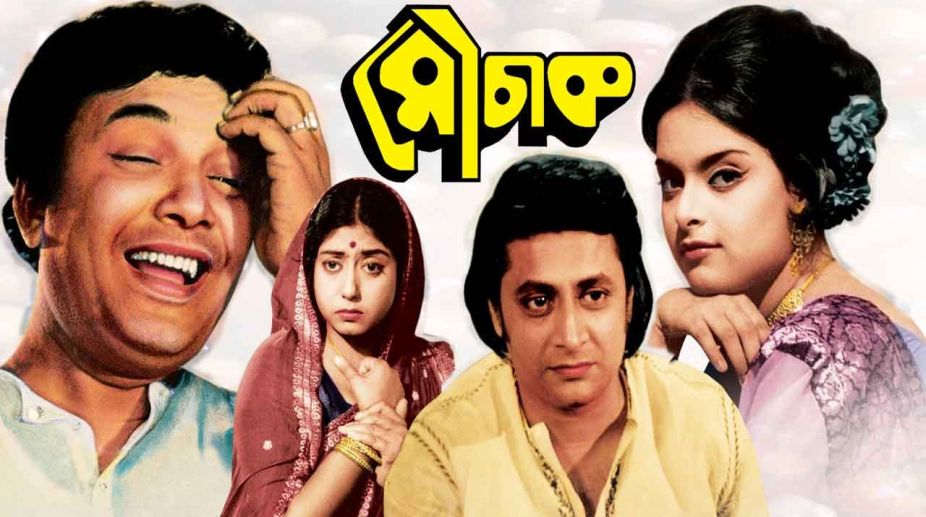
Mouchak, 1975
(Photo credit: Youtube)
Another classic by Uttam Kumar, featuring Ranjit Mallick as a handsome young man who catches the eyes of fathers of unmarried girls in his new locality. Watch the tug-o-war among them for the most eligible bachelor.
Bhooter Bhobishyot, 2012
(Photo credit: Youtube)
This one is the original film that was remade in Gang of Ghosts. A story of an aspiring director who gets his story and the money to invest in an old house. Want to know how? Watch how the story unfolds.
The complaint alleging fraud was lodged on May 19 by a businessman. It claimed that Chakraborty had taken Rs 1.05 crore under the pretext of producing a film but misappropriated the funds.
'Pather Panchali' won at Cannes in 1956. Sixty-six years later, Anik Dutta shot its origin story in black and white, with Ray's son watching, and called it a labour of love. That is what obsession looks like when it is handled well.
A toy gun, a flute, and a silent battle between two children become a haunting reflection of class and power. In just 12 minutes, Satyajit Ray turned silence into one of cinema’s sharpest social commentaries with 'Two'.