I had an unexpected call from my friend David in New York when I worked in New Delhi. He was to come to India for a conference the following month. He is a dear friend, and I suggested that when the conference ended he should come and stay with us for the weekend before his return.
Sunday morning, over coffee, David expressed an idea that appealed to me. He said his mother was 92, with limited vision, and had difficulty identifying the five different pills she had to take. His idea was to buy five ornamented silver boxes, of different shapes and colours, so that his mother could easily distinguish the pills inside them.
I thought it was an excellent idea, but remembered that most jewellery shops would be closed on Sunday. Then it occurred to me that jewellery shops in major hotels are sometimes open even on a Sunday, and there was a large five-star hotel near our home.
We were glad to find that there were two jewellery stores in the foyer of the hotel and these practically faced each other.
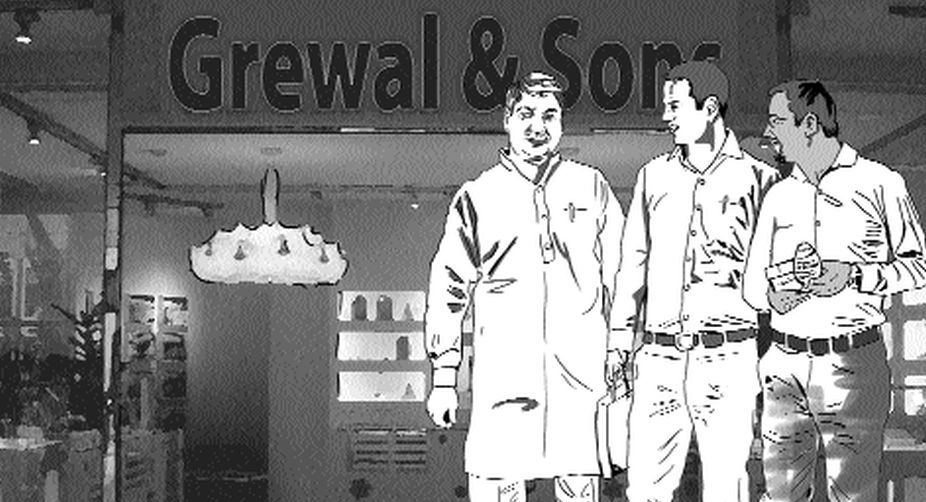
We went into the first store, Grewal & Sons, and found the kind of silver boxes David fancied. I asked the price and the saturnine owner said they would each cost 500 rupees. When I asked if there could be any discount on the price if one bought five of them, Grewal gruffly barked, “No discount.” We had politely asked a legitimate question, and the response was a brusque negative. Flustered, I walked out with David without saying a word.
We walked over to the other store, Punwani and Brothers, and were eagerly received by the store owner. When we expressed our interest in silver boxes, Punwani produced a large and varied collection. Once again I asked the price and mentioned that we might purchase more than one. The man said that his usual price was 500 rupees, but he would bring it down to 425 if we bought three or more.
That worked for us and we identified four very different types of boxes, oval, rectangular, square and circular, each with a distinctive color combination, such as green and gold or scarlet and silver. We were both pleased with the choices, but, try as we might, we could not find a fifth box that was identifiably different from the chosen four. We paid for the four boxes, took them and then pondered the alternatives.
We could look for other jewellery stores, but it was by no means sure we could find an open store. David needed to leave for the airport in a few hours and he certainly needed five boxes for his mother.
Very reluctantly David and I returned to the other store, whose somber-faced owner was standing at the entrance all the time and watching our transaction in the other store. Grewal knew we had returned to his store because we had not found in his competitor’s store all that we needed to find.
I explained to Grewal that David had a 92-year-old mother who took five types of pills and, because of her limited vision, those had to be in five noticeably different boxes. We had found four boxes and now needed a fifth box that would be quite different in appearance and dimension. Grewal took a furtive look at our four purchases and immediately brought out a remarkably beautiful and unusual triangular box, with maroon and chrome filigree.
He knew as instantly as the two of us that the new box was just the right thing for us. We simply had to buy it.
Then the miracle happened. David brought out five 100 rupee bills and handed them over to Grewal, and Grewal – without a single word of explanation – returned a bill to David.
Totally mystified, I muttered, “But you said the price was 500 rupees and there could be no discount!”Grewal did not change his hard, morose look for a second. He said, “But you did not tell me that your friend needed it for his old mother!”
The writer is a Washington-based international development advisor and had worked with the World Bank. He can be reached at mnandy@gmail.com
Advertisement