A projectile launched from Yemen towards Israel on Monday raised fresh concerns of the West Asia conflict spreading across multiple fronts, even as Israel carried out fresh strikes inside Iran and Tehran warned of a harsher response if attacks continue.
The latest development comes at a particularly sensitive moment for the region. With Israel and Iran already locked in a cycle of military action and retaliation, the projectile from Yemen adds another layer of uncertainty to efforts by the United States to prevent a broader regional conflict.
Advertisement
The Israeli military said it had identified a projectile fired from Yemen and that air defence systems were activated to intercept the threat.
“Defense systems are operating to intercept the threat,” the military said in a brief statement.
The incident unfolded amid heightened tensions following recent missile exchanges between Iran and Israel. Air raid alerts were activated as Israeli defence systems responded to the incoming threat, though authorities did not immediately provide details on the launch site, damage or casualties.
Meanwhile, the conflict widened further after Israel confirmed it had carried out strikes on military targets in western and central Iran early Monday.
“A short while ago, the Israeli Air Force struck military targets belonging to the Iranian terror regime in western and central Iran,” the Israel Defense Forces said.
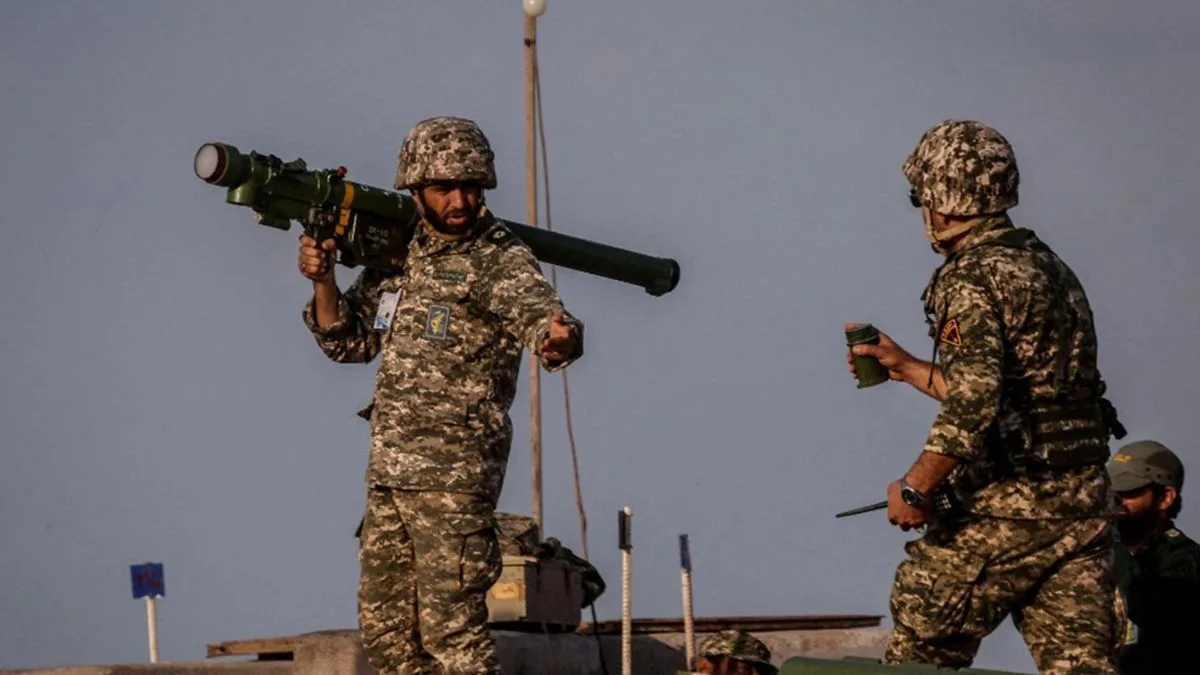
Iranian state media reported explosions in Tehran, Isfahan and Tabriz, citing the Islamic Revolutionary Guard Corps (IRGC). The IRGC claimed Israel used air-launched ballistic missiles during the operation.
In Tehran, authorities sought to reassure residents after explosions were heard in parts of the capital. Iran’s state broadcaster IRIB reported at least two blasts in western Tehran early Monday. A spokesperson for the Tehran Fire Department later said residential neighbourhoods had not been hit.
Iran warns of stronger retaliation
As the military confrontation intensified, senior Iranian officials warned Israel against expanding operations in Lebanon or responding further to Iranian actions.
Ali Abdollahi, chief commander of Iran’s Khatam al-Anbiya Central Headquarters, said Israel would face more “crushing and regret-inducing blows” if attacks continued.
According to Iranian media reports, Tehran also warned that future responses could extend to US and Israeli targets across the region if what it described as aggression continued.
Iran’s Islamic Revolutionary Guard Corps said its aerospace force had launched ballistic missiles at Israel’s Ramat David Air Base in response to Israeli actions in southern Lebanon.
The IRGC described the strike as a warning and said broader responses could follow if hostilities escalate further.
Trump pushes diplomacy amid rising tensions
The military developments came as US President Donald Trump publicly urged restraint and continued to back diplomatic efforts with Iran.
According to Axios, Trump asked Israeli Prime Minister Benjamin Netanyahu not to retaliate against Iran’s recent missile attack, arguing that negotiations with Tehran had reached a critical stage.
“He won’t have any choice,” Trump told the Financial Times while discussing any future agreement between Washington and Tehran.
“I call the shots. I call all the shots. He doesn’t call the shots,” Trump added.
A senior US official told Axios that Trump believed additional military action could jeopardise a potential agreement with Iran.
While expressing confidence in diplomacy, Trump acknowledged uncertainty about the outcome of negotiations.
“I think the deal is going on,” he told the Financial Times. “We’ll see what happens.”
The latest developments have fuelled concerns that a conflict initially centred on Israel, Iran and Lebanon could draw in additional actors, increasing the risk of a wider regional confrontation.