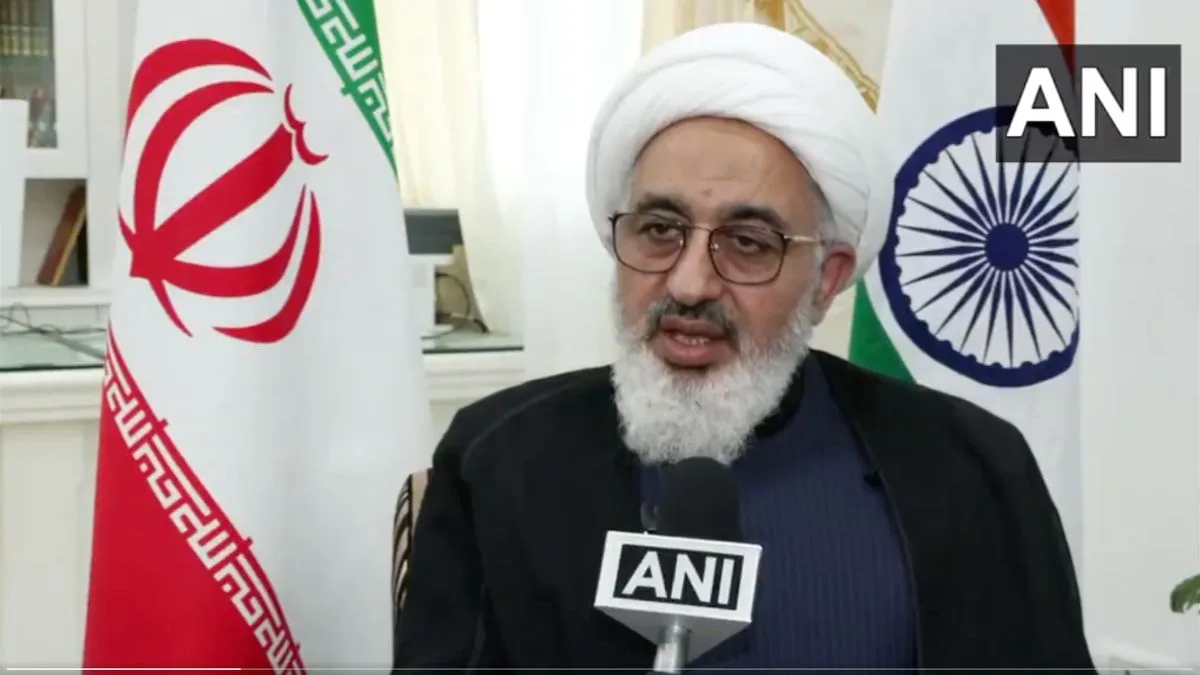
Abdul Majid Hakeem Ilahi, the representative of Iran’s Supreme Leader in India, on Wednesday said the United States carried out over 10,000 strikes on Iran and misjudged the conflict, as he defended Tehran’s position following a temporary ceasefire between the two countries.
Ilahi said Iran never wanted the confrontation and described the war as forced upon it. His remarks come after Donald Trump announced a two-week pause in attacks, opening a narrow window for talks between the United States and Iran.
Advertisement
“They thought they could finish everything within three days, but they realised it was a big mistake,” Ilahi said in a conversation with ANI.
Iran alleges large-scale attacks, defends its response
Ilahi claimed that US strikes targeted Iran’s military capabilities, including air forces and missile systems, and also hit civilian areas.
“According to their own statements, America attacked Iran more than 10,000 times, targeting air forces and missiles,” he said, adding that homes and civilians were also affected.
He maintained that Iran did not seek conflict with neighbouring Arab countries and said the US used bases in those countries to launch attacks. “We did not want any conflict with our neighbours… we only targeted American bases and never civilians,” he said.
Ilahi also referred to an alleged strike on a school in Minab, claiming it killed 170 girls, and said there was evidence acknowledged by European countries.
He warned that Iran had made its position clear during the escalation. “If they continue, Iran can create a resurrection for them. If they attacked our refineries, there would be no others left to work,” he said, adding that such signals forced a halt in hostilities.
The envoy further said threats to destroy Iran’s “7,000-year-old civilisation” showed a lack of understanding. He described scenes where civilians gathered near key infrastructure such as bridges, mosques and hospitals, ready to defend them.
Strait of Hormuz, diplomacy and India’s role
Ilahi rejected claims by Trump about reopening the Strait of Hormuz, saying it had remained functional before the conflict. He added that Iran controls the strategic waterway and hopes stability will return with the ceasefire.
He said both sides will continue discussions on a set of conditions proposed by Iran, while several countries played a role in bringing about the pause in fighting.
The envoy also highlighted coordination with India during the crisis. He said around 3,000 Indian students were moved to safer locations with support from the Indian Embassy in Tehran, while about 400 visitors were assisted with accommodation and travel out of Iran.
Praising India’s role, Ilahi referred to interactions between Prime Minister Narendra Modi and Iran’s leadership, and said India has consistently stood for “justice and humanity”.
Meanwhile, the Ministry of External Affairs said India has facilitated the return of 1,777 citizens from Iran during the conflict, with assistance from regional partners. MEA spokesperson Randhir Jaiswal said the Indian Embassy in Tehran continues to coordinate evacuation efforts.