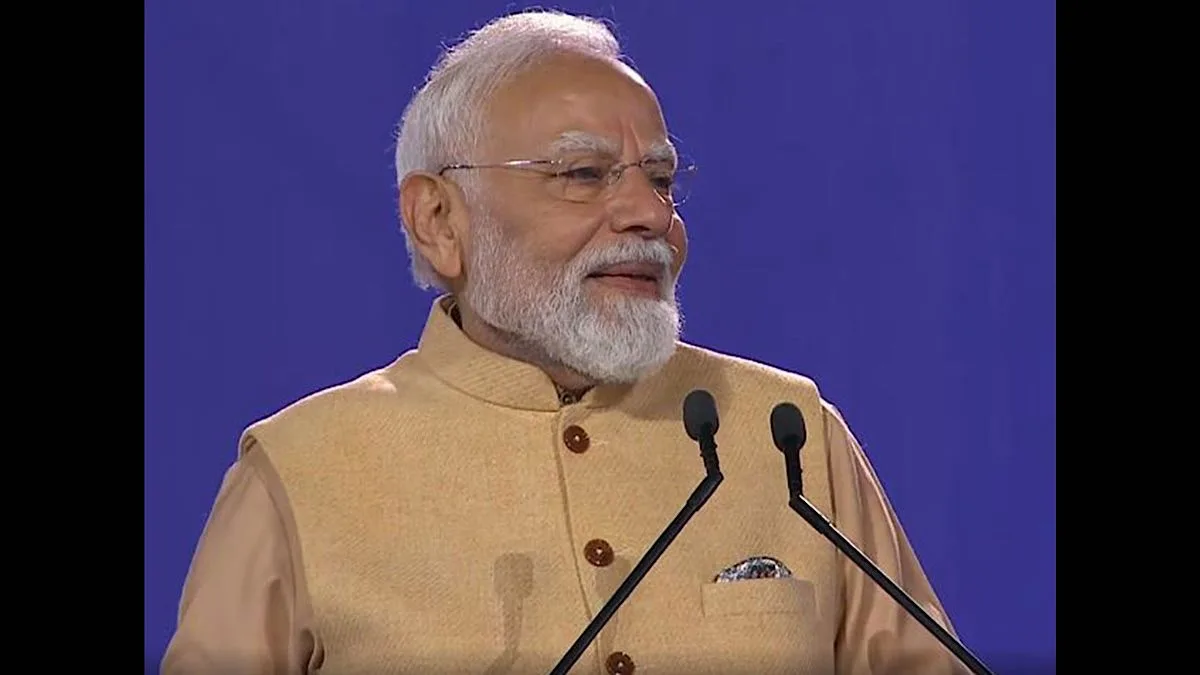
In a direct hit at Islamabad, External Affairs Minister Dr S Jaishankar called Pakistan an epicentre of global terrorism in his speech at the United Nations General Assembly (UNGA) on Saturday. “India has confronted this challenge since Independence, having a neighbour that is an epicentre of global terrorism,” he said.
Recalling the Pahalgam terror attack that left 26 dead in April, Jaishankar said, “While asserting our rights, we must also firmly face up to threats. For decades now, major international terrorist attacks have been traced back to that one country. UN-designated lists of terrorists are replete with its nationals. The most recent example of cross-border barbarism was the murder of innocent tourists in Pahalgam in April this year. India exercised its right to defend its people against terrorism and brought the organisers and perpetrators of the Pahalgam attack to justice.”
Advertisement
Stating that terrorism is a shared threat, the EAM called for much deeper international cooperation and choking the funding of countries that harbour terrorists. “When nations openly declare terrorism as state policy, when terror hubs operate on an industrial scale, when terrorists are publicly glorified, such actions must be unequivocally condemned. The financing of terrorism must be choked, even as prominent terrorists are sanctioned. Relentless pressure must be applied to the entire terrorism ecosystem. Those who condone nations that sponsor terror will find that it comes back to bite them,” he added.
The EAM further spoke about “de-risking,” stating that it has become a “growing compulsion” for countries facing “tariff volatility and uncertain market access.”
“When it comes to trade, non-market practices have gamed rules and regimes, resulting in concentrations that expose the world to leveraging. On top of that, we now see tariff volatility and uncertain market access. De-risking has become a growing compulsion, whether due to limited sources of supply or over-dependence on a particular market,” Jaishankar added.
He further spoke about the UN being in a state of crisis, adding that when peace is under threat from conflicts, when development is derailed by a lack of resources, and when human rights are violated by terrorism, the UN remains gridlocked.
He also stated that while the UN remains resistant to reform, most members strongly desire change, but the process is being made an obstacle to the outcome. “It is imperative that we see through this cynicism and purposefully address the reform agenda. The historical injustice done to Africa should be redressed. Both permanent and non-permanent membership of the Council must be expanded. A reformed Council must be truly representative. And India stands ready to assume greater responsibilities,” he said.
EAM Jaishankar further pointed out that India had undertaken over 600 development projects in 78 countries, along with many community-based initiatives covering infrastructure, livelihoods, capacity building, education, and welfare.
He emphasised that turbulent times demanded timely action, and India had supported its neighbours in crises by providing finance, food, fertiliser, and fuel. He added that climate events and conflicts had increased the need for humanitarian assistance, and India had sought to be a “First Responder” through medicines, relief supplies, field hospitals, and prosthetic camps, covering 19 nations last year. He recalled that India had extended help to Afghanistan and Myanmar after earthquakes.
He highlighted India’s role in ensuring safe commerce, countering piracy, and protecting shipping in the Arabian Sea. He also mentioned India’s longstanding contribution to UN peacekeeping operations in regions such as Congo, Western Sahara, South Sudan, Lebanon, and Somalia.
Summing up, he said India’s soldiers safeguard peace, its Navy protects maritime routes, its security forces counter terrorism, its doctors and teachers advance human development, its industry produces affordable goods, its technologists promote digitisation, and its training institutions remain open to the world. He stressed that these are the core principles of India’s foreign policy.