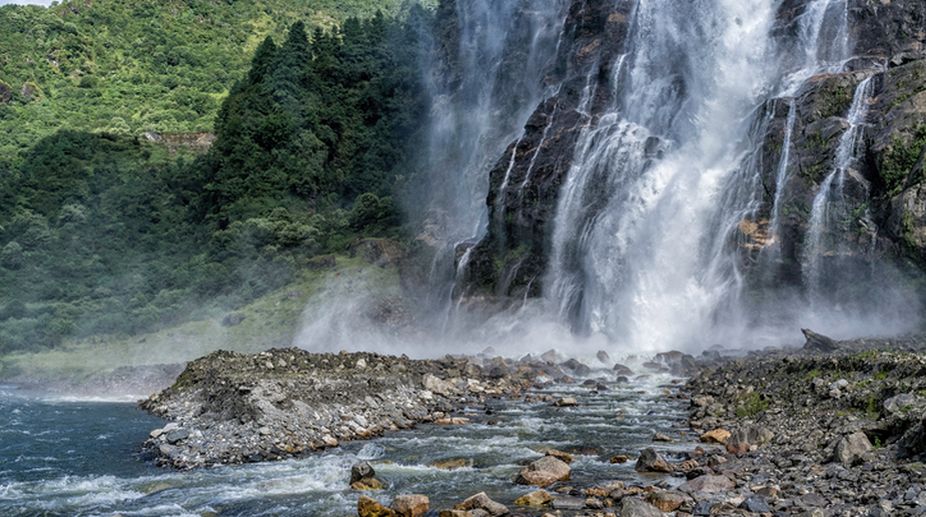
For wildlife lovers, what could be better than a visit to wildlife sanctuaries and national parks. If you are planning to visit one, travel to pristine Arunachal Pradesh in the Northeast, the land of dawn-lit mountains. The state is endowed with rich bio-diversity and there are 10 wildlife sanctuaries and national parks here.
Advertisement
The state is home to some rare and highly endangered flora and fauna. The wildlife sanctuaries and national parks are Sessa Orchid Sanctuary, Pakhui Wildlife Sanctuary, Eaglenest Wildlife sanctuary, Kane Wildlife Sanctuary, Mouling National Park, Dr Daying Ering Memorial Wildlife Sanctuary, Mehao Wildlife Sanctuary, Dihang-Debang Biosphere Reserve and Namdapha Wildlife Sanctuary. Apart from wildlife, the mystical and pristine beauty of the place lures tourists to the place.
Advertisement
(Getty Images)
Breathtaking panoramic view of Dirang in Arunachal Pradesh. The river Dirang flows through it. The place is famous for apple orchards and hot spring.
(Getty Images)
A morning view of a serene natural lake surrounded by high mountains north of Tawang in western Arunachal Pradesh.
(Getty Images)
Alpine shrubs in full bloom along the high slopes of the mountains near Tawang in western Arunachal Pradesh.
(Getty Images)
Tawang Monastery stands atop misty mountains in Arunachal Pradesh. It is one of the largest Buddhist monasteries of India.
(Getty Images)
Sela Lake high up in Tawang. Situated at a height of 4,160 metres above sea level, it is the main attraction of Sela Pass. The lake gets frozen and remains snow covered in winter months.
When a mountainside gave way before dawn on 24 June, engulfing the NEEPCO residential colony at Poosa village in Arunachal Pradesh's Keyi Panyor district, the immediate explanation was simple: an extreme monsoon cloudburst had triggered a devastating flash flood.
Bridges collapsed, farmlands vanished under water, and nearly a thousand cattle and goats were swept away in a single village alone. Entire communities are now waiting, isolated, for help to reach them.
The Nah Welfare Society, representing indigenous communities in Upper Subansiri district, has accused the People’s Liberation Army of gradually occupying traditional grazing lands and hunting grounds near Taksing, north of the Subansiri River.