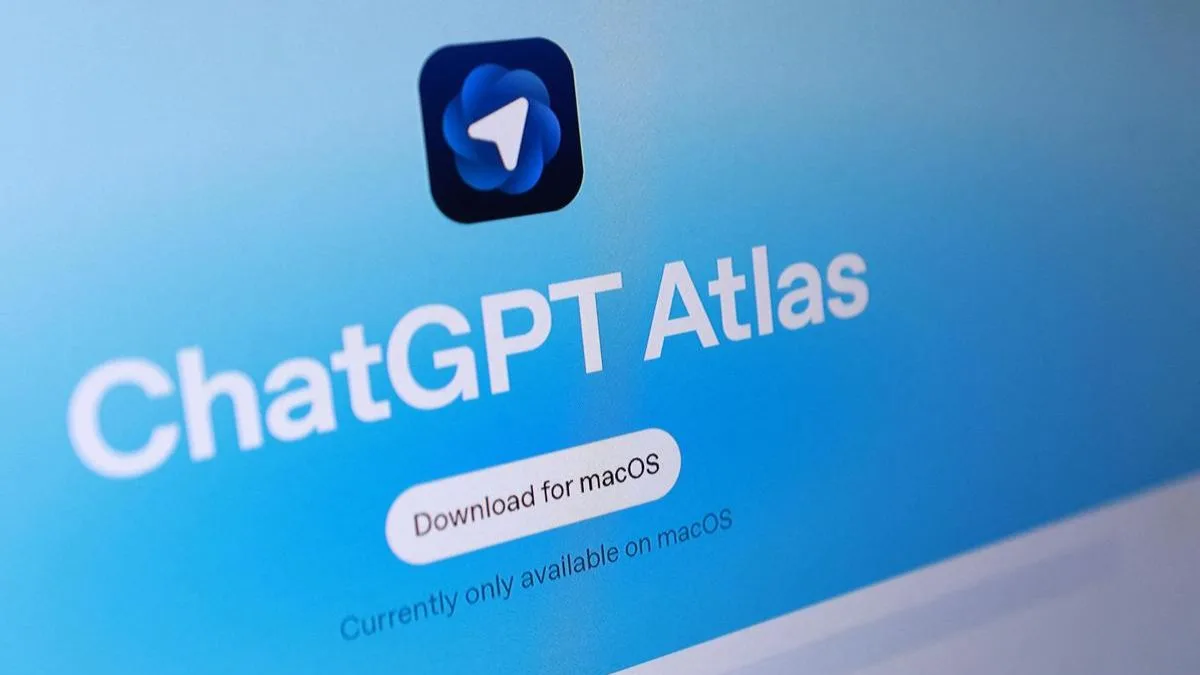
OpenAI has entered the browser world introducing ChatGPT Atlas, a web browser powered by AI that aims to revolutionise how we search on the internet. Different from conventional browsers, Atlas eliminates the familiar address bar and instead places ChatGPT at the forefront. The Tuesday announcement puts OpenAI directly in competition with technology giants Google and Microsoft that control the browser market using Chrome and Edge.
The brainchild of Sam Altman, CEO of OpenAI, Atlas browser has been “built around ChatGPT” and enables users to browse the web with artificial intelligence assistance. For Apple Mac users, the browser is currently accessible, with Windows, iOS, and Android versions to follow soon.
Advertisement
Altman explained the intention isn’t merely to browse websites but to make online activity more intelligent, quicker, and more seamless.
What’s new in ChatGPT Atlas?
One of the standout features of Atlas is its “agent mode,” reserved for paying subscribers of ChatGPT. The mode enables the AI to automatically perform searches and tasks, acting within the context of the user’s web browser session.
During a demonstration, OpenAI explained how Atlas was able to locate an online recipe and then add all the ingredients to a shopping cart on Instacart, something that would take dozens of minutes if a person were doing it.
The Atlas browser release occurs when OpenAI is pushing for new means to capitalise on its fast-expanding AI empire, more due to ChatGPT. OpenAI announced earlier this month that ChatGPT has 800 million weekly active users, a steep increase from 400 million in February, based on Demandsage data.
OpenAI is also forming partnerships with e-commerce sites such as Etsy and Shopify, as well as with booking services Expedia and booking (dot) com. They are alluding to a larger plan to turn Atlas into something more than a search engine.
There is skepticism among some industry players, however, about the browser’s ability to topple Google Chrome that presently commands the lion’s share of the market with a 71.9% global market share. OpenAI is indeed venturing into the browser space amidst a digitally changing world.
Traditional search engines such as Google are increasingly being challenged by big language models (LLMs) such as ChatGPT. Research company Datos discovered that as of July, almost 6% of desktop search queries were routed to LLMs, over twice the rate from a year ago.
Users are more and more using AI chatbots that aggregate information instead of simply depending on keyword-based search outputs.
Google adapts
Google has acted forcefully to this change of heart. Its search results now frequently contain AI-written summaries in addition to conventional links providing a chatbot-like experience for users that they call AI Mode.
Last month, Google brought its Gemini AI model into Chrome for US users, with plans to roll it out to iOS. Google recently staved off a forced sale of Chrome in a US federal court decision, but the company is still on the spot as a search monopoly, so competition from AI-fueled alternatives like Atlas is a big deal.
For OpenAI, the expansion into browsers is also a move into the business of collecting data about user behaviour while moving into more corners of users’ online existence. By merging AI-powered help with web browsing, the company hopes to deliver a more interactive, personalised, and efficient online experience.
Such abilities could redefine the search and ad business, potentially siphoning some ad dollars from Google, analysts observe.
But the browser has challenges to overcome. Convincing users to change from Chrome or Edge or Firefox, browsers with which they have been using for years, will not be an easy task. Mainstream adoption of Atlas will most likely hinge upon how much it can expedite tasks, save time, and produce results superior to what is available now.
OpenAI’s journey into the browser market also tell us how AI is increasingly changing everyday digital habits. Users no longer just search for information. They now expect technology to act as a personal assistant capable of executing tasks on their behalf. Atlas aims to be that assistant; not just a window to the web, but an AI companion that helps navigate it.
As Altman himself said, Atlas browser is “for the future of browsing”. And for those millions of ChatGPT users, the future might have already arrived.