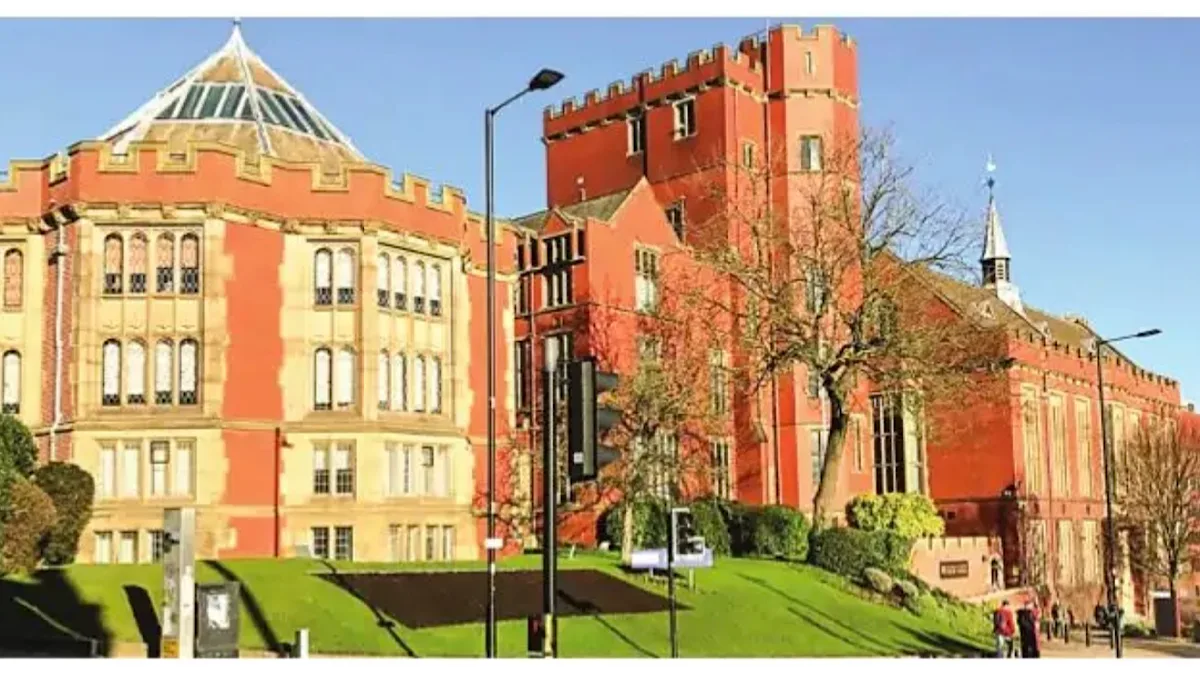
The University of Sheffield, UK is inviting applications for its BSc Biochemistry course starting in September 2026. On the three-year BSc Biochemistry course, students will investigate the structure and function of biological systems at a molecular level. Bringing together biology and chemistry, students will study the science that’s behind many medical discoveries.
They’ll learn about proteins, enzymes, hormones, and receptors, and explore the various ways that biochemistry can be applied to major challenges affecting humanity today, from how we sustainably feed a global population, to healthy ageing and how new drugs are designed. At Sheffield, students will be encouraged to be creative, think independently, and express their ideas. In the lab they’ll be studying the basis of life right down to the atomic level, completing practicals across molecular genetics, DNA manipulation, and protein structure analysis.
Advertisement
Outside of the lab, students will have the opportunity to develop IT solutions to global challenges, ranging from how to deliver a sustainable food supply to how to detect and treat heritable diseases. Students will also have opportunities to work with scientists from the Sheffield Children’s NHS Foundation Trust to learn how genetic disorders such as cancer or rare inherited diseases are diagnosed. As students progress through their degree, they’ll have the chance to delve deeper into key areas of molecular bioscience that interest them across biochemistry, genetics, microbiology, or even biotechnology.
No matter what areas of biochemistry students choose to study at Sheffield, they’ll develop practical laboratory and transferable skills that make graduates attractive to employers including project management, problem-solving, communication skills, and data analysis. All this experience will prepare them for their third-year research project where they could be laboratory-based, focus on computer modelling, science education, or even science communication.
Examples of recent student research projects include: Plastic bioremediation – investigate how proteins could help tackle environmental pollution as you generate and test enzymes that break down plastic waste Pathogens – analyse a pathogen linked to cancer using mass spectrometry techniques to discover how bugs use their bacterial ‘armour’ to avoid the immune system Genomics – explore what makes bacteria dangerous by using high-tech computer modelling software to analyse real-world scenarios like antibiotic-resistant superbugs or hospital outbreaks.
Crop survival – investigate how activating a key gene can prime plants to tolerate environmental stress across generations, like droughts linked to climate change. If students choose to spend a year on a work placement as part of their course, this tends to take place after their second year. It’s a great way to gain valuable experience and test out a career path that they’re considering. Students have found placements in science and non-science-based roles with a range of organisations including GSK, the UK Health Security Agency, and the Institute of Cancer Research.
Students can opt into the scheme once they get to Sheffield. This course is accredited by the Royal Society of Biology which shows employers that you’ve developed the scientific knowledge and technical and transferable skills that you’ll need for a great career. Eligibility: Standard XII (India – all exam boards using a percentage scale) with 80 % including chemistry and a second science subject. Standard XII (India – CBSE board using a GPA scale) 8.0 including chemistry and a second science subject. IELTS grade of 6.5, with a minimum of 6.0 in each component, or an equivalent acceptable qualification Fee:
Overseas students 2026–27 annual tuition fee: £32,100 International Undergraduate Scholarship: The University is offering automatic scholarships worth £7,500 to UG international fee-paying students starting their studies in September 2026, subject to achieving a minimum of 60% in each academic year and meeting other terms and conditions. The scholarship provides £2,500 per year for each subsequent year of study (up to three years), subject to achieving 60% or above and successfully completing at least 120 credits in the previous academic year. For further information on the course:
https://sheffield.ac.uk/ undergraduate/courses/2026/biochemistry-bsc