For decades, West Asia has operated on a simple assumption: when Washington and Jerusalem stand together, their adversaries have little room to manoeuvre. Recent events suggest a more complicated reality. The challenge facing the United States today is not merely how to contain Iran, but whether it can persuade one of its closest allies to accept the limits of military power. The latest exchange of attacks between Israel and Iran has exposed a strategic divide that had long been visible beneath the surface.
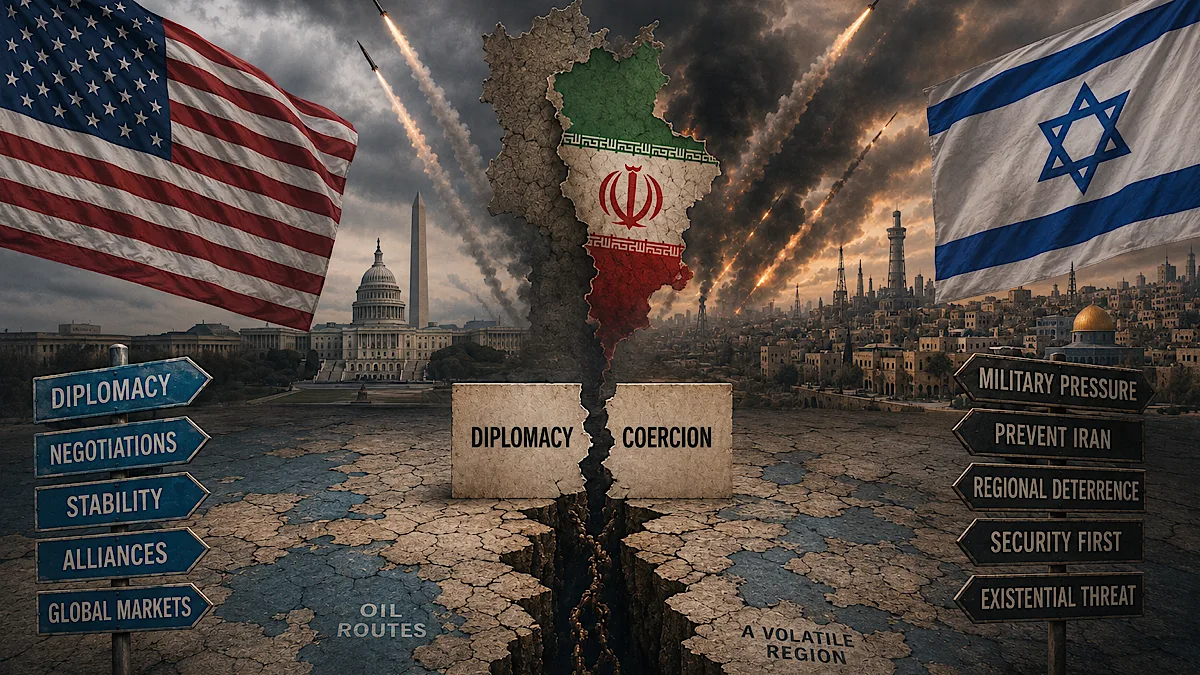
The US and Israel remain committed to preventing Iran from becoming a dominant regional force. Yet they increasingly differ on how that objective should be pursued. One side now sees diplomacy, however imperfect, as the best available instrument for managing a dangerous adversary. The other remains convinced that sustained military pressure is the only language Tehran truly understands. This disagreement matters because it goes beyond the personalities of President Donald Trump and Prime Minister Benjamin Netanyahu. It reflects a broader tension between immediate security concerns and long-term geopolitical stability.
Advertisement
Israel lives within missile range of hostile actors and views every pause in pressure as a potential threat. The United States, by contrast, must consider oil markets, global trade routes, alliance management, a domestic backlash and the possibility of being drawn into another prolonged conflict in a region where successive American administrations have sought to reduce their military footprint. The consequences are already visible. Every fresh exchange of fire raises doubts about the viability of any future understanding between Washington and Tehran.
Diplomacy depends not only on agreements but also on confidence that commitments can be honoured. If Iran concludes that American assurances cannot restrain military actions by its allies, negotiations become harder. Equally, if Israel believes diplomatic engagement merely provides Tehran with breathing space, its incentive to act independently grows stronger. History offers sobering lessons. The 1956 Suez Crisis demonstrated that even close allies can find themselves at odds when strategic priorities diverge.
More recently, disagreements between American and Israeli leaders over settlements, peace negotiations and Iran’s nuclear programme have repeatedly surfaced, only to be managed rather than resolved. The current dispute belongs to that tradition, but it is unfolding in a far more volatile environment. What makes the moment significant is that it reveals the limits of influence. Military superiority does not automatically translate into political control, even among partners.
Nor does diplomatic leverage guarantee obedience from allies facing existential security concerns. Great powers often discover that managing friends can be as difficult as confronting foes. The immediate ceasefires and diplomatic initiatives may yet hold. But the larger question will remain. If Washington seeks a durable regional settlement while Israel remains convinced that only coercion can ensure security, future confrontations are inevitable. The real challenge is not ending the latest crisis. It is reconciling two competing visions of how peace can be achieved in one of the world’s most combustible regions.