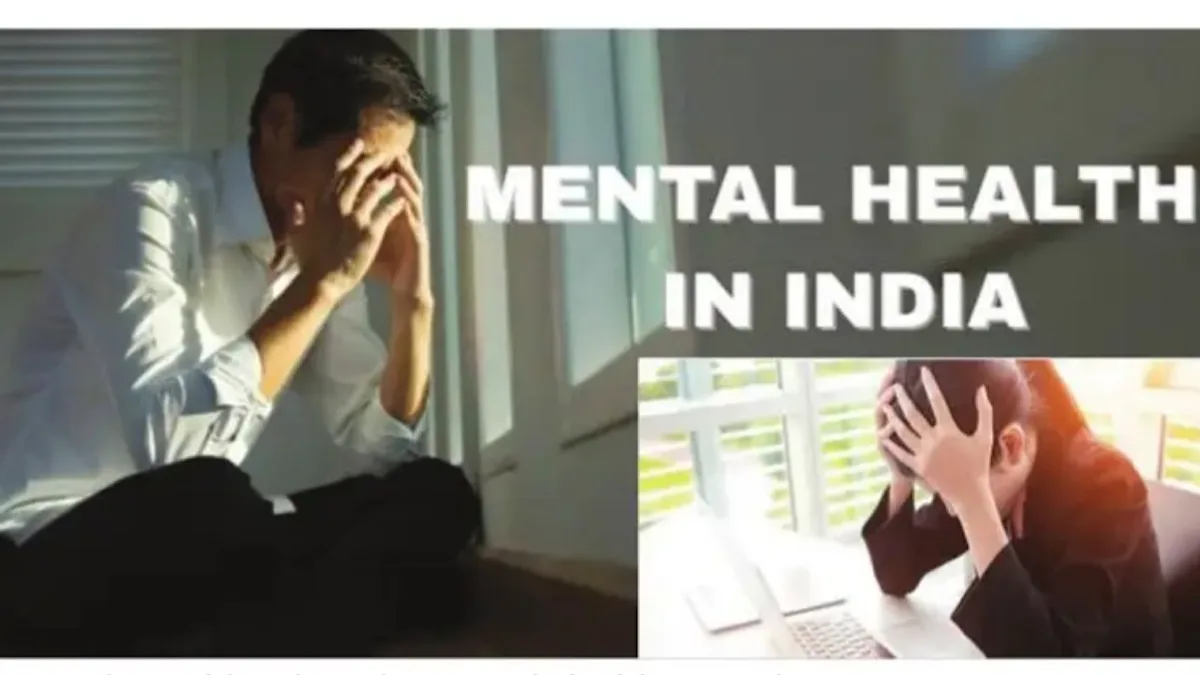
For decades, mental health in India remained trapped in silence ~ confined to overburdened psychiatric hospitals, misunderstood by the public, and overshadowed by deep-rooted stigma. But across the country a quiet revolution is underway. Community-based mental health movements are reshaping how India understands, treats, and supports psychological well-being by bringing care closer to where people live, work, and endure their daily struggles. India faces an undeniable mental health crisis. According to national estimates, nearly 14 per cent of the population requires active mental health interventions, yet the country has only about one psychiatrist per 100,000 people.
The gap between urban and rural access is even wider: while major cities have private clinics, counselling centres, and awareness campaigns, nearly 65 per cent of India’s population lives in rural regions with little or no mental health infrastructure. In such a scenario, the community becomes not simply a support network, it becomes the first line of response. Community-based mental health models acknowledge this reality and attempt to bridge the treatment gap through decentralized, culturally sensitive, and locally owned solutions. One reason why community matters is that mental health cannot thrive in isolation. It is deeply shaped by social relationships, local norms, economic pressures, and access to resources. Community-based initiatives recognize that healing is not only medical but also emotional, social, and collective.
Advertisement
They work on the three pillars of accessibility, where services meet people where they are ~ homes, schools, panchayat halls, workplaces; affordability, with most services being free or low-cost, reducing dependence on expensive private care; and acceptability, where interventions are rooted in cultural understanding, reducing stigma and resistance. By placing the community at the heart of care, these models make mental health visible, normalized, and embedded in daily life. A defining feature of India’s community mental health movement is the mobilization of local volunteers: ASHA workers, Anganwadi workers, schoolteachers, youth leaders, self-help groups, and even panchayat members. With basic training in psychological first aid, early detection, and supportive communication, these volunteers become the essential “first responders” in villages. Their advantage is profound: they are trusted. People who may never visit a psychiatrist are far more willing to confide in a neighbour, teacher, or community worker. Early identification of symptoms ~ whether depression, anxiety, substance use, or trauma ~ becomes more organic and less intimidating.
Also, western biomedical treatment in this area often struggles to address India’s diversity of beliefs surrounding mental distress. Many communities interpret mental illness through spiritual, familial, or social lenses rather than purely medical ones. In this intriguing context, community-based approaches bridge this gap by engaging local healers, elders and community influencers, religious and spiritual leaders and traditional systems of support. Rather than dismissing cultural narratives, these models integrate them with scientific care, ensuring that treatment feels familiar, dignified, and non-threatening. In many places, trained community workers now accompany families to mental health camps or help them navigate district hospitals ~ transforming care-seeking from an isolating experience into a supported journey.
One of the greatest barriers to mental health treatment is silence, shame and fear of judgment. Community-based movements challenge this by creating public spaces for dialogue. From village street plays on depression to school workshops on suicide prevention, from women’s groups sharing personal experiences to mobile helplines – conversations are becoming louder and more inclusive. These dialogues change perceptions: mental illness is seen not as a moral failure or a family disgrace, but as a health condition that can be understood, managed, and treated. Over time, communities shift from secrecy to solidarity.
It is a common experience that women form the backbone of India’s caregiving ecosystem, and the community mental health movement is no exception. Women’s self-help groups have emerged as safe spaces where emotional labour is acknowledged, stress is shared, and collective solutions are crafted. These groups often detect domestic violence, postpartum depression, and emotional distress long before formal systems do. In doing so, they redefine resilience ~ not as silent endurance, but as community-supported strength. A significant number of people requiring mental health intervention are young men and women. India’s young population faces unprecedented stress ~ academic competition, unemployment fears, digital overload, and family pressure.
Community-based initiatives recognize schools as crucial entry points. Mental health clubs, peer counsellor networks, and teacher sensitization programmes have begun replacing old punitive models with supportive environments. This not only protects children at risk but helps build emotionally intelligent generations who carry awareness into adulthood. Significantly, rural India’s digital transformation has offered new opportunities for mental health outreach. Tele – counselling, smartphone-based screening tools, AI-powered chat support, and virtual support groups now link remote communities to trained professionals. Importantly, the community remains the grounding force ~ technology simply expands the reach of human support.
The National Mental Health Programme and the District Mental Health Programme (DMHP) have created an important policy backbone, but community engagement gives these initiatives life. NGOs, academic institutions, and state governments are increasingly collaborating to scale community models – from Kerala’s pioneering neighbourhood mental health groups to Maharashtra’s village mental health champions. The growing public will to talk about mental health ~ driven by media coverage, celebrity advocacy, and lived experiences ~ as created fertile ground for community movements to thrive.
India’s future mental health system cannot depend solely on psychiatrists, psychologists, or urban hospitals. The real transformation will emerge from villages where neighbours notice the silent suffering of a senior citizen, schools, where children learn empathy before equations, and workplaces where stress is addressed, not hidden. Another crucial force-multiplier would be school going children, if their curriculum is reshaped with information on the contours of mental health, symptoms of stress and mental illness, knowledge of first responders and the value of reaching help early.
School children, armed with the basics of mental health knowledge can form the backbone of future community-based movements on mental health. Community-based mental health movements offer India a model that is humane, sustainable, culturally rooted, and scalable. They shift the narrative from crisis to care, from fear to understanding, from stigma to solidarity. In the end, the essence of the community mental health movement is simple: no one should struggle alone. By transforming ordinary people into allies in healing, India is building a mental health ecosystem that is not only larger than the formal health system, but more deeply human.
(The writer is Assistant Professor, Pritilata Waddedar Mahavidyalay a, Nadia)