Chabahar port is situated chistan province. It is located on the Gulf of Oman, outside the Strait of Hormuz. India and Iran signed an agreement for operating the Chabahar port in Iran for a10- year period. The contract was signed between India’s India Ports Global Ltd. through its subsidiary India Ports Global Chabahar Free Zone (IPGCFZ) and the Port and Maritime Organisation (PMO) of Iran. India has been given the contract to operate the Shahid Beheshti terminal. Shahid Beheshti terminal is one of the two main terminals of the port. It stands at a strategic location for regional trade. India has been granted the operational rights, including container handling equipment and terminal logistics of Shahid Beheshti Terminal at Chabahar port.
India has committed to 85millionUSD for berth improvements and a 250 million USD credit line through Exim Bank for the development of the port. The terminal has five berths for operation, giving rise to significant economic trade. This port focuses on India’s economic and strategic ambition and vision for Central Asia. The port connects India to Iran and Central Asia while circumventing Pakistan’s Gwadarport and counters China’s field of influence.India is a proactive member of the INSTC (International North-South Transport Corridor) with 12 other countries. INSTC is a 7,200 km long multi-mode network dedicated freight corridor that connects Central Asia, Russia, India and Europe.
Advertisement
The Taliban regime in Afghanistan has shown interest in joining this trade corridor.The Taliban’s Foreign Ministry has “welcomed” the integration of Chabahar Port into the INSTC. Chabahar Port’s inclusion in the INSTC was part of India’s bid, which was supported by five Central Asian nations. India reiterated the need and importance of including Chabahar into INSTC to improve and strengthen connectivity between Eurasia and Central Asia.
Russia supported and facilitated India’s interest in the Chahbahar port through the INSTC group.It helps India to access Central Asia and Russia’s re sour cerich region, which will help in future trade deals. The support of the INSTC members emphathe impact of the Chabahar port and heightens the strategic value of these projects for Ineconomic relations. Amidst the ongoing hostilities between Iran and Israel, Iran had threatened to close down the Strait of Hormuz. There waswidespread supposition that Iran might close the world’s busiest oil shipping channel. Chabahar lies outside the Strait of Hormuz, but its commercial viability is tied to the broader Persian Gulf maritime ecosystem. The closure of the strait would impact India’s trade with its major trading partners in the GCC: Qatar, UAE and Saudi Arabia.
The disruption would also lead to a decline in the shipping volume in the region. If the trade flows of the Persian Gulf are curtailed, it would also lead to a reduction of shipments through Chabahar. The closure could lead to inflation of the cost of goods worldwide, and it might hit many major world economies, including India. India is deeply dependent on its energy imports, which accountfor almost 80 per cent of its crude oil imports.
“Any closure could send oil prices soaring, sharply inflating India’s import bill, worsening inflation, and putting pressure on the country’s fiscal position,” said Global Trade Re search Initiative (GTRI) founder Ajay Srivastava. Nearly two-thirds of India’s crude oil and half the country’s liquefied natural gas (LNG) imports transit through the Strait of Hormuz. “Shipping insurance premiums and freight costs are also expected to surge, squeezing not only India’s energy markets but also broader trade between Asia and Europe,” said Srivastava.
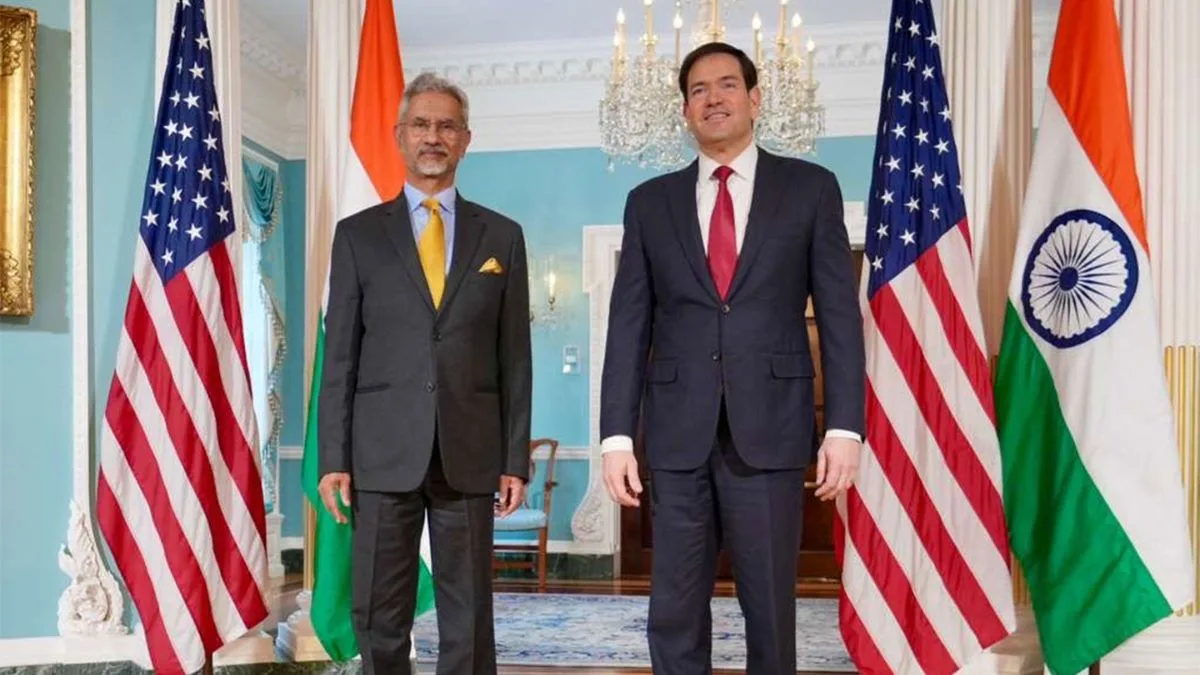
As observed by experts, this might lead to a scenario where New Delhi’s diplomatic focus will shift to the impending energy crisis and pause the development of Chabahar port and its projects, such as the Chabahar- Zahedan rail link. This might also affect the bilateral relationship between India and Iran, giving rise to India’s resistance to dealing with Iran. India will have to exercise deep caution as the US might levy sanctions again on Iran. The US had already warned India of potential sanctions if it signed a long-term contract for the development of Chabahar port. In 2018, the US softened its stance on India’s involvementin the port, but in 2024, it imposed sanctions on three Indian companies for their Iran connections. This could be seen as a shift in its Indo-Iranian policy. In response to the risk of potential US sanctions, Indian External Affairs Minister S. Jaishankar emphasised that the project would benefit the entire region and that people should not take a “narrow view” of it. He also mentioned how the US had already acknowledged Chabahar’s greater significance.At this point in time, Iran will seek to use Chabahar port to negate its isolation in the region and open trade.
This will test India’s long-standing neutral stance on whether to deepen strategic engagement with Iran via Chabahar as a hedge against regional instability or to adopt a more neutral posture to safeguard ties with the U.S. and Arab Gulf states. It would require India to balance between political global standoffs and national energy interests. Another important aspect of the Chabahar port and India is its role in humanitarian assistance in the region. India, through Chabahar, has provided assistance in Afghanistan and the Gulf during Covid-19. Iran is one of the largest rice importers from India, importing around 18-20 per cent of India’s total basmati rice exports. Since the beginning of the war, around 100,000 tonnes of basmati rice destined for Iran have been stranded at Kandla and Mundra Ports in Gujarat, with neither vessels nor insurance available for Iran-bound cargo due to the Middle East conflict,as explained by the All India Rice Exporters Association president Satish Goyal. In 2021, India provided 40,000 litres of pesticide to Iran through the port to combat locust attacks.The humanitarian value of this port exceeds its commercial viability.
India finds itself at a critical juncture with the spiralling of the Iran-Israel conflict.Chabahar port for India is not just an economic corridor but a geopolitical lifeline. It embodies India’s aspirations for regional influence and connectivity, but it lies withinone of the world’s most volatile regions. For India, this port is now about diplomacy, autonomy, ambition and resilience. India should evaluate and institutionalise its strategic engagement and investment with Iran and match China’s investment in the Gwadar Port of Pakistan to become a serious regional player. There is a need to rebrand Chabahar not only as a link between India and Iran but other INSTC countries, which will help India navigate crisesand trade with different countries during war times. This would insulate India from geopolitical imbalances present in the Middle East.
At the same time, it needs to utilise other corridors in the Persian Gulf, Arabian Sea to reduce dependence on a single chokepoint.India needs to invested in the operations of Chabahar port, expanding its economic and regional influence over the Persian Gulf, Central Asia and Afghanistan.
(The writer is a research scholar of peace studies and conflict resolution)