Xi Jinping set for North Korea visit next week, first since 2019 amid geopolitical strains
Beijing's latest diplomatic outreach to Pyongyang comes as North Korea balances ties with both China and Russia while expanding its nuclear capabilities.
The World Health Organization has declared the crisis a global health emergency, and the first death outside China was confirmed in the Philippines last Sunday.




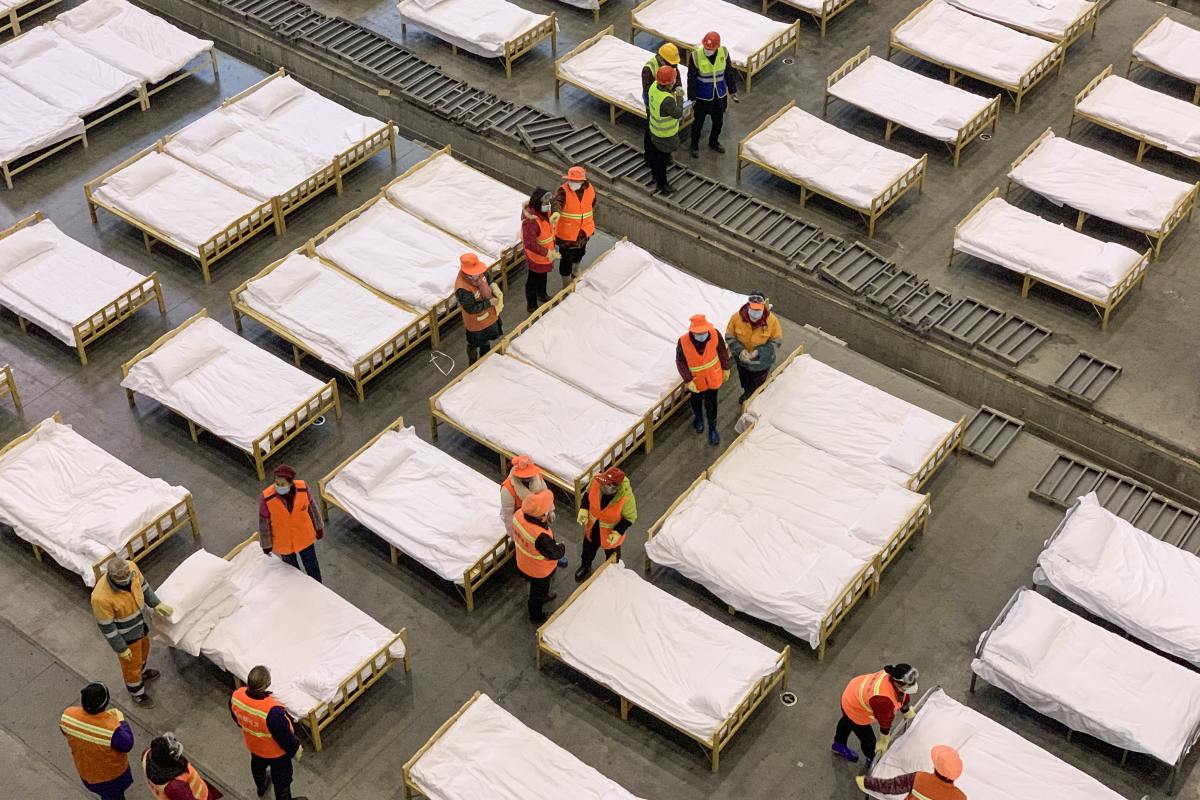
Workers set up beds at an exhibition centre that was converted into a hospital in Wuhan in China's central Hubei province on February 4, 2020. - The Wuhan government said it plans to convert three existing venues, including a gymnasium and an exhibition centre, into hospitals to take in patients with mild symptoms of the new coronavirus that has so far claimed more than 400 lives. (Photo by STR / AFP) / China OUT)
Relatively unnoticed in the rest of the world has been the astounding achievement of China in the midst of the awesome spread of coronavirus, with the casualties exceeding 425 till Wednesday afternoon and infecting an estimated 20,000. Indeed, the national health emergency has killed more people in China than the Sars outbreak in 2003. The World Health Organization has declared the crisis a global health emergency, and the first death outside China was confirmed in the Philippines last Sunday.
The construction in less than two weeks of the 1000-bed hospital for the coronavirus patients in Wuhan, from where it all began, has happened in parallel to the viral outbreak. There are two facets to the signal achievement, almost incredible. First, the authorities took just about eight days to put the facility in place, in itself a testament to the enormity of the catastrophe that has now spread further afield ~ to Hong Kong, embattled as it is, Singapore and Kerala for example.
Advertisement
Admittedly, it is a prefabricated structure; but it is the alacrity and the time-span that ought to be greeted with worldwide appreciation. It is the promptitude of the official response that must resonate across the echo chambers of the world health authorities. Yet another facet must be the inherent lesson for the subcontinent ~ a lockdown need not ipso facto reduce an administration to a state of suspended animation.
Advertisement
True, the administration of the President-for-life, Xi Jinping, was initially reluctant to part with data on the afflictions and symptoms. Secrecy is the hallmark of the party’s ideology. There is little doubt though that the government in Beijing strove towards a tangible initiative, one that would be concordant with the Benthamite doctrine of the “greatest good of the greatest number”.
The 1,000-bed facility was built to relieve hospitals swamped with patients in Wuhan, the city of 11 million people in Hubei province. Leishenshan (“Thunder God Mountain”), another hospital on an adjacent site, was set to start admitting patients on Thursday, with 1,600 beds. Between them, the two hospitals will provide 2600 beds for emergency care ~ an achievement many nations would be proud of, but few able to claim.
Fire and thunder are traditionally associated in China with protection against illnesses. The two hospitals are an example of the decisive response to the public health crisis after authorities in Hubei encountered public anger for perceived incompetence, including delays in announcing the public health emergency. When a lockdown and blanket travel ban were finally introduced, the affliction had threatened more than 50 million people in Wuhan and nearby cities. Indubitably, work has done the talking in the People’s Republic of China. The country cries out for assistance from around the world.
Advertisement