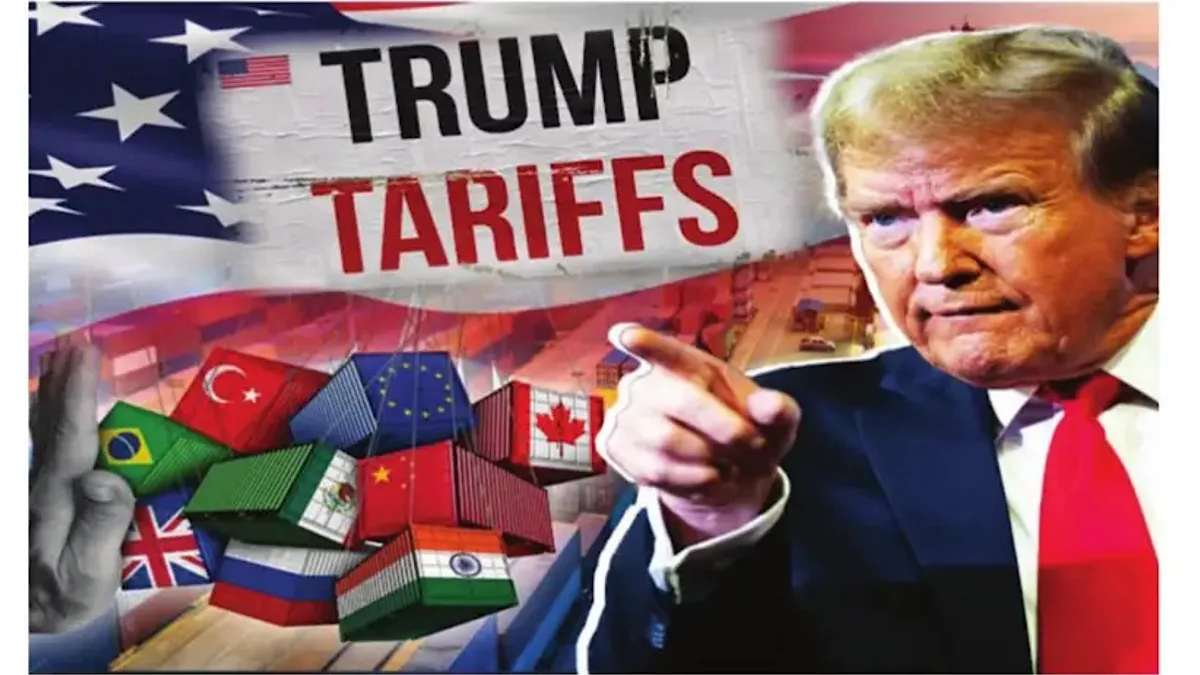
Let’s turn to the international stage. An independent-minded foreign government, however determined an adversary or stalwart an ally, invites tariffs. The ally that dares to criticize a policy, to vote against a resolution, or to pursue an independent foreign policy finds itself the target of economic sanctions. The adversary that challenges American dominance, that seeks to expand its own sphere of influence, finds itself subject to a volley of economic attacks. The message is a simple one, delivered with the blunt force of economic power: align with me, or face the consequences.
This is not diplomacy; it is a form of economic coercion, a tool of punishment wielded against nations. The Tax Foundation has documented the use of tariffs against both allies and adversaries, with rates sometimes reaching as high as 50 per cent on certain countries like India for buying Russian oil. Beyond the specific punishments, there is the ever-present threat of a hail of insults, a lesson in public humiliation to potential transgressors. The tweets, the rally speeches, the press conferences ~ they all serve as a public record of who has crossed Trump and what they have received in return.
Advertisement
The names are not forgotten, the slights are not forgiven, and the public shaming is a warning to others. This is a form of political theatre designed to reinforce a single, unyielding truth: loyalty is the only currency that matters, and disloyalty will be met with public scorn and private ruin. In the end, this is not a system of political debate or even political rivalry. It is a system of retribution, a machine designed to punish dissent and reward loyalty. It is a system that erodes the norms of democracy, that chills free speech, that undermines the independence of our institutions, and that transforms politics from a contest of ideas into a personal vendetta.
The Trumpian reckoning is not just a style of politics; it is a fundamental reordering of our political life, and its full implications are still unfolding before our eyes. The question is not whether this pattern exists, but rather, what the long-term consequences will be for a democracy that has been taught a very harsh lesson in the politics of punishment. All of this feels unprecedented, the sheer scope and brazenness of it. But is it? We have to ask the historical question. Is this an exception, or is it a recurring theme in American history? Let’s go back a couple of centuries. You can trace this back to the very beginnings of the republic.
Take John Adams and the Sedition Act of 1798. That law essentially made it a crime to criticize the president and his Federalist Party. Newspaper editors were put on trial, and it was a clear attempt to use the power of the government to silence political dissent. The law, as some historians note, was specifically gerrymandered to allow criticism of his rival, Thomas Jefferson, but not of Adams himself. And then you have Andrew Jackson, who weaponised the “spoils system.”
He removed more than 919 officials ~ nearly 10 per cent of all government postings ~ and replaced them with his loyalists. His famous line, “To the victor belong the spoils of the enemy,” wasn’t just a political slogan; it was a blueprint for using government jobs as a tool of political reward and punishment. Exactly. Fast-forward to the 20th century. Franklin D. Roosevelt, after a landslide victory, proposed his infamous “court-packing plan.” The Supreme Court had been striking down his New Deal legislation, so he proposed a bill to expand the Court, adding a new justice for everyone over 70. It was a thinly veiled attempt to dilute the power of his conservative opponents on the bench. He lost the legislative battle, but the threat was enough to make the Court change its tune. And, of course, no discussion of this topic would be complete without Richard Nixon.
His “enemies list” is legendary. He compiled a list of over 200 political adversaries ~ journalists, celebrities, labour leaders ~ with the stated purpose of using “the available Federal machinery to screw [our] political enemies.” The IRS was a key tool in this project, targeting critics with audits and harassment. It’s a chillingly direct historical parallel. The difference, perhaps, is not the idea of using power to punish rivals, but the scale and the public nature of it today. In the past, these actions were often cloaked in legal or administrative justifications.
Today, retribution is a central promise, a point of pride, even. The attacks on universities, the legal suits against the media, the raids on political rivals ~ all of this is not an exception to American political life. It is, in fact, a recurring, dark vein in American history. The pattern is clear: a powerful leader, a personal vendetta, and the use of the state to settle scores. The names change, the targets change, but the playbook is remarkably consistent.
So, while the current moment feels unique, the historical record tells a different story. The danger isn’t that we’ve never seen this before. The danger is that we have seen it before, and we have often failed to fully grapple with its implications until it was almost too late. The lesson of history is that this kind of politics is not an aberration; it is a temptation that every powerful leader faces. And what we’re seeing now is a stark, public reminder of just how easily that temptation can be acted upon.
(The writer is the author of India In A New Key: Nehru To Modi. He hosts the podcast, America Unbound)