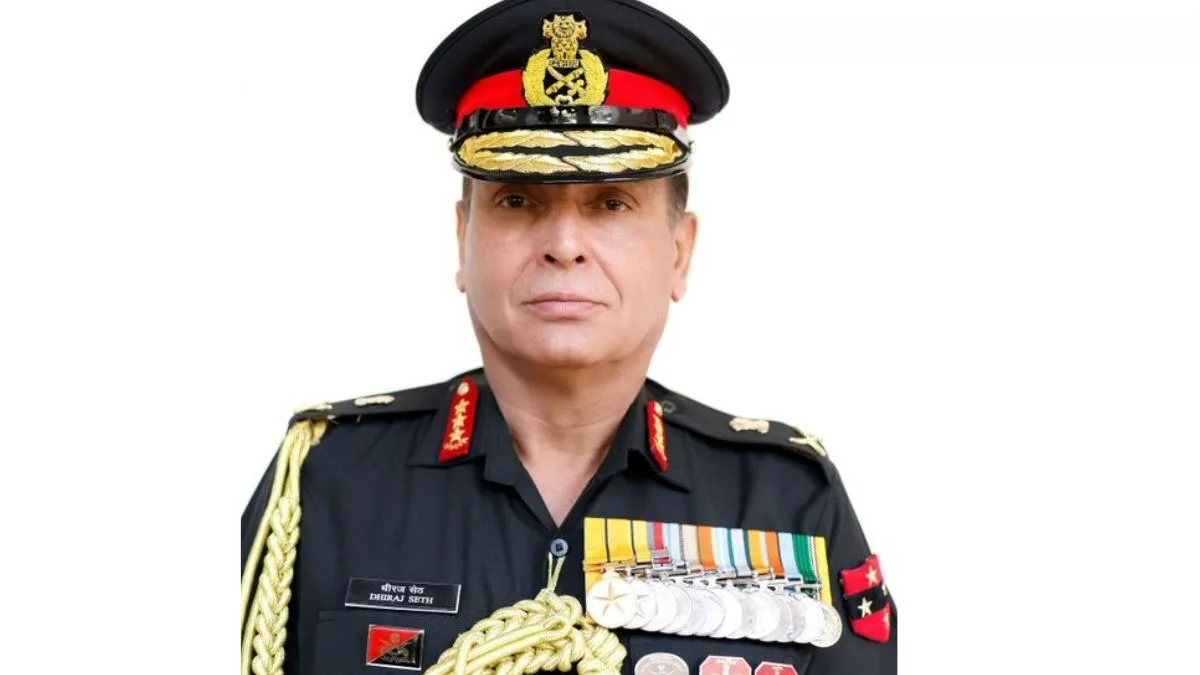
The deputy chief of the Indian Army, Lt Gen Rahul R Singh, has said what had been known all along but not presented in the manner it should have. He stated, while addressing an event organized by the Federation of Indian Chambers of Commerce and Industry, that India was battling two, if not three, adversaries during Operation Sindoor. He added that Pakistan was the face with China and Turkey providing vital support from the background.
The CDS did try to do damage control by saying, ‘How much of State support (from China) is very difficult to define,’ however, the facts are well known. China historically hesitates to enter into a conflict unless it is 100 per cent certain of victory. It is aware that a long-drawn conflict as in Ukraine, tactical defeat or even a stalemate would break the carefully built myth of the ‘invincible’ PLA and threaten the authority of its ruling dispensation. Their national public fears body bags. Hence, Beijing continues to threaten Taiwan, unwilling to risk an operation, preferring hybrid warfare. Powerful nations like China exploit proxies to push their agenda. Indian capability and infrastructure development was aimed at countering the Chinese.
Advertisement
This had to change as India was narrowing the tactical and infrastructure gap. The best manner was to make India look westwards, splitting resources and funds. China also needed its military products to be tested in controlled military operations. What better guinea pig than Pakistan? China and Pakistan are aware that any terrorist incident with high casualties in Kashmir would invite a military backlash. This is essential for the survival of the Modi government, which had been broadcasting a policy of ‘Ghar mein ghus kar maarenge.’
For Pakistan, dependent on China for financial survival and military hardware, the options are few. It is dutybound to do Beijing’s bidding. Add the fact that its army is losing control over the nation alongside increased casualties to freedom movements in its western provinces of Baluchistan and Khyber Pakhtunkhwa. What better than a threat from India to bring unity within? Since Operation Sindoor, Imran Khan is missing from media coverage, losing fabricated cases, while Asim Munir tightens his grip on the country. Their perception management team played up victory in Operation Sindoor with emphasis on Indian losses, hiding their own.
Turkey, whose drones were successfully employed by Azerbaijan against Armenia, were hopeful of a similar performance against India. Failure of their famed Bayraktar TB2 drones is an immense setback to their export plans. With India likely to offer Long-Range Land Attack Cruise Missiles to its major rival, Greece, concerns within Turkey are rising. They consider it as Indian revenge for their support to Pakistan. China provided Pakistan with all back-up support, technical, intelligence, as also real-time inputs from its satellites. This did impact Indian plans, but failure of their military hardware, including aircraft, missiles and air defence radars was a major setback.
More importantly, multiple nations have obtained technical data of failed Chinese missiles from India. Strategic losses to Pakistan, which compelled them to seek a ceasefire, would take time to recoup. Even if China provides them at a discount, it will still be costly for a cashstrapped nation. It would need to rethink its future plans on pushing terrorism in Kashmir, at least for now. It is now clear that peace with China is just an illusion. Talks are only a façade and Beijing will remain our perpetual adversary.
China’s anti-India policy is also evident on the economic field by its restrictions on exports of critical minerals, finished products and withdrawing its engineers from global manufacturing organisations. India can never let its guard down and must consider all agreements reached with China with a pinch of salt. Beijing is also expanding its reach in the neighbourhood. Another factor is that Pakistan, which was considered a lesser evil due to its depleting economy and being globally sidelined, will remain an irritant, funded, armed and exploited by China. It has gained confidence due to Chinese and Turkish support and would at some time in the future, after recouping its losses, consider another major terrorist strike. A combination of Pakistan and China, alongside a changing Bangladesh is a security concern for India.
This means India must invest in its military upgradation and capability development, not just against the northern adversary but also the western one. For this, apart from increased budgetary allocation, it needs to push its domestic industry to deliver products as per schedule. The current shortfalls in airpower cannot continue for ages. India has rightly ordered an audit of Chinese parts in domestic military products and must pursue the same with vigour. Investment in R and D must be enhanced. Air defence has proved to be an essential pre-requisite in national defence.
It needs to be upgraded with emerging threats. Simultaneously, New Delhi must change its policies towards countering terrorist strikes immediately, rather than giving the adversary two weeks to prepare, deploy and organize its defences as it did with Operation Sindoor. This means that theatre commands, which would be responsible for responding militarily, must be raised and tasked suitably. The Western Theatre Command should have multiple offensive options ready and rehearsed to be implemented with minimum time delay, post political-military approval. There is also a need to enhance civil-military fusion at state levels to counter any actions planned by Pakistan on similar lines as Operation Spider Web launched by Ukraine against Russia, targeting strategic assets deep within the country, alongside operations on the borders.
There are Pakistani sleeper cells within India which could be activated alongside military operations. The armed forces may not be available to assist the civil administration when the border scenario is tense. States must possess resources and intelligence to counter such actions. India needs to revisit its neighbourhood first policy. It cannot let its neighbours shift gears towards China. With Bangladesh slowly drifting away, others cannot be permitted to follow suit. China, lacking the will to act militarily, will exploit Indian neighbours to enhance tensions within the country.
India is amongst the few nations facing threats from multiple directions. National security needs to be given priority. The China-Pak axis is a reality and will be an increasing threat in the future. Only military power alongside national and political will keep adversaries at bay. Enhancing defence capabilities is now more essential than ever.
(The writer is a retired Major-General of the Indian Army.)