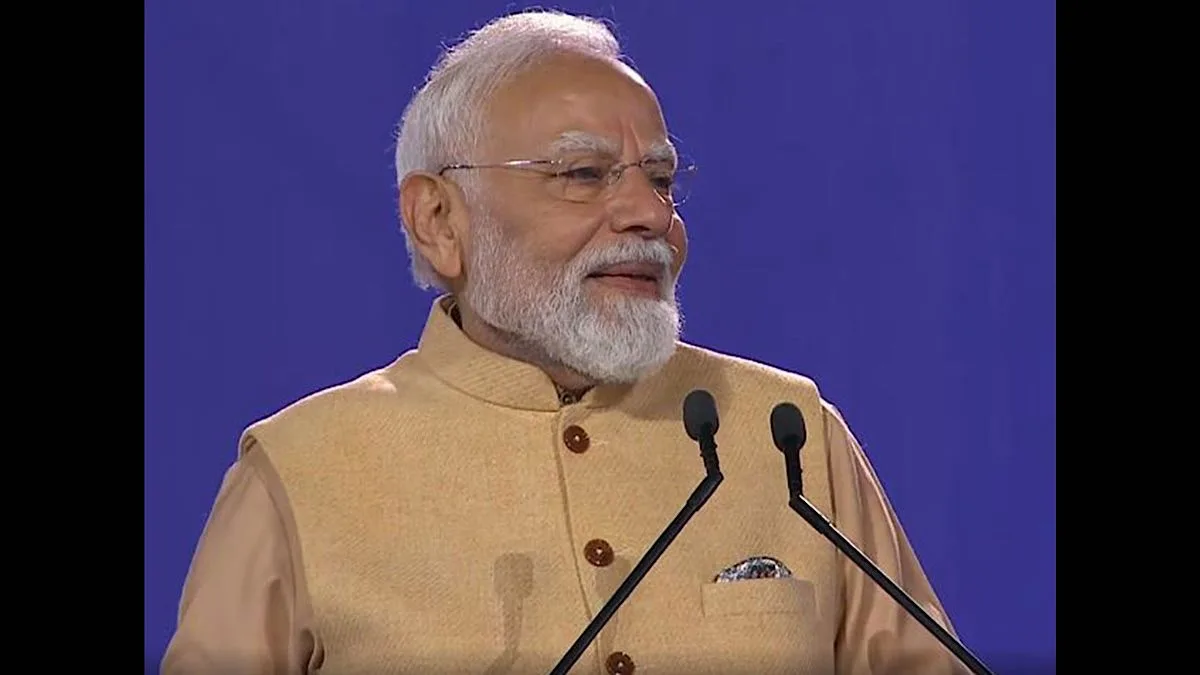
When Prime Minister Narendra Modi addressed Israel’s Knesset last week, one sentence stood out: “No cause can justify the murder of civilians. Nothing can justify terrorism.” It was a line crafted to resonate in a chamber still marked by the trauma of the October 7 attacks. It was also a sentence constructed with careful breadth. In wartime diplomacy, language does double duty. It must reassure the host without foreclosing future flexibility. Mr Modi’s formulation did exactly that.
By condemning the killing of civilians in absolute terms, he aligned India firmly against terrorism. By keeping the phrasing universal, he avoided narrowing the moral frame to one episode alone. The setting mattered. Israel has been engaged in a prolonged and devastating conflict in Gaza and has now opened another front in Iran. Civilian suffering in Gaza has been immense, and international debate over proportionality, humanitarian law, and accountability is intensifying. In that environment, every word uttered by a visiting leader is parsed for emphasis, omission, and implication.
Advertisement
India’s approach has been to condemn the October 7 attacks unequivocally while reiterating support for a two-state solution and humanitarian relief. That balancing act reflects both history and interest. India recognised Palestine decades ago, maintains deep ties across West Asia, and depends on the region for energy, trade, and diaspora security. At the same time, its strategic partnership with Israel – particularly in defence and technology – is no longer discreet or peripheral. The speech therefore illustrated something larger than a single sentence. It showed how India now speaks in morally expansive language while operating in politically constrained space.
The phrase “no cause can justify” is, on its face, universal. But diplomacy often relies on such universality precisely because it allows different audiences to hear different emphases. That caution reflects a broader shift in Indian diplomacy. As New Delhi’s economic and strategic profile expands, its statements are no longer read as routine expressions but as signals of intent. Precision in language has become a tool of statecraft, not merely a matter of style. For supporters of Israel, the line reinforced solidarity against terrorism. For those concerned about Gaza’s civilians, it preserved space to argue that the same principle must apply more broadly. That elasticity is not accidental.
It is the grammar of strategic autonomy in a polarised world. The question for India is not whether such phrasing is defensible – it is. The question is whether, as India’s global weight grows, moral language will remain general or become more specific when circumstances demand clarity. A country that aspires to shape norms, not just navigate them, will increasingly find that its words are measured not only for balance but for direction. Mr Modi’s address did not redraw India’s West Asia policy. But it did underline the tight choreography of modern diplomacy: speak firmly, avoid entrapment, leave room to manoeuvre. In a region where allegiances are scrutinised and silences amplified, that choreography may be unavoidable. Whether it will always be sufficient is another matter.