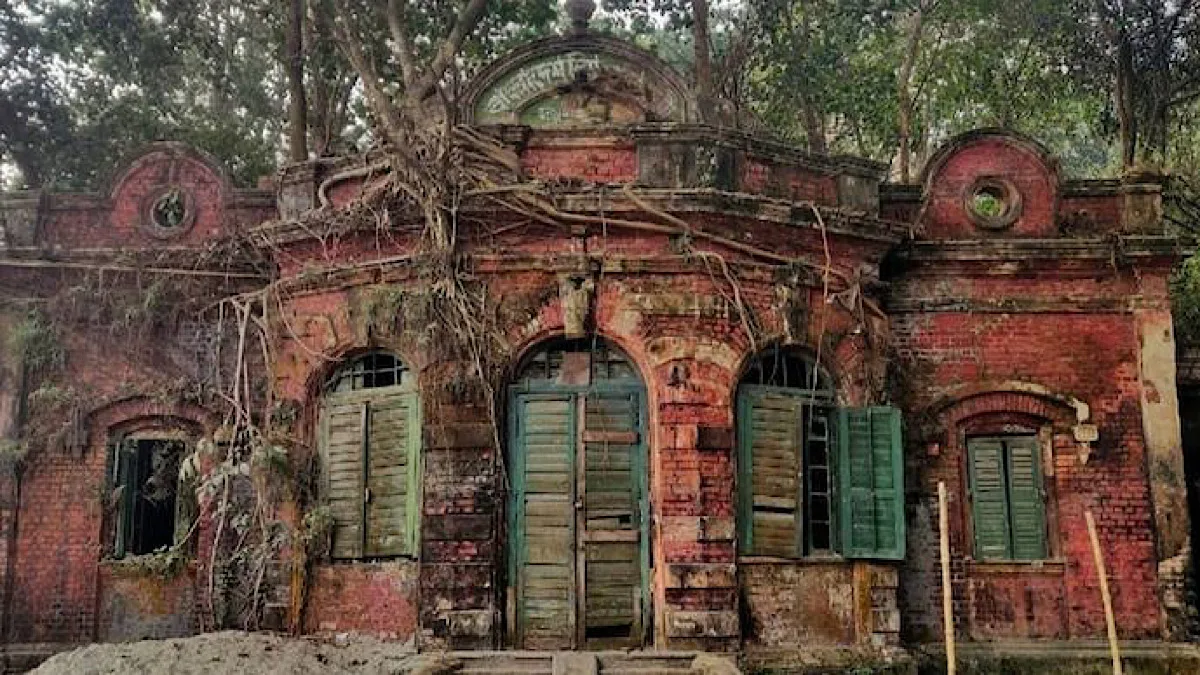
The threatened demolition of Satyajit Ray’s ancestral home in Mymensingh, Bangladesh, is not merely a matter of bricks and mortar. It is a deeper rupture in the fragile fabric of a shared cultural and historical legacy that India and Bangladesh have painstakingly preserved, often in the face of political and logistical neglect. The structure, built by Ray’s grandfather Upendrakishore Ray Chowdhury – himself a towering figure of Bengal’s literary and intellectual renaissance ~ is more than just the birthplace of a legendary lineage. It is a silent witness to the rise of modern Bengali thought, art, and identity. This is not the first time South Asia’s cultural history has stood at the edge of irreparable loss. But what makes this instance particularly poignant is the symbolism it carries.
At a time when geopolitical relations between India and Bangladesh are relatively stable, cultural diplomacy could and should serve as a potent tool to strengthen bonds. Unfortunately, acts like these ~ dismissive of shared memory and historical depth ~ end up doing the opposite. The Indian government’s call to reconsider the demolition and its offer to assist in preserving the structure as a literary museum is not just timely but necessary. It is a call to recognise that certain spa – ces belong not just to the land on which they stand, but to a wider community of people who see their own stories, struggles, and aspirations reflected in them. India and Bangladesh may be sovereign nations, but their cultural identities are deeply intertwined.
Advertisement
To erase such a monument is to chip away at a heritage that neither partition nor time has managed to sever. Preserving such spaces is not about nostalgia ~ it is about continuity. Cultural heritage sites serve as anchors in turbulent times, offering societies a sense of rootedness and perspective. Their loss diminishes not only memory but also the potential for reconciliation and unity. The justifications offered by authorities ~ safety concerns, structural instability, and lack of resources ~ are not without merit. Yet the neglect that led to the building’s decay is itself a political choice. For years, calls from local poets, historians, and residents went unanswered. The building was left to rot, its cultural value reduced to bureaucratic inconvenience.
And now, in the guise of civic necessity, a vital thread of Bengali history may be severed. Recent acts of vandalism at other heritage sites in Bangladesh underscore a troubling trend: the slow erasure of the region’s pluralist roots. Whether by apathy or aggression, these losses threaten to shrink the space that once celebrated diversity, dialogue, and dissent. What is needed is not just preservation, but participation. If India is willing to help, let Bangladesh show the political will to accept that help. Let this house be saved ~ not only for the legacy of the Ray family, but for the generations who still find meaning in their story.