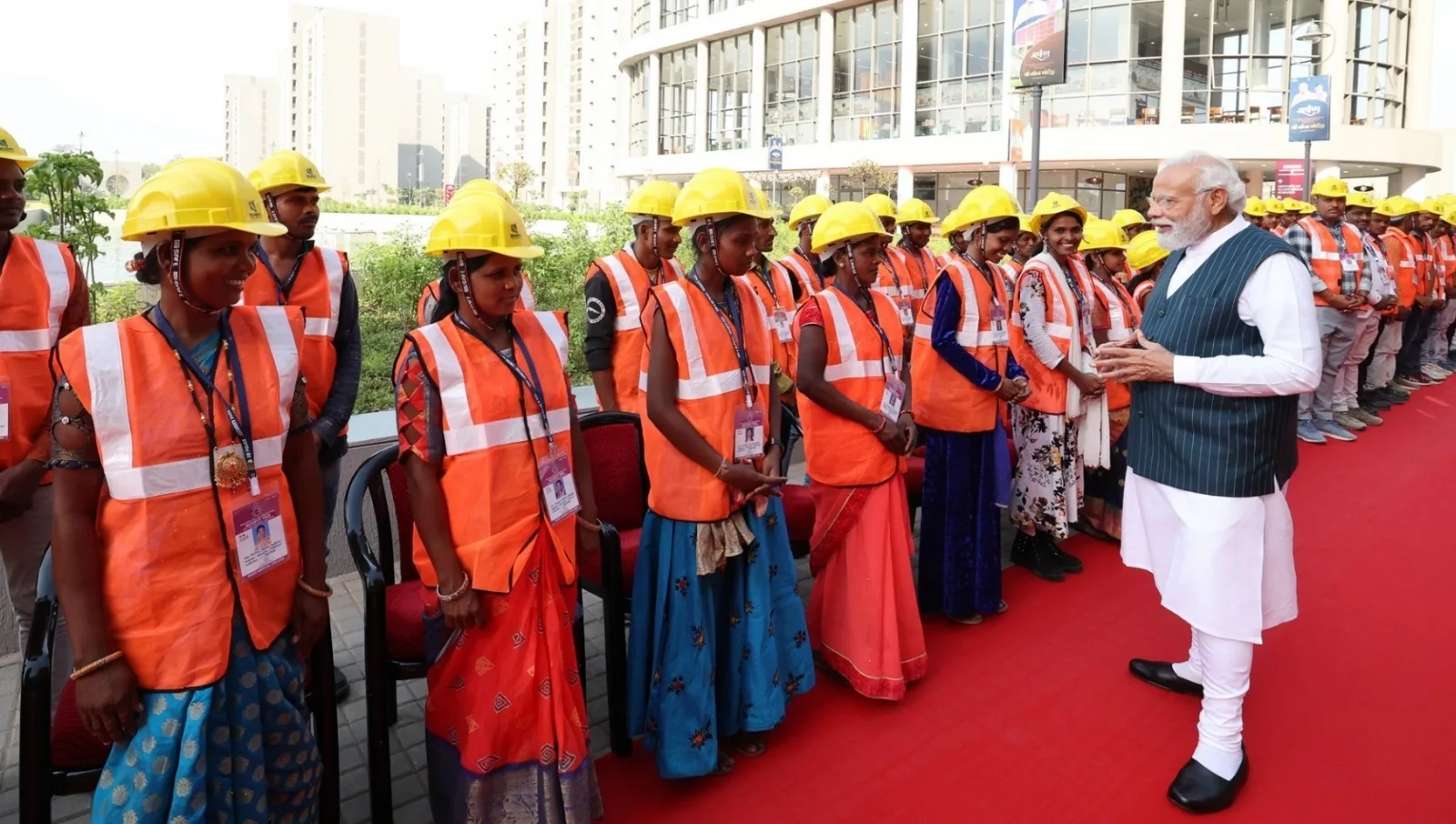
India stands at the dawn of a historic era, a moment of national confidence as the country implements the Labour Codes, widely regarded as among the most visionary and transformative reforms since independence.
Their implementation marks the shedding of colonial-era labour laws and the adoption of a modern legislative framework aligned with the aspirations of Atmanirbhar Bharat and the long-term trajectory of Viksit Bharat 2047.
Advertisement
These reforms uplift millions of workers and invigorate the Micro, Small and Medium Enterprise sector, where women and marginalised groups play an indispensable role. With nearly one fifth of MSMEs being woman-led, the Codes open new pathways for Nari Shakti, strengthening equality, productivity and social justice across the sector.
From protection to empowerment
The Labour Codes inaugurate a new era in which workers, particularly women, are empowered through dignity, fairness and widened access to essential protections. The Code on Wages and the Code on Social Security reinforce equal pay for equal work, ensure the universalisation of protection, and create an environment that supports and encourages women’s full participation.
The expansion of Employees State Insurance Corporation coverage strengthens health, maternity and income security, ensuring that women in both rural units and large MSME clusters benefit from comprehensive social protection.
The expanded definition of family, which now includes a woman’s parents-in-law, reflects an informed acknowledgement of caregiving responsibilities and enhances the social foundations that support women’s participation in the workforce. Collectively, these provisions embody a renewed social contract that places women at the centre of India’s evolving labour landscape.
Healthy and safe workplaces
The Occupational Safety, Health and Working Conditions Code establishes a modern standard for workplace welfare in India. The requirement for crèches, toilets, drinking water, canteens and rest areas ensures that MSME workplaces evolve into environments that are safe, respectful and conducive to productivity.
By defining standard working hours, introducing flexible arrangements such as work-from-home where suitable, and ensuring eligibility for paid leave after one hundred and eighty days, the Codes enhance work-life balance and align India’s labour environment with contemporary expectations of worker welfare.
Mandatory free annual health check-ups for employees aged forty years and above advance the focus on preventive health and long-term well-being. These developments reinforce India’s steady movement towards a future in which worker welfare and economic efficiency are mutually reinforcing.
Formalisation and financial autonomy of workforce
The Labour Codes celebrate formalisation as a central driver of Atmanirbhar Bharat. The requirement for appointment letters, timely wage payments, and clear statutory definitions of worker and employee strengthens transparency, consistency and accountability within the employment relationship. The formal extension of protection to commuting accidents marks a significant expansion of welfare coverage, reflecting the evolving realities of mobility among India’s workers.
These provisions collectively strengthen the formal labour market and provide millions of workers with documentation, security and financial autonomy, contributing directly to India’s broader goals of inclusive and sustainable economic development.
Skill, re-skilling and voice
The Worker Re-skilling Fund represents a forward-looking innovation that supports workers navigating transitions in a dynamic labour market. By enabling re-skilling and up-skilling, it prepares the workforce for emerging sectors such as renewable energy, advanced manufacturing, electronics and digital services.
A strengthened grievance redressal mechanism ensures workers have accessible channels through which their concerns may be addressed. This aligns with the ethos of broad-based participation and reflects a labour ecosystem grounded in dignity, accountability and opportunity.
Mobility and inclusive growth
The expanded definition of the interstate migrant worker modernises the legal understanding of labour mobility and fosters continuity of welfare entitlements.
The provision for portability of social security benefits, including Public Distribution System access and Building and Other Construction Workers Cess Fund entitlements, strengthens the protection available to workers who seek opportunities across different regions. These measures reflect India’s commitment to supporting labour mobility while ensuring that workers remain securely integrated into formal welfare architecture.
A global and national imperative
By universalising social protection, updating definitions and simplifying regulatory structures, the Labour Codes position India as a leader in modern labour governance. International institutions, including the International Labour Organization, the International Monetary Fund and the World Bank, have acknowledged the significance of these reforms.
Enhanced gender participation, supported by these Codes, contributes to unlocking substantial economic potential and reinforces India’s commitment to inclusive growth and global competitiveness.
Conclusion, a new national euphoria
The implementation of the Labour Codes signifies the arrival of a new phase in India’s development journey.
These reforms elevate the dignity of labour, strengthen MSME Shakti, empower women, support migrant workers, and consolidate a welfare-oriented labour architecture.
They exemplify the principles of Atmanirbhar Bharat, accelerate progress toward Viksit Bharat 2047, and contribute to a labour ecosystem defined by resilience, equity and opportunity.
As these reforms take root, they generate a positive and confident national environment, setting the stage for a future in which every worker contributes to and benefits from India’s economic ascent.