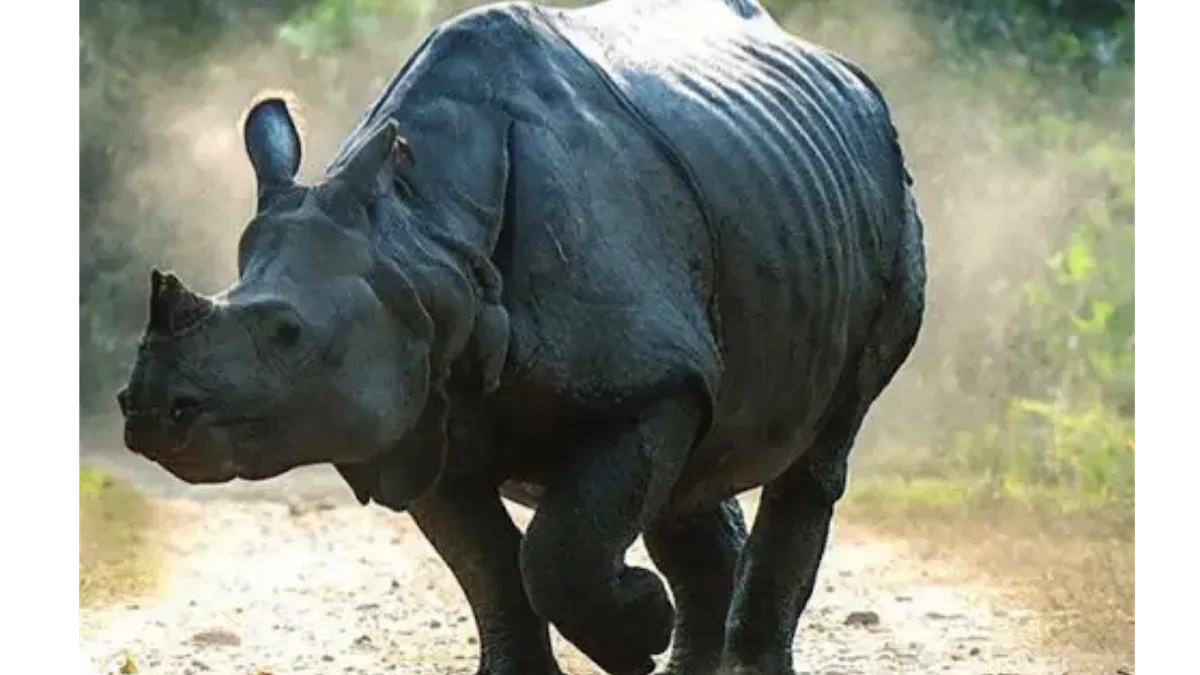
In conservation, success stories are rare enough that they often sound improbable. Yet in Assam, the recovery of the greater one-horned rhinoceros at Kaziranga National Park demonstrates that determined policy and relentless enforcement can rescue a species that once seemed destined for decline. A century ago, the rhinoceros that has become the emblem of Assam hovered near extinction. At the beginning of the twentieth century barely a dozen survived in the marshes along the Brahmaputra.
Today the population has climbed into the thousands across the state, with Kaziranga holding the world’s largest concentration of the species. The turnaround did not happen by accident. It required a deliberate shift in how wildlife protection was conceived and enforced. The modern phase of that shift began roughly a decade ago when rhino poaching surged sharply. Horns were fetching astronomical prices in international illegal markets, driven by demand in parts of East and Southeast Asia where myths about their medicinal value persist. Faced with the possibility that decades of conservation gains could unravel, the Assam government adopted a zero-tolerance strategy.
Advertisement
Forest guards were armed, intelligence networks strengthened, and patrols intensified across the park’s grasslands and wetlands. Technology was added to the traditional ranger’s toolkit. Drone surveillance, digital patrol tracking systems originally developed for tiger reserves, and a dense network of anti-poaching camps allowed authorities to monitor vulnerable zones far more closely than before. The message to organised poaching syndicates became unmistakable: Kaziranga was no longer easy terrain. Leadership also mattered. Officials in Assam’s forest department, including Indian Forest Service officers such as Sonali Ghosh, pushed for a conservation model that combined strict enforcement with public engagement.
Women forest guards ~ popularly called “Van Durgas” ~ were recruited and trained alongside male counterparts, reinforcing the sense that protecting the rhino was a collective mission rather than a specialised bureaucratic task. Political endorsement amplified the effort. Visits by Prime Minister Narendra Modi drew national attention to Kaziranga and reinforced the rhino’s status as a symbol of Assam’s natural heritage. The results are striking. Rhino poaching has fallen dramatically, and recent years have recorded no killings at all. For conservationists accustomed to grim statistics about endangered wildlife, that outcome is extraordinary. Yet success has created its own challenge.
As rhino numbers grow, Kaziranga’s landscape ~ bounded by the Brahmaputra and human settlements ~ faces the risk of ecological overcrowding. Conservation planners are increasingly discussing translocating animals to other protected areas such as Manas National Park to create new populations and reduce pressure on the park’s habitat. Kaziranga, therefore, offers more than a story of recovery. It provides a template for how political will, scientific management, and public support can converge to protect wildlife. The next task is to ensure that the success of that model does not become its limitation.