Time was when Tamil films had regular press shows, which were held a few days before the movies hit the theatres. But this has now been cancelled, as filmmakers found much to their chagrin that journalists flouted the cardinal rule of journalism: balance. Some of the most atrociously negative reviews appeared, and with a good part of journalistic writing slipping into the dozens of websites now being scanned by the public, this became a huge impediment to even getting a minimally decent number of footprints into theatres.
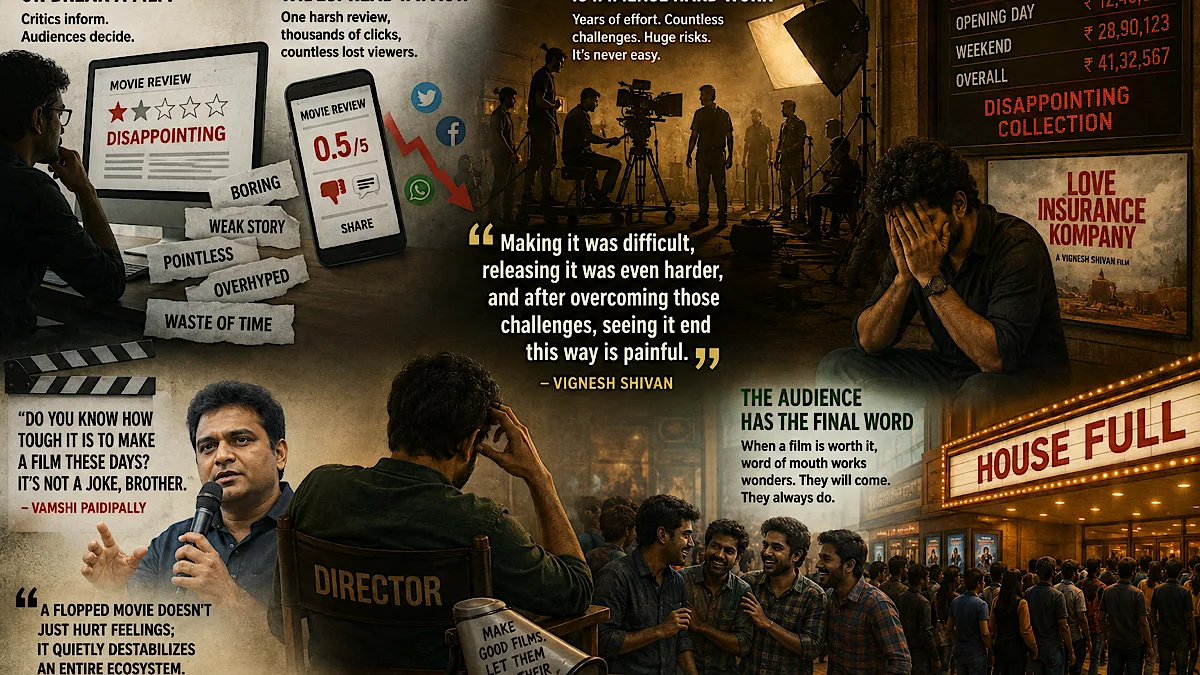
Also, the Covid epidemic in 2019–20 kept people indoors, and they got used to watching cinema from home on Over-the-Top (OTT) platforms, which mushroomed then. Although the disease has long become less virulent, the masses have not yet begun to patronise cinemas as they once used to. I have often seen disappointingly thin attendance in theatres, even for the first shows of a film. Obviously, movies suffered, and filmmakers suffered even more. And here is one latest example. Director Vignesh Shivan was distraught when he saw the abysmally poor box-office returns for his latest work, Love Insurance Kompany.
Advertisement
It is science fiction, and he wrote on his Instagram account how unfairly he had been snubbed. What is more, he lamented that reviewers, some of whom fancied themselves as the moral guardians of society, went several steps ahead by crushing a movie. “Making it was difficult, releasing it was even harder, and after overcoming those challenges, seeing it end this way is painful,” he rued. Well, this is nothing new in Tamil Nadu. When Varisu opened in 2023, helmer Vamshi Paidipally attacked critics: “Do you know how tough it is to make a film these days? Do you know how much hard work people are putting in? It’s not a joke, brother.”
He then pointed to actor Joseph Vijay’s (now a prominent political leader in Tamil Nadu) dedication, rehearsing every song and practising every dialogue, before declaring that he alone was his critic and his audience. Admittedly, putting together a movie is no joke. A lot of work goes into it, and it is very, very tough. And when a film bombs at the box office, so many people are hit: producers, distributors, and exhibitors. As Paidipally said: “A flopped movie doesn’t just hurt feelings; it quietly destabilizes an entire ecosystem.” It is partly why filmmakers have repeatedly pushed for reviews to be held back until a movie has had at least its opening weekend.
In 1960s France, the legendary François Truffaut, Jean-Luc Godard, and others famously disrupted the Cannes Film Festival and film screenings because of deep ideological battles over the control and judgment of cinema. But asking critics to be kind in what they write is a no-no. Why would they be expected to weigh in on considerations like these? Let us not forget that however hard it may be to make a film, critics are not obliged to bow before the makers. The man at the computer works for the cinema-goer, not the producer, the director, or the actor. No way.
The audience cannot be expected to pay for the toil behind a production. They can pay only for what they see on the screen. Period. A last word: Remember, audiences will return in their dozens when the worth of a movie spreads through word of mouth. I have seen how theatres get filled up after the first weekend, purely from the appreciation that audiences carried to their friends and families.
(THE WRITER IS A MOVIE CRITIC AND AUTHOR)