Relive composer & singer Pankaj Mallick’s journey through some memorabilia
The City of Joy is a treasure trove, we all know.
The recent blaze at a venerable Parsi temple in Kolkata casts a spotlight on a troubling trend affecting India at large. The chaotic maze of overhead electrical wires, frequently overlooked in maintenance, stands as a principal contributor to fire outbreaks.




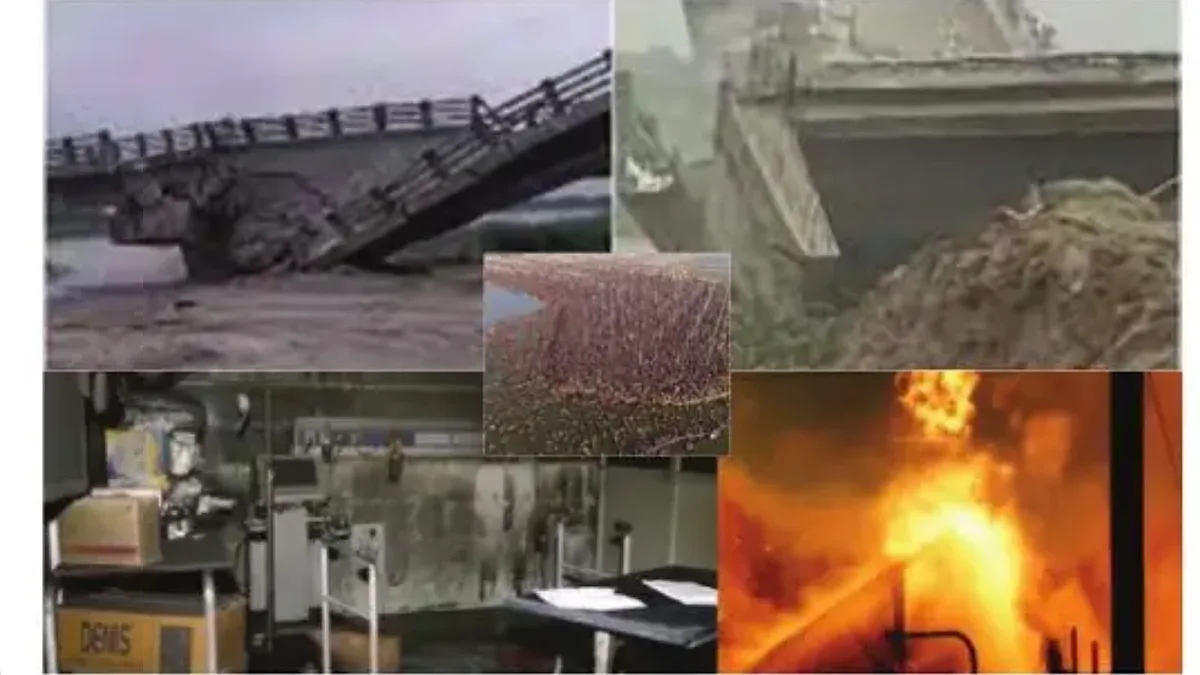
Photo:SNS
The recent blaze at a venerable Parsi temple in Kolkata casts a spotlight on a troubling trend affecting India at large. The chaotic maze of overhead electrical wires, frequently overlooked in maintenance, stands as a principal contributor to fire outbreaks. This escalating issue, which brings considerable losses and hazards, has alarmingly become routine. Consider the pattern of tragedies that have scarred our collective memory.
Fatal train crashes, stampedes at religious gatherings, collapsing bridges, fires in hospitals and residential apartments, and air accidents ~ ll expose systemic lapses. Yet rarely do they lead to resignations or structural reforms. The Odisha train tragedy of 2023, which claimed nearly 300 lives, revealed grave lapses in railway maintenance and signalling systems. But no senior official accepted responsibility. The tragedy dissolved into the news cycle, leaving behind grief but no accountability. The same year, a stampede at the Mahakumbh in Prayagraj killed dozens, yet crowd control is still left to chance.
Advertisement
In 2025, a bridge collapsed in Pune, and similar failures across Bihar again demonstrated the hollowness of our safety systems – and the even greater hollowness of our response. These are not isolated incidents; they are symptoms of a deeper malaise. Responsibility is deflected, blame is dispersed, and silence becomes the default response. The consequences are visible everywhere. Open electric panels from Prayagraj to Greater Noida, from Pune to Hyderabad, display a uniform work culture that has no place for safety or perfection. Tangled overhead wiring, normalized in urban landscapes, has caused fatal fires in Delhi, Mumbai, and Kolkata. NCRB data points to thousands of short-circuits that caused fires each year, yet complaints go unheard.
Advertisement
Roads remain potholed and dangerous, even on toll highways. Floods return each monsoon, followed by stock excuses about “unprecedented rain.” Pollution worsens year after year, rivers remain contaminated, and plastic waste chokes cities. Yet no one is held accountable. The irony is that despite paying taxes and tolls, citizens receive neglect in return. The disconnect between voters and governance begins here. We find ourselves at a curious crossroads ~ our achievements celebrated, yet they remain shadowed by a vacuum of accountability. On one side, we applaud spectacular successes: bridges that span the valleys of Kashmir, satellites that circle the earth, a successful landing on the moon, and breakthroughs in aviation, medicine, and astronomy that place us among the world’s leading nations – rightly a source of pride and proof of our resilience and ingenuity.
Yet, on the other side, we remain unresponsive to the most basic civic needs – hygiene, sanitation, pollution control, unclogged cities, reliable healthcare, and safe infrastructure. Between 1977 and 2017, more than 2,130 bridges collapsed across India, each a silent indictment of neglect. This paradox is not merely technical; it is cultural. It reflects a governance model that celebrates spectacle but sidesteps scrutiny, a society that normalizes failure, and a bureaucracy that has perfected deflection. The bureaucracy has designed a unique protection shield where most get away and never get punished. Orders are signed by under secretaries, rarely by those with real decision-making power. Files move endlessly through layers of red tape, filled with notings that buy time but avoid directives. District officers remain inaccessible, entombed in protocol, surrounded by staff, and indifferent to citizen grievances.
Governance is meant to be participative, but citizens face a fortress. Appointments are elusive, complaints unanswered, and accountability unclaimed. Even those entrusted with authority are shackled by fear. Officers live under the constant threat of transfer, suspension, or public humiliation at the whim of political masters. In such a climate, responsibility is not embraced but avoided, for to act decisively is to risk reprisal. This culture of intimidation corrodes governance from within, ensuring that accountability is neither demanded nor delivered. Even Supreme Court directives on police reforms and RTI mandates are ignored. Public interest litigations, once a beacon of citizen empowerment, have lost their edge as courts hesitate to entertain matters they deem executive responsibility. The result is a governance model that resists responsibility at every level. Today, accountability has become elusive in every sphere – political, bureaucratic, judicial, and even in the microcosm of daily life.
The tragedy is not simply that institutions fail, but that failure has been absorbed into our civic culture, eroding the very consciousness required for honest dealing and disciplined governance. Each new disaster is met not with reform but with silence, evasion, or token gestures. The culture of impunity has become pervasive, threatening democratic values and eroding citizen trust. Sadly, the vacuum is not confined to institutions. It pervades daily life, shaping the quality of existence for every citizen. Traffic police stand idle as accidents mount. Wrong side driving, helmetless riders and fatal crashes unfold without consequence. Banks mishandle vital documents like nominations and death certificates, sometimes leaving them unresolved for years.
Hospitals function with absent doctors, where patients wait endlessly and no one answers. Vendors and service providers fail to deliver, without apology or consequence. A tailor promises delivery in three days but takes three weeks. A plumber promises to return tomorrow and never does. A courier delivers a broken item and shrugs. A food delivery arrives cold and late, and the app offers a token refund but no accountability. This erosion of responsibility has seeped into the very culture of daily life. Too often, failure is met with resignation rather than reform, expectations are quietly lowered, and confrontation is avoided. In time, such habits shape a disposition that weakens our collective will. The roots of this malaise lie deep in our social fabric. In a country where rulers are often revered like gods, traits of discipline and responsibility must flow from the top down. But they rarely do.
Children are not taught to admit mistakes. From school onwards, we learn to dodge, to blame, to survive scrutiny. Leaders offer explanations but never apologies. Bureaucracies bury their errors in procedure. The phrase “I was wrong, and I accept the consequences” has vanished from our vocabulary. The absence of accountability has become our national temperament. The first reaction to a wrong is to resist, to justify, to get away. If cornered, there is no remorse ~ only mute resentment. Learning fades into perpetual wrongs. This is not just inefficiency; it is a cultural normalization of irresponsibility. The paradox is stark. We excel in fields that demand precision ~ space exploration, aviation, medicine, astronomy ~ yet falter in everyday responsibilities such as sanitation, pollution control, food safety, infrastructure maintenance, and healthcare.
The roots of this failure lie in two gaps: the absence of education and discipline that nurture responsibility, and the absence of infrastructure designed to respond on its own. Where systems are disciplined and self-correcting, excellence thrives; where they are absent, neglect rules. Without education, responsibility cannot take root. Without autonomous infrastructure, accountability collapses. And without responsibility, democracy tends to grow hollow. To keep our democracy healthy and progressive, accountability must be embraced as a cardinal value. It should be nurtured through education, reflected in infrastructure, and reinforced by citizen participation. Transparency demands clear standards and fair enforcement, while leadership must inspire through example rather than rhetoric. Only then can governance move beyond performance to genuine service. India’s accountability vacuum is not inevitable.
It is a choice we have allowed to persist. To reverse it, we must confront the paradox of our progress and neglect. We must demand responsibility not only from institutions but from ourselves. We must make accountability visible, personal, and non-negotiable. Because a nation that dreams of greatness cannot afford to evade its failures. Ambition is no substitute for ethics. Growth does not absolve decay. To dream of becoming a global leader while neglecting civic trust is to construct a hollow republic ~ visibly rising, invisibly crumbling.
What India needs is a system that works on its own – an infrastructure designed with accountability built into its very fabric. Roads that are inspected and repaired without petitions, power lines that are maintained without tragedies, hospitals that respond without agitation. True progress will come not when citizens beg for redress, but when systems themselves embody responsibility. As Ginger Graham said, “Building a culture in which people take accountability to deliver on promises is hard work. Only when every person is held accountable to themselves, their peers, and their shared goals can the ‘impossible’ become ‘possible’.”
(The writer is a retired Air Commodore, VSM, of the Indian Air Force)
Advertisement