When a war pauses without moving closer to peace, the pause itself becomes the strategy. That is the significance of President Donald Trump’s decision to extend the ceasefire with Iran while maintaining a naval blockade that continues to squeeze the country’s economic lifelines. At first glance, the move appears conciliatory.
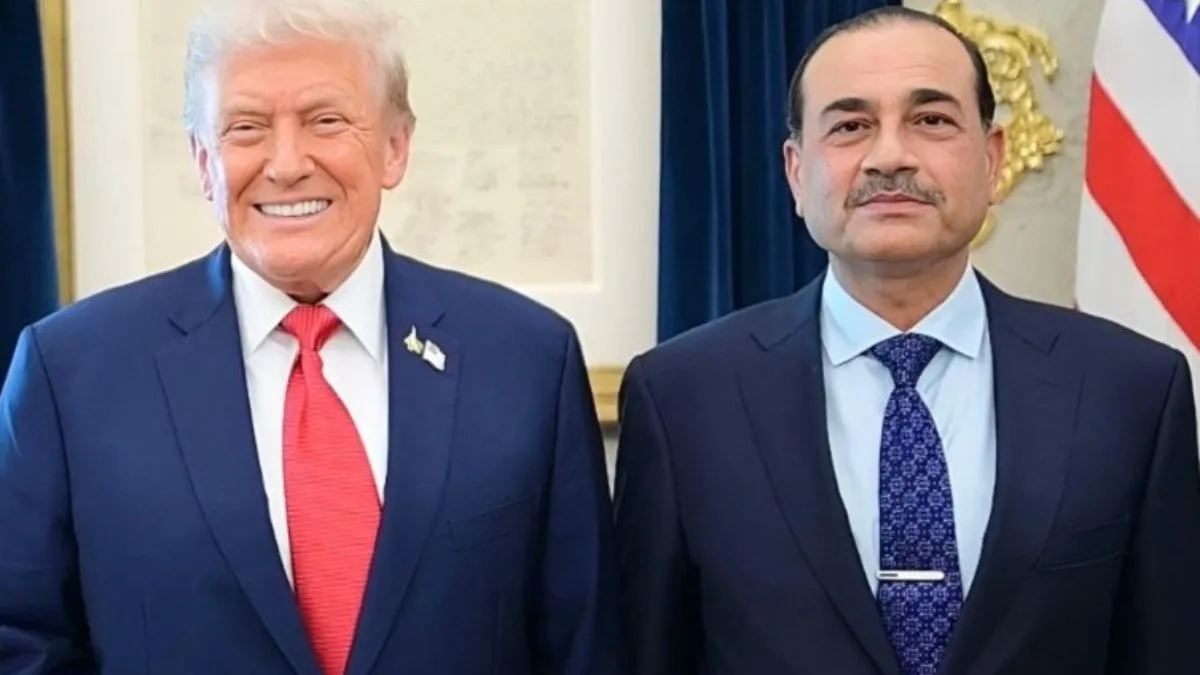
A ceasefire extension suggests restraint, even a willingness to allow diplomacy space to operate. But the conditions attached to it tell a different story. By insisting that Tehran produce a “unified proposal” before further progress can be made, Washington has shifted the burden of de-escalation onto a leadership it openly describes as fractured. This is not merely diplomacy; it is calibrated pressure dressed in the language of negotiation. The involvement of Pakistan, with Prime Minister Shehbaz Sharif and Army Chief Asim Munir stepping in as intermediaries, adds a layer of regional legitimacy.
Advertisement
Yet mediation here functions less as a pathway to resolution and more as a diplomatic holding mechanism. Talks are anticipated, postponed, and reconfigured, but never quite realised. The result is a process that sustains the appearance of engagement without guaranteeing its substance. For regional actors beyond Pakistan, the message is equally clear. Countries like Saudi Arabia and the United Arab Emirates, long dependent on stability in Gulf shipping lanes, are being forced to recalibrate their positions as prolonged uncertainty threatens both energy revenues and internal economic planning. Meanwhile, the blockade of Iranian ports and the effective closure of the Strait of Hormuz ensure that the conflict remains active in all but name.
Oil flows are disrupted, global markets are unsettled, and the economic costs ripple far beyond the Gulf. By preserving this pressure, the United States retains escalation dominance without incurring the immediate risks of renewed military strikes. It is a form of coercion that operates below the threshold of open warfare, yet shapes outcomes just as forcefully. This dual-track approach ~ pausing attacks while intensifying leverage ~ reveals a broader pattern in President Trump’s conduct of the conflict. Military threats are alternated with diplomatic openings, deadlines imposed and then extended, red lines asserted and then deferred.
The effect is not confusion but an illusion of control. By keeping both allies and adversaries uncertain about the next move, Washington seeks to dictate the tempo of the crisis. For Iran, the implications are stark. A divided leadership is now expected to negotiate under siege, its internal cohesion tested by external pressure. Any delay or disagreement can be interpreted as bad faith, justifying a return to escalation. In this sense, time itself becomes a weapon, wielded to expose vulnerabilities rather than resolve them. The ceasefire, then, is not a bridge to peace but a suspension designed to reshape the battlefield ~ politically, economically, and diplomatically. It postpones decisions without reducing stakes. And in doing so, it reinforces a dangerous equilibrium: a war neither advancing nor ending, but carefully managed in a state of permanent uncertainty.