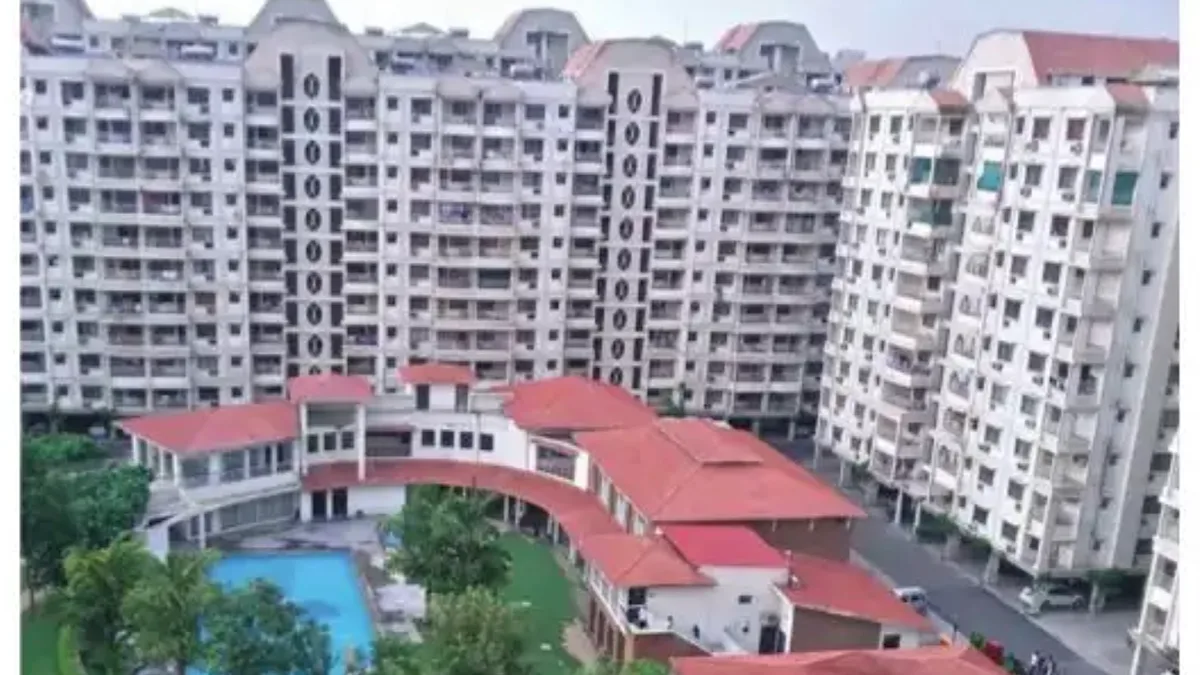
The rapid urbanisation of India has ushered in a new era of residential living, marked by the proliferation of housing societies built by government agencies, private developers, and cooperative institutions. This shift from independent homes to multi-storey flats was driven by a combination of necessity and aspiration ~ security concerns, shrinking land availability, and the promise of modern amenities, enabling millions to access affordable housing in limited space. These housing societies do not just offer shelter; they foster relationships, encourage civic participation, and provide platforms for mutual adjustment.
Children grow up in shared courtyards, elders find companionship, and festivals are celebrated collectively. The Resident Welfare Association (RWA), in theory, becomes a micro-democracy ~ where decisions are made collaboratively, and civic life is nurtured. In a country as diverse as India, these societies have the potential to be crucibles of harmony and resilience. Yet beneath this promise lies a troubling reality. Cost-cutting measures, disregard for building laws, and overwhelming demand have contributed to unsafe practices, poor infrastructure, and substandard maintenance across countless residential societies.
Advertisement
The consequences are not merely inconvenient – they are dangerous, dehumanising, and emblematic of a deeper civic malaise. Many societies, particularly those built in earlier phases of urban expansion, lack even the most basic amenities. Lifts are absent in multi-storey buildings, staircases are narrow and slippery, and room sizes have shrunk to the point of congestion. Club houses and indoor recreational facilities are either non-existent or lie in disrepair. Fire safety systems are inadequate or entirely missing, and periodic checks of electrical wiring, grounding, and load distribution are rarely undertaken. The consequences of such negligence are not hypothetical.
In recent months alone, several major fire incidents have been reported across cities like Noida, Ghaziabad, and Mumbai ~ each one a grim reminder of the price of apathy. In September 2025, a fire at Sunworld Vanalika Society in Noida destroyed property worth lakhs, while in October, a blaze at Divya Apartments in Ghaziabad necessitated the evacuation of 20 families. These are not isolated events but part of a disturbing pattern that underscores systemic failure. According to data from the National Crime Records Bureau, over 7,400 people lost their lives in fire accidents in 2022, with more than half of these fatalities occurring in residential buildings.
In 2019, the figure stood at 6,329 deaths from residential fires resulting in lost lives, shattered families and a collective failure to prioritise safety. Yet, despite repeated tragedies, there is little evidence of a coordinated response from either builders or local administrations. Fire-fighting systems remain rudimentary, evacuation protocols are virtually non-existent, and disaster management plans are more theoretical than operational. Earthquake resilience is another area of concern. Most societies have not undergone structural audits to assess their ability to withstand seismic activity, and disaster preparedness remains a neglected domain.
The neglect of safety becomes even more troubling when viewed through the lens of vulnerable groups. In congested societies, the well-being of children, elders, and women must be treated as a core civic priority. Children need safe routes to school, clean air, and accessible play areas. Elders deserve mobility, healthcare, and social inclusion ~ not isolation in vertical silos. Women face daily risks that demand more than token gestures; true safety requires better lighting, surveillance, responsive policing, and cultural shifts rooted in homes, schools, and workplaces. Disaster preparedness must also move beyond paperwork and drills.
In dense urban settings, a fire, flood, or epidemic can escalate rapidly. We need hyper local resilience ~ community-led response teams, real-time alerts, and evacuation protocols tailored to each locality. Safety audits of buildings, schools, and transport hubs must become routine, not reactive. Adding to infrastructural woes is the rising threat of urban wildlife conflicts, especially in the National Capital Region. In 2024, India recorded over 37 lakh dog bite cases, with Delhi alone reporting more than 35,000 incidents in just the first half of 2025. These aren’t isolated health concerns – they signal a deeper failure in urban governance. The volatile interface between humans and stray animals is worsened by unchecked feeding, poor sterilisation efforts, and inadequate sheltering, turning residential zones into unpredictable and unsafe spaces.
In many housing societies, irresponsible pet ownership has become a daily source of distress. Dogs are often walked without muzzles, barking aggressively and alarming children and elders. Handlers, distracted by mobile phones, neglect basic hygiene, leading to civic disorder. Though the right to keep pets is protected by law, the absence of accountability has turned it into a point of conflict. Monkey attacks are also rising, and the unchecked feeding of stray animals ~ dogs, monkeys, and cats ~ by well-meaning, educated but misguided residents has worsened the situation, making common areas unsafe for vulnerable groups. The quiet erosion of community life is a troubling by-product of urban living. Neighbours now coexist without connection, and the warmth of shared spaces has faded into impersonal silence.
RWAs, once meant to foster collective welfare, are increasingly plagued by internal politics, opacity, and allegations of mismanagement. Financial transparency is rare, and maintenance is often outsourced to untrained staff ~ resulting in poor service, delayed repairs, and widespread dissatisfaction among residents. Security and civic discipline in many housing societies remain deeply compromised. Alarm systems and internal communication networks are often absent, leaving residents vulnerable. Parking chaos is rampant ~ exacerbated by families owning more vehicles than necessary.
To ease congestion and ensure emergency access, a cap of two cars per household must be considered. The lack of integrated shopping areas forces reliance on quick-service personnel entering at odd hours, raising safety concerns. Meanwhile, erratic garbage collection, neglected solar energy adoption, and unchecked structural violations ~ such as unauthorized flat redesigns and illegal groundwater extraction – reflect a breakdown in civic responsibility. These failures carry both financial and emotional costs. Rabies treatments, averaging Rs 5,128 per case, strain household budgets. Fire incidents lead to property loss, displacement, and trauma. Poor maintenance inflates repair bills and erodes quality of life.
Yet the deepest loss is intangible ~ the erosion of dignity, safety, and trust in the very spaces meant to nurture community and care. The Real Estate (Regulation and Development) Act, 2016 — RERA ~ was a landmark reform that brought long-overdue transparency and accountability to India’s real estate sector. It mandated project registration, standardized carpet area definitions, and required developers to deposit 70 per cent of buyer funds into escrow accounts. By enforcing timelines, penalizing delays, and offering grievance redressal, RERA restored a measure of trust to a sector once plagued by opacity.
Its impact has been notable: over 1.5 lakh consumer complaints resolved, more than 1.3 lakh projects registered, and a marked reduction in delays. Surveys show rising buyer confidence and a decline in fraudulent practices. Yet, RERA’s promise remains uneven. Enforcement varies across states, and many buyers still face delayed possession, poor construction quality, and limited post-possession protections. To truly serve residents, RERA must evolve into a holistic framework ~ one that ensures uniform enforcement, accessible tribunals, and expanded oversight of maintenance standards, RWA transparency, and civic coordination.
Home ownership is not a transaction ~ it is a lived experience, and the law must reflect that reality. Builders must be held to account not just legally, but morally. RWAs must be reformed to reflect transparency, inclusivity, and service. Civic authorities must act not as distant regulators but as responsive partners in urban well-being. And citizens must rise ~ not just in protest, but in participation. We must begin by reclaiming the spirit of community. Societies must become spaces of shared responsibility, not just shared walls. RWAs need reform – greater transparency, regular audits, and inclusive decision-making. Civic authorities must enforce building codes, conduct safety audits, and regulate pet ownership with compassion and firmness. Disaster preparedness must be localized and practiced, not just printed.
Urban India is not merely a cityscape of steel and stone ~ it is a living organism. Its health depends on the dignity, safety, and solidarity of its people. This is not just a call for better governance ~ it is a call for moral leadership, for policies that are not just efficient, but ethical. For citizens who do not merely demand rights, but shoulder responsibilities. For a nation that does not just grow, but grows up. As Benjamin Franklin aptly remarked, “An ounce of prevention is worth a pound of cure.” That ounce, in today’s urban India, begins with conscience, courage, and collective will.
S S SAXENA
The writer is a retired Air Commodore, VSM, of the Indian Air Force