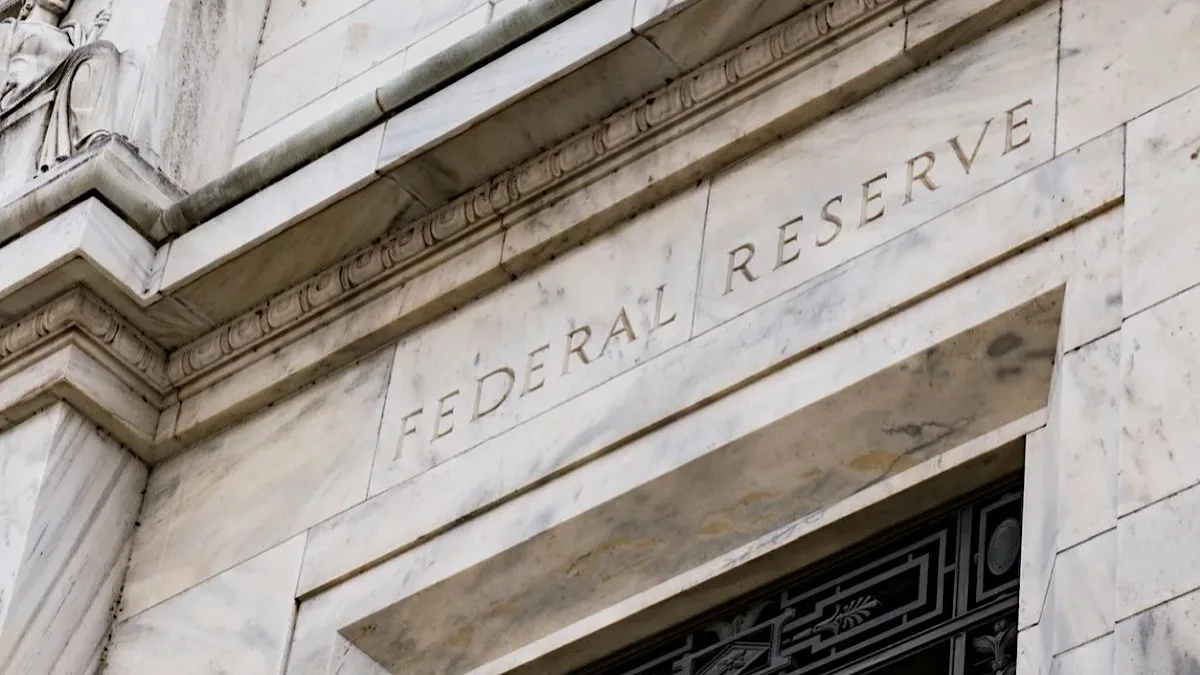
The spectacle of a sitting Federal Reserve chair publicly disclosing a criminal investigation into himself is without precedent in modern American governance. Central bankers are designed to be invisible operators ~ technocrats who move interest rates, not headlines. When the head of the world’s most influential central bank steps into the political arena to defend the institution’s independence, something has gone badly wrong in an America that is seeing more wrong than right in recent times.
At the surface, the dispute revolves around renovation costs and congressional testimony. But to treat this episode as a narrow legal or administrative matter is to miss the deeper structural shift it reveals. This is about power. More specifically, it is about whether monetary authority can still exist beyond the reach of political retaliation in an increasingly personalised political system. For decades, the Federal Reserve’s credibility has rested less on law than on convention. Presidents grumbled, markets speculated, but the boundary between elected power and monetary policy largely held. That boundary now looks alarmingly thin. When public pressure over interest rates is followed by legal scrutiny, even if formally justified, the sequence itself sends a message.
Advertisement
It tells future central bankers that policy decisions may carry personal risk. That is not how independent institutions are supposed to function. The danger here is not limited to one individual, Jerome Powell, or one presidency. Once the idea takes root that legal machinery can be deployed against inconvenient officials, the logic becomes transferable. Today he is a central banker. Tomorrow it could be a regulator, a prosecutor, or a judge. Institutions built on restraint cannot survive sustained pressure from leaders who view independence as insubordination. The muted market reaction should not reassure anyone. Financial markets are often slow to price in institutional decay because it unfolds gradually, not explosively. A small rise in safe-haven assets is an early tremor, not the quake. The real risk lies ahead: a Federal Reserve led by officials chosen in a climate of intimidation, where loyalty is valued over judgement.
That would change not just policy outcomes, but the character of the institution itself. Globally, the implications are profound. The Federal Reserve is not merely an American body; it is a pillar of the international financial system. Its credibility anchors currencies, stabilises capital flows, and shapes risk calculations across continents. If that credibility becomes contingent on political favour, uncertainty will spread far beyond American borders. This episode also exposes a deeper contradiction. Political leaders demand accountability from unelected institutions, yet bristle when those institutions refuse to bend.
Accountability, however, is not the same as obedience. Democracies require both responsiveness and restraint. When restraint is treated as defiance, the system begins to tilt. In the end, this is a test not of one man’s integrity, but of a country’s institutional maturity. Strong systems protect their referees, even when they dislike their calls. Weak systems go after the referee. The United States is now uncomfortably close to finding out which one it is.