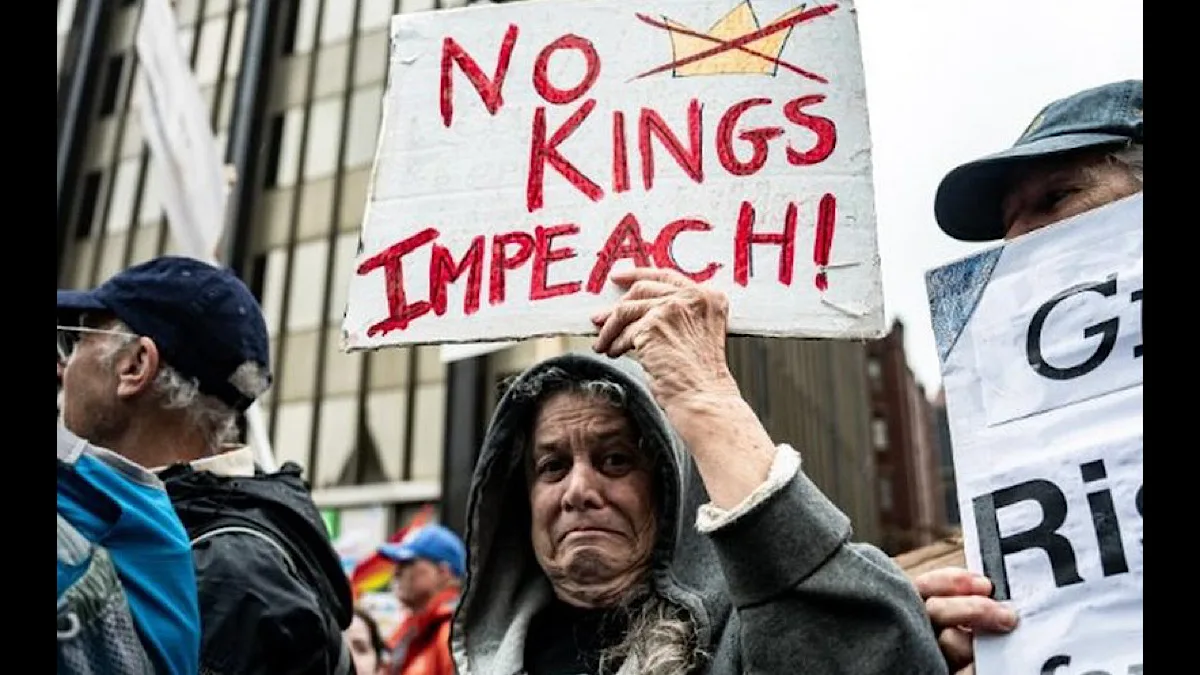
The “No Kings” demonstrations that swept through American cities last weekend signified far more than political theatre. They were a direct rebuke to President Donald Trump’s brash, unrestrained use of presidential authority ~ a message that millions of Americans are unwilling to accept the transformation of public office into personal dominion. Yet, as stirring as the images were, the harder question for Democrats is what comes next. The protests projected impressive energy. They drew Americans from different regions and classes under a single banner, a defence of democratic restraint.
Families marched alongside veterans of earlier movements. The mood was defiant but peaceful, almost celebratory. Still, the data hint at limits to that enthusiasm. According to a recent YouGov poll, only about 34 per cent of Americans strongly approve of the No Kings protests, with another 10 per cent somewhat approving. That leaves a majority ~ 56 per cent ~ either opposed or indifferent, underscoring the gap between symbolic mobilisation and broader public conviction. Many protesters viewed their participation as a moral duty rather than a political statement, reflecting a growing unease with Mr Trump’s personalisation of power. But moral conviction alone cannot replace political groundwork; the latter remains the Democrats’ most fragile frontier.
Advertisement
For Democrats, that gap is crucial. The party faces the paradox of having momentum without mandate. Mr Trump’s approval ratings remain net-negative, yet the Democrats’ own favourability hovers near historic lows. Anger alone cannot replace strategy. Protesters may reject Mr Trump’s tariff wars, immigration crackdowns, and norm-bending governance, but unless that passion is organised into policy clarity and electoral machinery, it risks dissipating. The ongoing government shutdown, now in its fourth week, has given Democrats a rare moment of leverage. By refusing a stopgap deal that excludes healthcare subsidies for low-income Americans, Senate Democrats have framed themselves as defenders of social safety nets. But that stance carries risk: the longer the shutdown lasts, the more its economic pain will be felt by ordinary citizens, many of whom form the party’s natural base.
A misstep could allow Mr Trump to recast himself as the pragmatist amid partisan obstinacy. Equally challenging are the ideological divides within the Democratic camp. Progressives urge confrontation; centrists call for discipline and moderation. Disputes over economic messaging, social priorities, and West Asia policy have begun to re-emerge, signs that unity forged in opposition may fracture in practice. Without reconciling these internal tensions, Democrats may squander the one resource Mr Trump himself lacks: coherence. The No Kings protests revealed an enduring faith in American democracy, that citizens will not be ruled as subjects. But movements, however vast, are only beginnings. To convert defiance into direction, Democrats must do more than denounce. They must persuade, organise, and offer a credible alternative vision of governance. Otherwise, the sound of dissent will fade, leaving Mr Trump’s ‘crown’, however contested, still firmly in place.