Between light and shadow lies our reality, a land where triumph and fragility walk side by side. Gleaming towers of achievement rise proudly, airports rival the best in Asia, metro systems move millions with precision, digital payment platforms astonish the world, and space missions place the tricolour among the stars. These moments of brilliance prove that when discipline, planning, and accountability converge, perfection is not only possible but enduring.
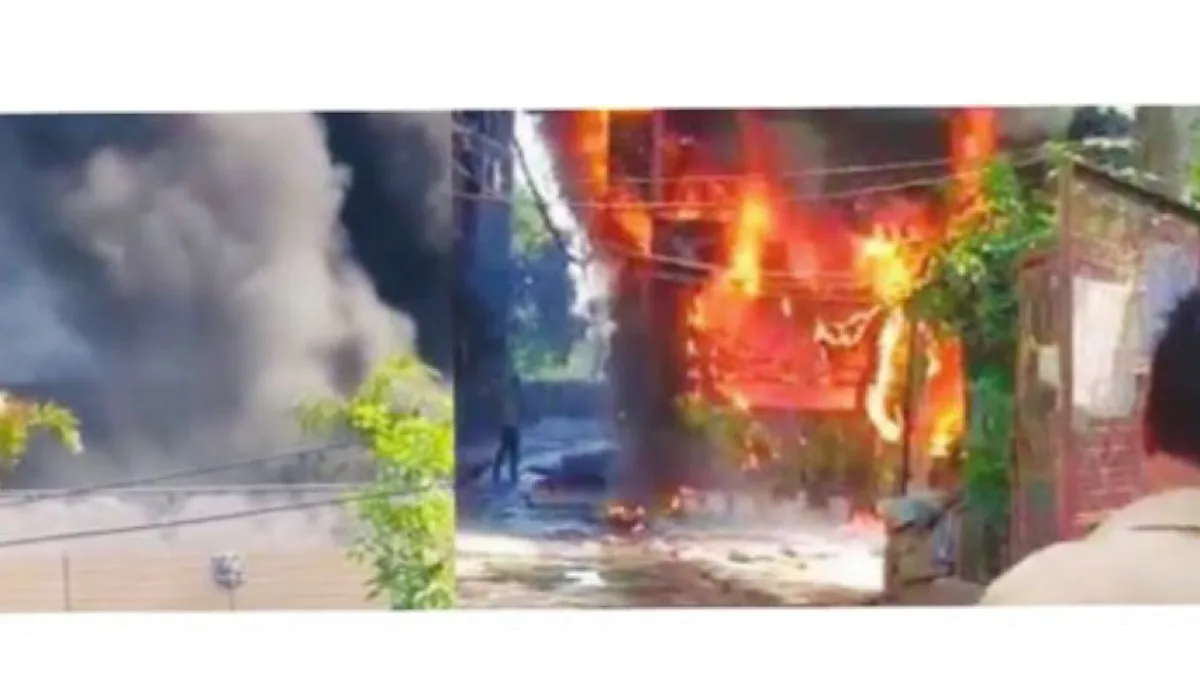
Yet, in the same breath, bridges collapse without warning, residential colonies burn in preventable fires ~ the Malviya Nagar inferno on 4 June killed 21 and left many critically injured ~ expressways crack within days of inauguration, and sewage flows unchecked into rivers. The contradictions are vivid and unsettling: excellence where accountability is enforced, fragility where excuses are allowed to thrive. Every wrong in India finds a readymade excuse. A collapsed bridge is blamed on rain, a fire on faulty wiring, a flood on excessive monsoon, a road cave-in on heavy traffic.
Advertisement
Rarely is governance blamed, rarely is accountability fixed. The safety valve theory operates relentlessly: when pressure builds, the valve is opened to release public anger, committees are formed, promises made, and responsibility deflected. The valve protects not citizens but those responsible to deliver. Counterfeit currency rumours and whispers of another demonetisation illustrate this fragility. Why should such stories gain credibility? They gain credibility because governance leaves loose ends. In developed economies, currency management is transparent and stable; in India, secrecy and sudden shocks create panic.
Citizens remember standing in queues during demonetisation, livelihoods disrupted, trust eroded. Rumours thrive because accountability is absent, and communication is opaque. Centralisation of power deepens the paralysis. Nothing major moves without explicit orders from a Chief Minister. Bureaucracy waits inert, police hesitate, and local officers fear initiative. Contrast this with decentralised systems abroad, where local councils act independently, empowered to solve problems without waiting for higher-ups. In India, centralisation becomes another safety valve ~ protecting leaders while citizens suffer delay. The reliance on the army for civilian failures is another symptom.
Floods, riots, civic breakdowns ~ the army is summoned when bureaucracy, police, and paramilitary forces fail. This reliance erodes civilian credibility. In developed countries, civilian institutions handle crises; in India, the army becomes the last resort. The safety valve operates again: responsibility is shifted, accountability avoided, and citizens told to be grateful for rescue rather than demand reform. Infrastructure collapse is the most visible betrayal. The Ganga Expressway, inaugurated with fanfare, develops cracks within days.
Public money is wasted, commuters endangered, and builders escape accountability. In Japan, highways are built to withstand earthquakes, maintained with discipline, and audited independently. In India, excuses multiply, responsibility diffuses, and citizens pay the price. Work culture and ethics compound fragility. Indiscipline dominates everyday governance, punctuality is optional, and accountability expendable. Food adulteration thrives: milk diluted, spices mixed with chemicals, medicines counterfeited. Honesty is sacrificed for profit, and consumers pay with health and dignity.
In Germany, consumer protection is uncompromising; in India, adulteration is explained away as isolated lapses. The safety valve operates again: raids conducted, culprits arrested, but systemic reform avoided. Governance without opposition breeds arrogance. A robust opposition is the lifeblood of democracy, ensuring scrutiny and correction. In its absence, governments operate without fear of consequence. Bureaucracy becomes distant, police indifferent, and citizens powerless. Meetings with district officers are called “Jan Darshan,” as if meeting an official is ‘divine darshan’ rather than civic duty. Citizens are treated as petitioners, not stakeholders.
Governance is seen as favour, not responsibility. Population growth nullifies the benefit of economic expansion. Cities choke with pollution, dirt, plastic invasion, poor sanitation, and toxic air. Clean water and clean air remain privileges, not rights. Garbage mountains rise at the edge of towns, drains clog with plastic, and sewage spills into rivers. In Singapore, cleanliness is a national ethic; in India, bans are debated but rarely enforced. Excuses multiply, responsibility vanishes, and citizens endure fragility. Skill-based education remains elusive, dignified self-employment unaffordable.
Training costs are beyond reach, and 80 crore people survive on ration subsidies without a roadmap for upliftment. South Korea invested heavily in vocational training, making self-employment dignified and affordable. In India, youth remain trapped in cycles of unemployment and frustration, the demographic dividend wasted by neglect. Excuses multiply again: poverty blamed, resources cited, but accountability avoided. Water scarcity adds urgency to fragility. Rivers remain choked with sewage and plastic, ponds vanish under encroachment, groundwater collapses under reckless extraction, and cities face alarming depletion. In London, the Thames was once biologically dead, yet through decades of strict pollution control and sewagetreatment it was revived into a living river.
The Rhine in Germany, poisoned by industrial waste, was restored through cross border cooperation and rigorous enforcement. Singapore, a nation with no natural water resources, regenerated ponds and reservoirs, invested in recycling every drop, and today stands as a model of water security. These examples prove that fragility is not destiny; it is a choice between excuses and accountability. India’s revival of Yamuna or Ganga cannot remain slogans; they must become missions with timelines, audits, and accountability. Citizens cannot be asked to wait for divine intervention while drains overflow and taps run dry. The culture of excuses extends to every sphere.
Collapses are blamed on rain, fires on wiring, pollution on population, unemployment on poverty. Responsibility is never fixed. The language of officialdom is filled with explanations but empty of accountability. Citizens are told to be patient, to wait for committees, to accept fragility as fate. Yet fragility is not fate, it is failure. The safety valve theory explains the pattern. When pressure builds, the valve is opened to release anger. Citizens are given explanations, committees are formed, promises made, and responsibility deflected.
The valve protects those responsible, not those betrayed. This theory has become the operating principle of governance, ensuring that accountability is avoided while fragility continues. What is needed is not another condolence ritual but a structural shift. Minimum safety standards must be enforced across cities. Fire audits, building inspections, sewage management, and pollution control cannot remain optional. In Canada, building codes and sewage treatment benchmarks are enforced nationwide, not left to local discretion. In India, codes exist but enforcement falters.
Accountability must be decentralised, responsibility visible at every level, and excuses eliminated. Economic growth without accountability is betrayal. Civic order cannot be sacrificed at the altar of revenue or convenience. Regulation of outlet density, prohibition of public drinking, strict enforcement of workplace laws, and gender sensitive policing are essential. Awareness campaigns must highlight not just health risks but societal consequences: unsafe roads, molested commuters, broken families, murdered innocence, and shattered dignity.
Contrast again shows the truth. Where accountability is enforced, India shines. The Delhi Metro is punctual because delays are not tolerated. ISRO succeeds because discipline is uncompromising. Digital payments thrive because systems are monitored and corrected. But roads collapse because maintenance is ignored, colonies burn because safety audits are absent, and sewage flows because responsibility is diffused. The difference is not capacity but accountability. India’s achievements prove capacity; its failures prove neglect. The contrast is undeniable. Airports, metros, and space missions show what India can achieve when accountability is enforced.
Collapsing bridges, burning colonies, counterfeit currency rumours, and polluted rivers show what India suffers when excuses replace responsibility. The choice is clear: excuses or accountability, fragility or dignity. Society now demands answers. Who ensures that roads are safe for sober commuters? Who protects women from harassment near liquor outlets or workplaces? Who shields children from the violence of drunken fathers or predators? Who prevents brawls from escalating into deaths? The answers lie not in silence but in reform. If India fails to act, it betrays not only its citizens but itself.
The future of families, and the credibility of civic order, depends on that choice. Growth without safety is betrayal. Accountability must be the safety valve of governance. Without it, bridges will keep collapsing, colonies will keep burning, expressways will keep cracking, and lives will remain fragile. The contrast between excellence and fragility is India’s greatest paradox. The nation has shown it can deliver perfection; it must now show it can deliver accountability. As Abraham Lincoln famously said, “You cannot escape the responsibility of tomorrow by evading it today.”
(The writer is a retired Air Commodore, VSM, of the Indian Air Force)