Are you a mountain person or a beach person?” It is a classic icebreaker we have all asked or been asked at least once. For the longest time, choosing the mountains meant choosing serenity. When the chaos of daily life becomes too loud and we desperately need an escape from reality, the towering peaks act as our ultimate saviours, offering a sanctuary of peace and silence. But lately, a troubling new trend has taken over. People are no longer heading to the hills only for peace; they are rushing there because it has become the “trendy” thing to do.
Driven by intense summer heatwaves in the plains and the irresistible urge to post the perfect Instagram reel, a record-breaking wave of tourists has packed into India’s fragile mountain belts this past season. Unfortunately, this desperate race for cool air has left the highlands suffocating under the weight of human insensitivity. The numbers behind the boom This is not just an observation; global data confirms that mountain tourism is expanding at an unprecedented rate. Global mountain tourism at a glance ¢ Current market share: accounts for 9 per cent to 16 per cent of all international tourist arrivals, translating to approximately 195 million to 375 million arrivals annually.
Advertisement
¢ Future market growth: projected to grow from $5.6 billion in 2026 to $9.8 billion by 2036, driven by the rise of “soft adventure” tourism and digital booking platforms. ¢ Post-pandemic shift: around 62 per cent of modern tourists now prioritise health, wellness, and open-air nature travel over crowded urban spaces. While this boom brings significant economic benefits to local communities, it has also triggered a severe crisis of overtourism. Fragile ecosystems, inadequate waste management systems, and narrow mountain roads are being pushed far beyond their limits.
Spiritual journeys built on cruelty & chaos The stark contrast between the plains and the mountains has always been the latter’s pristine beauty and quiet dignity. However, this year’s unprecedented rush has revealed a disturbing lack of civic sense among travellers. The mountains have become claustrophobic, choked by traffic gridlocks, exhaust fumes, and piles of plastic waste. Nowhere is this crisis more painful than on pilgrimage routes, where a troubling irony has emerged: the pursuit of spiritual peace is actively harming the mountains and their animals.
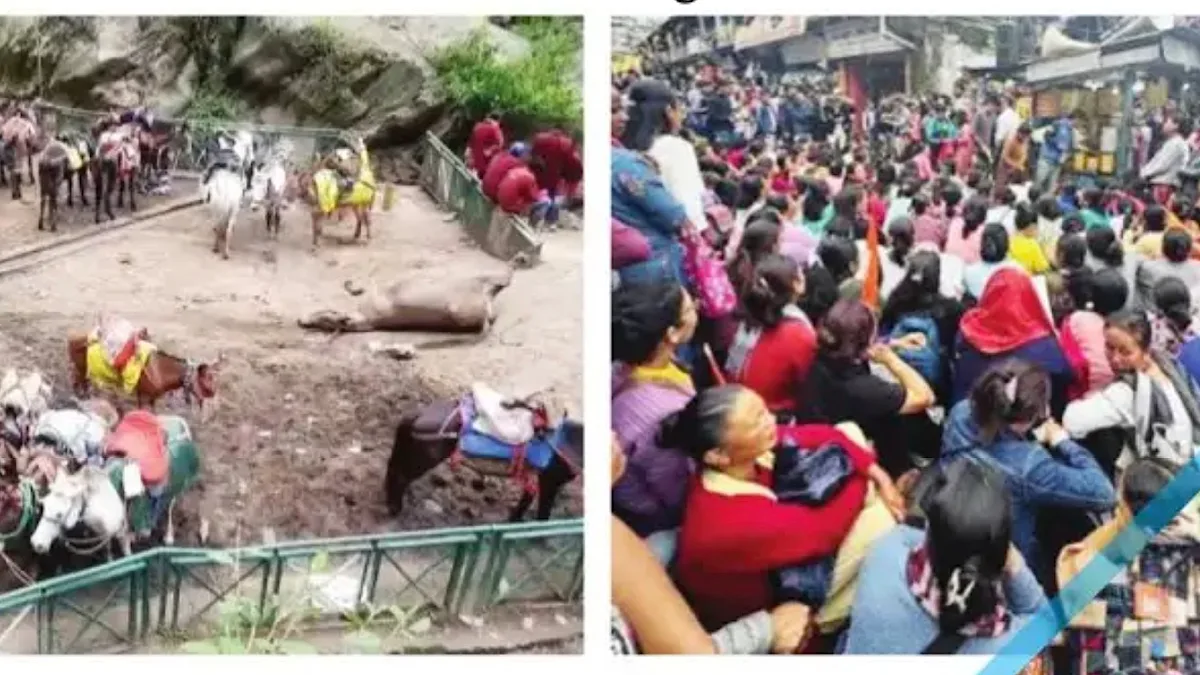
For elderly or physically challenged pilgrims, the arduous journey to routes such as the Char Dham Kedarnath Yatra depends heavily on mules and horses. Recently, a significant number of these animals have died along the trails. While official reports point to an outbreak of equine influenza, animal rights activists and locals suggest a darker reality of systemic neglect and overwork. “To protect tourism revenue, the actual death toll of these equines is being downplayed,” says Joyeeta Ganguly, an animal rights activist.
“Why did the government fail to take strict preventive action when there were early warnings of the outbreak? Why is the management still so poor? I am completely infuriated. Just because these beautiful animals cannot speak, does it give us the licence to exploit them to the point of death?” On the other side of the crisis are locals, caught in the middle. A local pitthu (porter), speaking on condition of anonymity, shared the harsh reality of survival: “We know the animals are suffering, and we are exhausted too. But we have families to feed.
This chaotic rush is the only time of the year we can earn a living.” The local heartbreak: Faith without respect For permanent residents of these mountain towns, the economic windfall of a boom – ing tourist season has begun to feel like a curse. “The business is good, yes, but at what cost?” laments a local resident. “The traffic was so suffocating this year that we could not even walk down our own village roads. After a point, the money stops mattering; you just want your home back.” What hurts locals most is the blatant disrespect often disguised as devotion.
“People travel thousands of miles for the Char Dham Yatra to seek blessings, but they leave their basic humanity behind. They discard plastic wrappers, half-eaten food, and worst of all, holy books, Hanuman Chalisa booklets and Panchalis as if they are common waste. You claim to be walking a path of God, yet you treat God’s own creation like a dumping ground. It is deeply saddening.” Several recent videos from Uttarakhand show tourists littering extensively. One viral reel, in particular, captures a woman callously throwing garbage into a gorge.
Such behaviour highlights a shocking lack of civic sense, reflecting poorly not only on individuals as tourists but also as responsible citizens. A call for conscious travel The lesson of this tourist season is clear and unavoidable. No matter which beautiful corner of the world we visit, we must carry civic responsibility, discipline, and environmental empathy along with our luggage. The mountains have sheltered us from our stressful realities for generations. If we continue polluting their slopes, littering their trails, and exploiting their resources for short-term trends, we may soon lose these sanctuaries altogether. Travel is welcome, but it must be responsible travel, with a footprint that heals rather than harms.