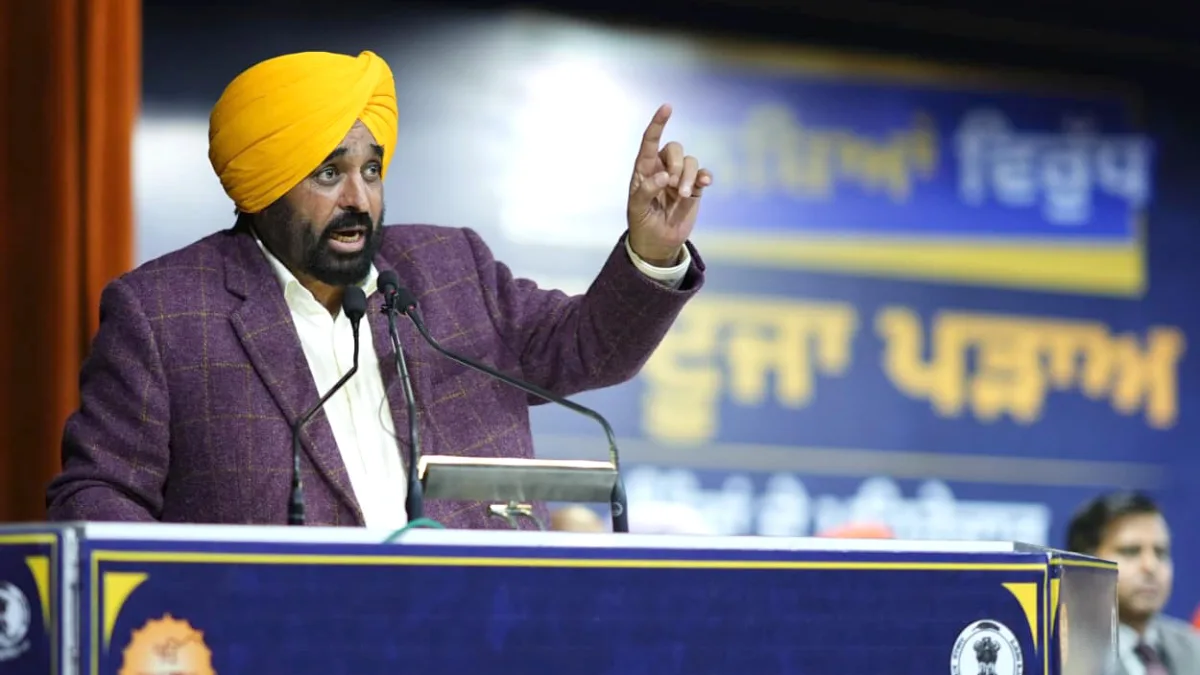
Punjab’s anti-drug drive ‘Yudh Nashean Virudh’, spearheaded by Chief Minister Bhagwant Mann, has moved beyond government offices and firmly taken root at the grassroots level, with Village Defence Committees (VDCs) now working closely with authorities on the ground, the Aam Aadmi Party (AAP) said on Tuesday, calling it a “people’s movement.”
Addressing the media on Tuesday, AAP Punjab State Media Incharge Baltej Pannu said, “In just the last 15 days, more than 300 street-level drug peddlers have been arrested with inputs from VDC members,” adding that direct action is being taken on every tip-off received.
Advertisement
From Slogans to Ground Action
Earlier too, anti-drug promises were made, but unlike those, the Mann government claims that this time the model is different. In every village and ward, 8 to 10 local residents have been brought together to form VDCs. These members are equipped with a dedicated mobile application through which complaints are directly sent to the Police Headquarters and even the Chief Minister’s Office.
According to party leaders, over 1,400 complaints have already been received through the app, leading to FIRs and arrests.
He referred to VDC members as the “frontline warriors,” stating that they are functioning as the administration’s local support system against illegal drug networks.
Pannu stressed that the identity of people giving information will remain a complete secret and that confidentiality remains the backbone of the system, assuring that no whistleblower will be exposed.
Weekly Meetings, Drug Hotspot Mapping
Weekly or fortnightly review meetings are being held in villages and urban wards to ensure the campaign does not lose momentum. The aim is to identify drug hotspots, track repeat offenders and monitor police action.
This structured review mechanism makes the campaign “system-driven” rather than symbolic, say AAP leaders.
‘Parcha Culture’ Ended, Innocents Won’t Be Targeted
Responding to criticism from the opposition, Pannu said the Mann government has ended the “parcha culture” in Punjab, a term often used to describe the alleged misuse of police cases for political vendetta.
“No false cases will be registered against innocent people,” he said, while adding that those involved in drug trafficking will not be spared under any circumstances.
Political Undercurrents
The anti-drug campaign has also triggered sharp political exchanges. Pannu accused previous governments of failing to curb the drug menace, alleging that Punjab had seen a “dark phase” between 2007 and 2022 when smugglers allegedly enjoyed protection.
He even took the chance to target opposition leader Sukhjinder Singh Randhawa for questioning the VDC initiative, saying the movement has unsettled those who are uncomfortable with citizens directly participating in the crackdown.
A Public Movement in the Making?
The recent oath-taking ceremony at Killi Chahal village in Moga witnessed lakhs of VDC members pledging their support, proving to be a pivotal point for the state, according to the ruling party. Furthermore, the presence of the Chief Minister straight from the hospital for the rally ignited many and put forth the seriousness of the drive.
Whether the initiative brings long-term change remains to be seen. But for now, the government is banking on one clear message: the war against drugs will not just be fought by the police, it will be fought village by village, ward by ward.
As Pannu put it, “This is not just the government’s fight. It is Punjab’s fight.”