Justice Surya Kant of the Supreme Court on Sunday said that regardless of the circumstances, women deserve the quiet assurance that the justice delivery system will firmly stand beside them.
He also reminded that the constitutional duty enshrined in Article 39A of the Constitution of India mandates that the state shall render legal aid to the people of India.
Advertisement
Justice Surya Kant, Executive Chairman of the National Legal Services Authority (NALSA), appreciated the achievements of the Uttar Pradesh State Legal Services Authority (UPSLSA) under the leadership of its Patron-in-Chief and Executive Chairman. He congratulated the UPSLSA on the launch of the AI chatbot “NyayMarg”, stating that the sensitisation programme and the adoption of technology would help bridge the gap between beneficiaries and their entitlements.
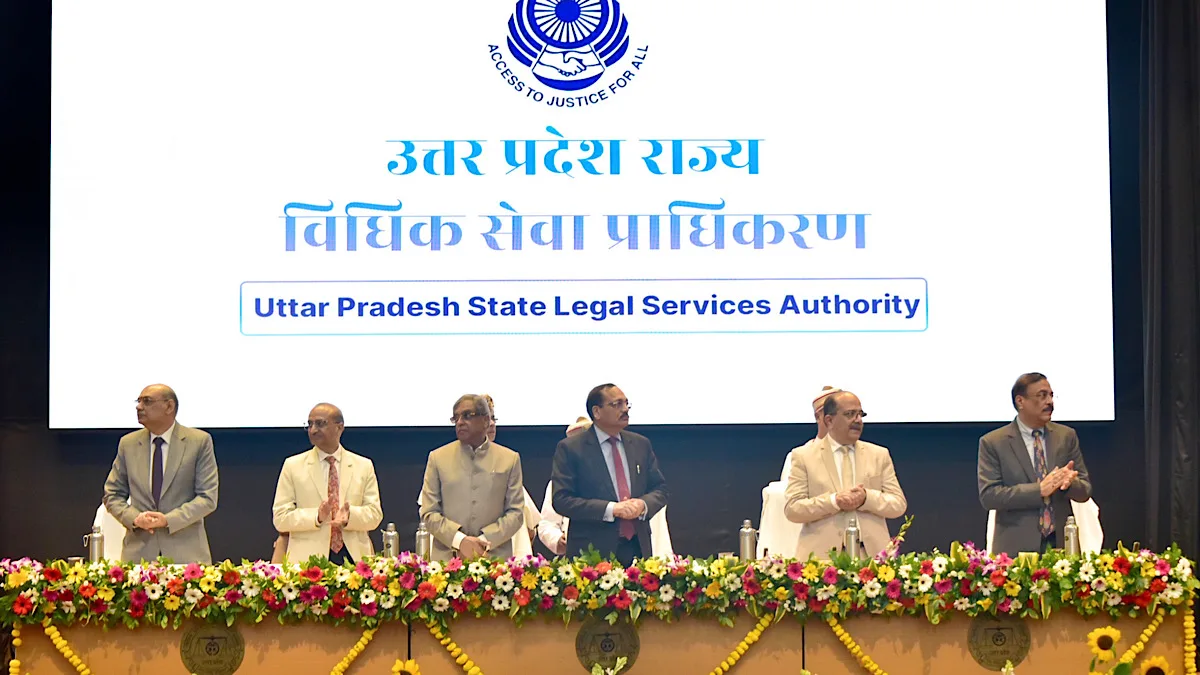
Earlier in the day, Justice Surya Kant inaugurated a sensitisation programme on “Removing Barriers to Reproductive Autonomy through Legal Aid”. The event was organised by the Uttar Pradesh State Legal Services Authority (UPSLSA).
Justice Vikram Nath of the Supreme Court of India and Chairman of the Supreme Court Legal Services Committee welcomed the participants.
He quoted Dr. B.R. Ambedkar, “I measure the progress of a community by the degree of progress which women have achieved.”
Justice Arun Bhansali, Chief Justice of the Allahabad High Court and Patron-in-Chief of the UPSLSA, highlighted the significance of the sensitisation programme and the NyayMarg chatbot of UPSLSA, describing the event as a significant step in the pursuit of Justice through legal aid.
Justice Manoj Kumar Gupta welcomed all the dignitaries and participants. He highlighted the achievements of the UPSLSA and emphasised making legal aid more accessible to the needy and marginalised sections by expanding digital outreach, enhancing legal aid activities, and promoting them for the poor and needy.
Justice Mahesh Chandra Tripathi, Chairman, HCLSC, Allahabad, addressed the concern for rape survivors, particularly minor girls, who face not only the trauma of sexual violence but also the overwhelming burden of unintended pregnancies, social stigma, emotional distress, and procedural complexities.
He said that justice is not delivered only in judgments; it is also delivered in how we treat those who come to us in vulnerability.
During the programme, experts from the fields of law, health, psychiatry, policing, and women’s rights addressed critical issues relating to reproductive autonomy, access to safe medical termination of pregnancy, psychosocial support mechanisms for victims, and coordinated institutional response. The interactive discussions focused on strengthening legal aid support for survivors, ensuring timely medical care, and removing procedural and social hurdles faced by women and children in distress.