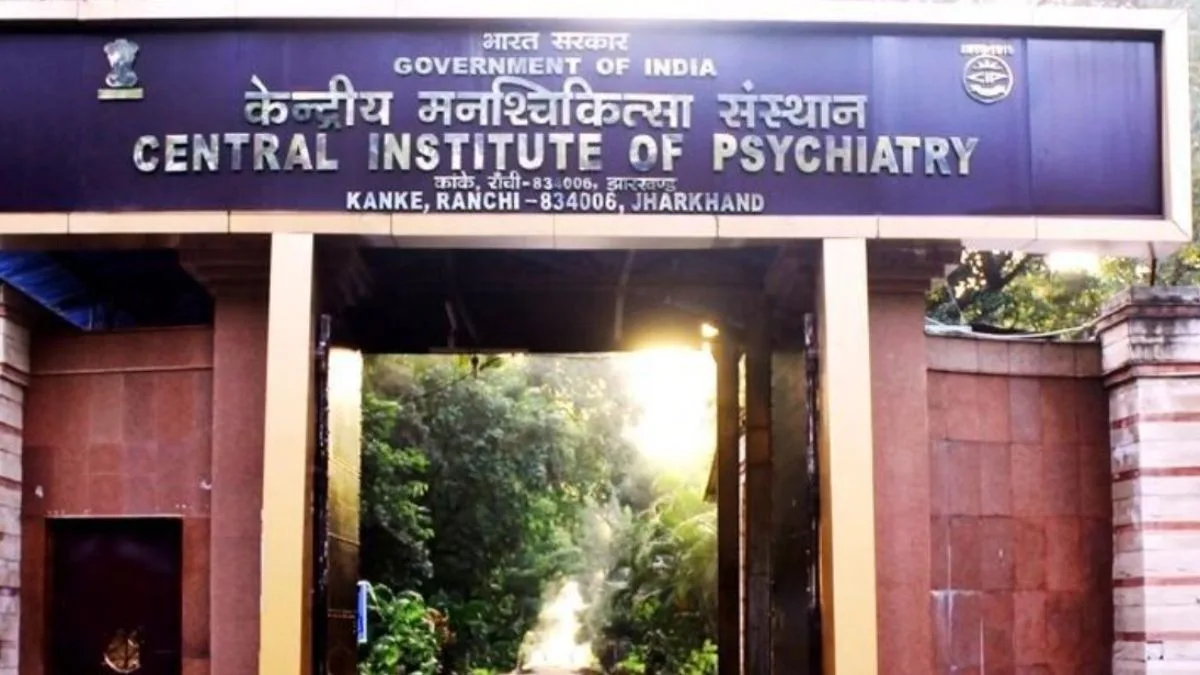
“There are no national institutes for mental healthcare in north India. We will therefore set up a NIMHANS-2 and also upgrade National Mental Health Institutes in Ranchi and Tezpur as Regional Apex Institutions,” Finance Minister Nirmala Sitharaman announced while presenting the Union Budget 2026–27, marking the most direct and significant allocation for Jharkhand in this year’s Budget.
The decision to upgrade the National Mental Health Institute in Ranchi is expected to substantially strengthen mental healthcare infrastructure, research and professional training in eastern India.
Advertisement
Ranchi already houses the Central Institute of Psychiatry (CIP), and the new apex status is likely to bring higher funding, expanded facilities and increased deployment of specialist doctors and medical professionals.
Beyond the healthcare sector, Jharkhand is expected to benefit from the Centre’s broader focus on the Purvodaya or eastern India region, which includes Bihar, Odisha, West Bengal and Jharkhand.
Under this framework, the Budget proposes development of tourism destinations, deployment of 4,000 electric buses and measures to strengthen industrial and logistics connectivity. These initiatives could support Jharkhand’s urban transport systems and boost tourism linked to tribal culture, eco-tourism and religious destinations.
The announcement of a new Dedicated Freight Corridor connecting eastern India with western industrial hubs is also seen as beneficial for Jharkhand’s coal, steel and cement industries. Improved freight movement is expected to reduce logistics costs and enhance supply chain efficiency for industrial centres such as Bokaro, Dhanbad and Jamshedpur.
Several schemes aimed at micro, small and medium enterprises and rural livelihoods align with Jharkhand’s socio-economic profile, particularly its large tribal population and dependence on forest-based and village industries.
Programmes such as the Mahatma Gandhi Gram Swaraj initiative for khadi and handicrafts, the National Handloom and Handicraft programme, the Champion MSME Growth Fund and SHE-Marts for rural women entrepreneurs are expected to provide new market access and income opportunities in regions such as Santhal Pargana, Kolhan and parts of Palamu and Gumla.
In the education and skill development sector, the proposal to establish a National Institute of Design in eastern India has opened the possibility for Jharkhand to compete as a host state.
If located in Jharkhand, the institute could promote creative industries and provide structured training linked to tribal art and design traditions. The announcement of girls’ hostels in every district for STEM education is also expected to improve access to higher education for young women in remote and tribal districts.
However, the Budget does not announce any Jharkhand-specific highway, irrigation project or large industrial park. The state features largely within a regional development cluster rather than as a standalone focus area.