Alleged Pakistan-linked ‘sleeper cell’ operative arrested in Rajasthan’s Hanumangarh
A police spokesperson, quoting Hanumangarh Superintendent of Police (SP) Narendra Meena, identified the accused as Krish Rai alias Shaan.
Addressing a gathering at the Bengaluru based Hal Management Academy, the IAF Chief said that during Operation Sindoor one of the targets marked the longest recorded surface-to-air engagement by the Indian Air Force, highlighting the effectiveness of Russian defence systems in achieving airspace superiority.




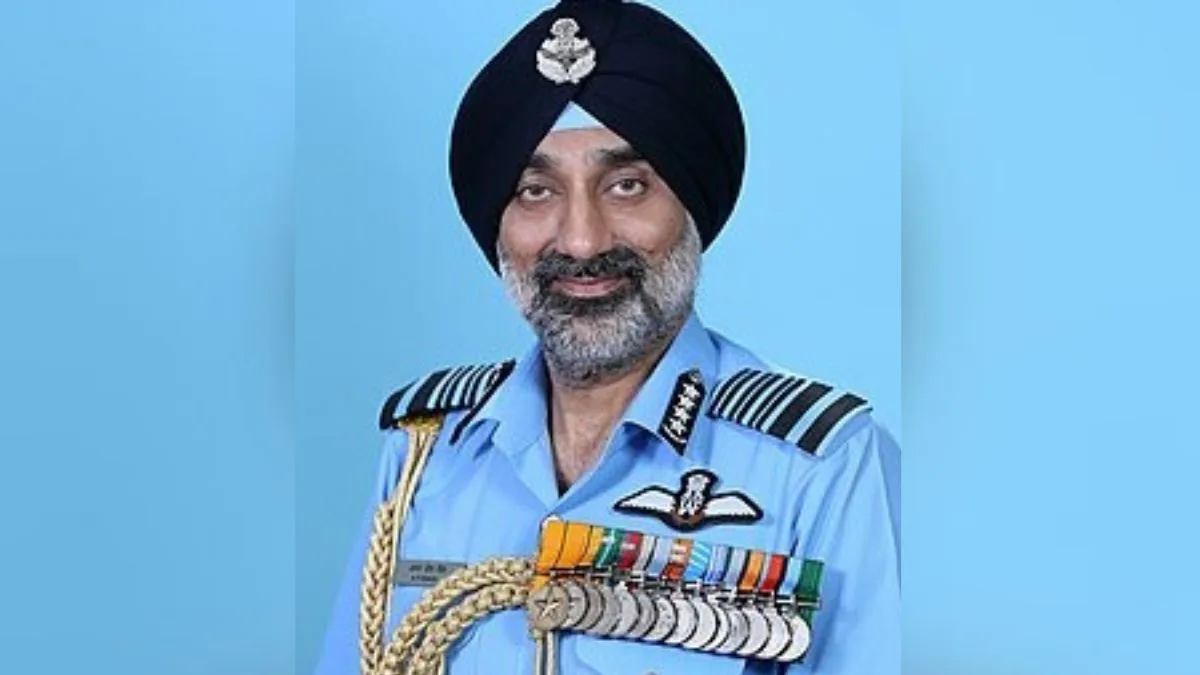
Photo: IANS
Since the first time India launched a strike against Pakistan backed terrorism on May 7, Chief of the Air Staff (CAS) Air Chief Marshal Amar Preet Singh revealed that the Indian Air Force (IAF) shot down six Pakistani aircraft during Operation Sindoor.
Addressing a gathering at the Bengaluru based Hal Management Academy, the IAF Chief said that during Operation Sindoor one of the targets marked the longest recorded surface-to-air engagement by the Indian Air Force, highlighting the effectiveness of Russian defence systems in achieving airspace superiority.
Advertisement
“Our air defence systems have done a wonderful job. The S-400 system, which we had recently bought, has been a game-changer. The range of that system has really kept their aircraft away from their weapons like, those long-range glide bombs that they have, they have not been able to penetrate the system,” he added.
Advertisement
Speaking about the Pakistan jets that were downed by India, the CAS said that five were Pakistani fighter jets while the other one was an AEW & C (Airborne Early Warning and Control) or an ELINT (Electronic Intelligence) aircraft.
“We have at least five fighters confirmed kills and one large aircraft, which could be either an ELINT aircraft or an AEW&C aircraft, which was taken on at a distance of about 300 kilometres. This is actually the largest ever recorded surface-to-air kill that we can talk about,” he said.
Speaking about the 2019 Balakot strike carried out by IAF, the Air Chief said that it was unfortunate that some sections raised doubts about the terror camps being destroyed in the strikes.
“In Balakot, we could not get anything from inside, and it became a big issue trying to tell our own people, unfortunately, as to what we have been able to achieve. We had intelligence (human kind of intelligence) on what had gone on inside, where we had a very clear picture of the inside in terms of them having been huge damage. There have been so many terrorists who have been neutralised, but we could not convince our own people that, look, we have achieved that,” he said.
He further noted that the absence of video proof could have led to similar doubts after Operation Sindoor. However, he emphasized that footage from the recently concluded military mission is now publicly available.
“Things like this would have given us the same problem (regarding Operation Sindoor). However, we were lucky that we got these videos in the open. So, I’m very happy that this time we were able to take care of that ghost of Balakot, and we were able to tell the world what we have achieved,” the Air Chief Marshal said.
Clearing the air about the liberties extended to the defence forces in carrying out the strikes during Operation Sindoor, the CAS said that there were no restrictions upon the planning and execution of the operation.
“A key reason for success was the presence of political will. There were very clear directions given to us. No restrictions were put on us. If there were any constraints, they were self-made. We decided how much to escalate. We had full freedom to plan and execute,” Singh said.
Commending the collaboration and coordination between the Army, Air Force and Navy, the IAF Chief said, “Our attacks were calibrated because we wanted to be mature about it. There was a synchronisation between the three forces. The post of Chief of Defence Staff made a real difference. He was there to get us together. NSA also played a big role in getting all the agencies.”
Claiming that the Operation Sindoor was carried out only with an aim to “teach terrorists a lesson”, the Air Chief Marshal said that once the objective was achieved, India chose to “stop the conflict”.
“People got down to their egos in the war, and that is what is continuously driving the ongoing conflicts. We set a very good example. Our objective was very clear: to teach terrorists a lesson. Once we achieved our objective, we should have looked for all windows of opportunity to stop that. Some people very close to me said, ‘Aur maarna tha’. But can we continue to be at war? The nation has taken a good decision,” he added.
Advertisement