ISI ploting Khalistan-linked attacks against Indians in UK, Canada: Report
Indian security agencies are reportedly in touch with their Western counterparts to strengthen security of Indian nationals and prevent such attacks.
According to a report by news agency IANS, the investigation has also shed light on Pakistan’s intelligence agency ISI’s shifting strategy, targeting major Indian cities instead of Jammu and Kashmir.




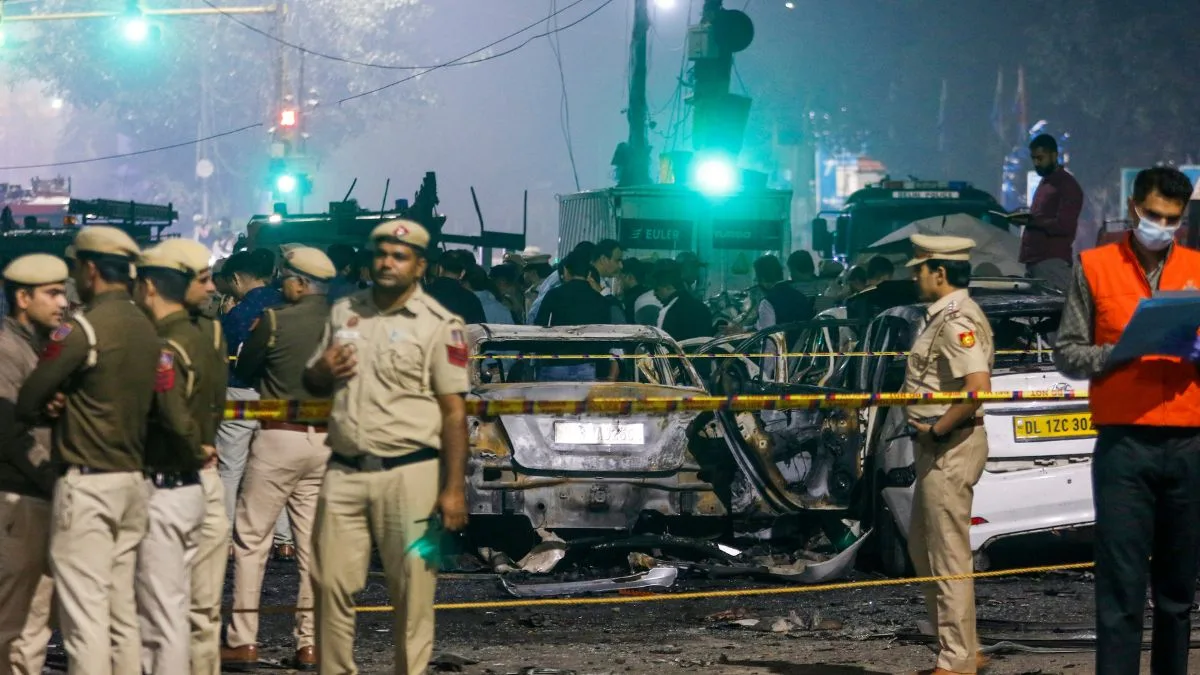
Photo: IANS
The investigation into the Red Fort bomb blast that killed at least 13 people and injured over 20 others has indicated that the incident was linked to the “white-collar” Jaish-e-Mohammed terror module busted in Faridabad earlier this week.
According to a report by news agency IANS, the investigation has also shed light on Pakistan’s intelligence agency ISI’s shifting strategy, targeting major Indian cities instead of Jammu and Kashmir.
Advertisement
It has further revealed that a large-scale radicalisation drive had been underway for a long time to recruit educated, white-collar individuals.
Advertisement
Hours before the attack, the Jammu and Kashmir Police, in a joint operation with the Haryana Police, had busted a major terror module and arrested Dr. Muzammil Ahmad Ganai from Faridabad.
The police had also seized over 350 kg of explosive material, possibly ammonium nitrate. Ganai’s arrest led them to Dr Adeel Majeed Rather, who was nabbed from Qazigund.
During the operation, Dr Umar Nabi managed to evade arrest and went missing. Nabi is suspected to be the bomber in the Red Fort attack.
According to CCTV footage examined by the investigators, Nabi was driving the Hyundai i20 car used in the blast.
The Jaish-e-Mohammed module reportedly included four doctors, including a woman named Shaheen Saeed.
Saeed, who hails from Uttar Pradesh, was in contact with Nabi and had studied with him at Al-Falah Medical College in Faridabad. Police believe she was also involved in the planning of the attack.
It is believed that the module was created after Operation Sindoor, and the suspects used their medical profession to avoid suspicion.
Meanwhile, initial findings have suggested that the Red Fort blast was not a typical suicide attack, and the suspect may have triggered the explosion in panic after police arrested his associates.
Investigators are of the view that the fact that Nabi did not follow the usual suicide bombing pattern indicates he acted hastily.
Suicide bombers usually follow a set pattern, ramming the car into their target to inflict maximum damage. However, this was not the case in the Red Fort bombing.
Moreover, the bomb was reportedly not fully developed, as the blast did not create any crater. Investigators also did not find any shrapnel or projectiles at the site.
The anti-terror agency NIA has taken over the probe, and more details are likely to emerge in the coming days.
Advertisement