Panic prevails in Rajasthan town for 5 hours as strayed leopard leaves three injured
Three persons including a forest volunteer were injured in attacks by a strayed leopard in Toda Raisingh town of Rajasthan's Tonk district on Monday.
This optimistic outlook was shared by senior BJP leader and former Leader of Opposition, Rajendra Singh Rathore, during a press conference held here.




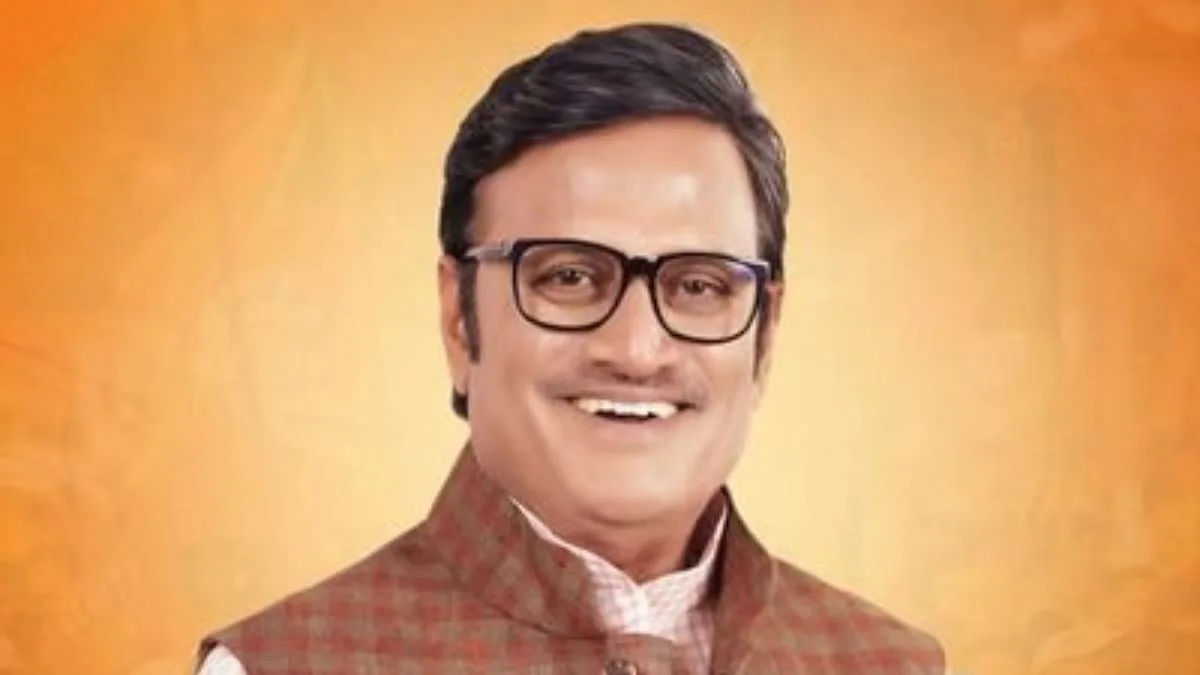
X/@Rajendra4BJP
The suspension of the Indus Waters Treaty (IWT) with Pakistan has emerged as a boon for Rajasthan, its agrarian economy, and overall GDP. The planned diversion of water from the western rivers under IWT is expected to significantly improve water availability and prosperity in the desert state.
This optimistic outlook was shared by senior BJP leader and former Leader of Opposition, Rajendra Singh Rathore, during a press conference held here.
Advertisement
Rathore, a seven-time MLA and former Cabinet Minister, asserted that the decisive and visionary approach towards utilizing IWT waters, coupled with the swift and dedicated groundwork initiated by the Bhajan Lal Sharma-led BJP government on critical water infrastructure projects, is set to transform the state’s economic landscape within the next two to three years.
Advertisement
“Rajasthan, along with Punjab, Gujarat, and Jammu & Kashmir, will be among the major beneficiaries of the enhanced water availability from the IWT system,” Rathore said. He explained that water from the Indus River, which is now planned to be prevented from flowing across the border, will be diverted to the Harike Barrage via the Ravi and Beas rivers. Additionally, surplus water from the Chenab River will be brought to the same barrage through the Sutlej-Yamuna Link (SYL) Canal.
From the Harike Barrage, this surplus water will be supplied to the Indira Gandhi (IG) Canal system, significantly boosting irrigation capacity. The increased availability of water will also augment the inter-state Yamuna Water Agreement with Haryana.
Guided by Prime Minister Narendra Modi, Chief Minister Bhajan Lal Sharma has been actively pursuing a viable agreement with Haryana to secure Yamuna waters for the drought-prone Shekhawati region.
Rathore also praised the BJP-led “double engine” government for accelerating progress on the ambitious Eastern Rajasthan Canal Project (ERCP), which had been stalled for five years under the previous Congress regime. He lauded the cooperation between the Centre, Madhya Pradesh, and Rajasthan governments in this effort.
“These three major water projects—the IWT diversion plan, Yamuna agreement, and ERCP—hold the potential to reshape Rajasthan’s economy, especially its agriculture sector,” Rathore emphasized.
He further elaborated that the agriculture sector’s contribution to the state’s GDP currently stands at 26.92 percent. With these water initiatives gaining momentum, this figure is projected to rise to around 35 percent by the 2027–28 fiscal year.
“Encouraged by these projections, I can confidently say that Rajasthan will play a crucial role in fulfilling Prime Minister Modi Ji’s vision of making India the world’s third-largest economy by 2028,” Rathore concluded.
Advertisement