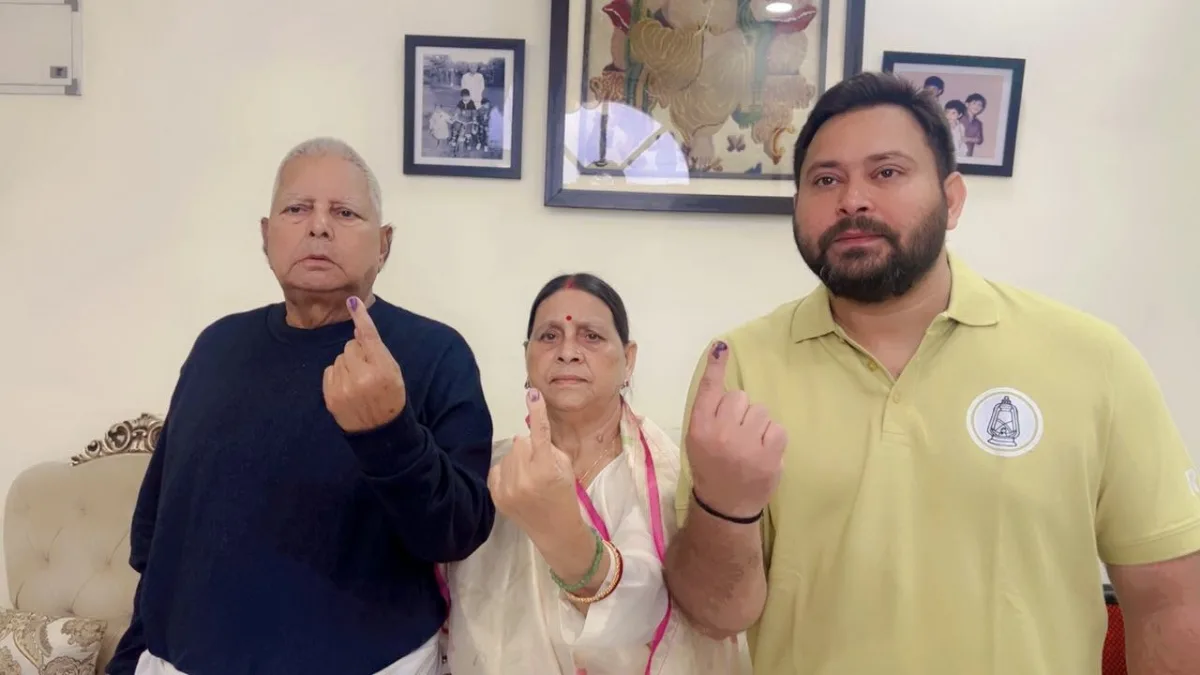
Since the Bihar election results, there has been significant political drama inside and outside RJD supremo Lalu Prasad’s residence in Patna. But political family feuds are not new to India. Dynastic parties have gone through internal rivalries that spill into the public domain; the question is its implications for the future.
The Lalu Prasad family feud comes at a time when voters in Bihar have already given their verdict: the next Assembly elections are five years away, the Lok Sabha in 2029, and the party is out of power, meaning there is no immediate threat—like Maharashtra, where the Sharad Pawar–Ajit Pawar split in July 2023, paving the way for BJP-led Mahayuti.
Advertisement
The fact is, family feuds have reshaped parties, toppled governments, and exposed the fragility of dynastic power—from the Yadavs of Uttar Pradesh to the Pawars of western India to DMK in Tamil Nadu—internal rifts led by personal ambitions have weakened organisations.
There have been several high-profile families that faced dramatic internal battles that reshaped their parties and altered state politics. In Uttar Pradesh, the Samajwadi Party witnessed one between Akhilesh Yadav and his uncle Shivpal Yadav, both fighting for control, forcing the late Mulayam Singh Yadav to choose a side—his son. In Tamil Nadu, the DMK saw a bitter power struggle between brothers M K Stalin and M K Alagiri that culminated in Alagiri’s expulsion and the emergence of Stalin as Karunanidhi’s political heir.
In Maharashtra, there was the Pawar family split in the Nationalist Congress Party. Ajit Pawar broke away and aligned with the BJP. However, the NCP split cannot be compared to the Shiv Sena fracture when Eknath Shinde sidelined Uddhav Thackeray to claim the party’s legacy—party symbol, name, et al. Shinde and Thackeray were not related, but earlier cousin Raj Thackeray did walk out after feeling sidelined. Even the grand old party has seen family tensions between Sonia Gandhi and Maneka Gandhi, underscoring a recurring theme of ambitions, rivalries, and succession.
Now the question—how will this rift affect the RJD? The fact is, this is not the first time RJD has slipped so low in numbers. In 2010, the RJD won 22 seats out of 243, with about 18.84 per cent vote share. As part of the Mahagathbandhan in 2015, it won around 80 seats with a vote share of around 18.4 per cent. In 2020, it emerged as the single largest party, winning 75 seats and about 23.11 per cent vote share. In 2025, RJD’s seat count dropped dramatically to 25 seats, but it secured the highest vote share among all parties—around 23 per cent.
Observers say protests outside Lalu Prasad’s home targeting Sanjay Yadav, a close aide to Tejashwi Yadav, with slogans like “Sanjay Yadav Murdabad” and “Sanjay Yadav Haryana jao” are bad optics. Allegations that grassroots voices were being ignored and party decisions, especially on ticket distribution, lacked transparency — need to be analysed by the party. Public allegations made by Rohini Acharya, who specifically criticised Sanjay Yadav for sowing discord within the party and family, reflect growing factionalism and discontent among RJD cadres. But Rohini and her sisters—Rajlakshmi, Ragini, and Chanda—leaving the family’s Patna home, and elder son Tej Pratap Yadav’s anger and public outburst are family matters that need to be dealt with by Lalu Prasad, who has chosen Tejashwi Yadav as his political heir.
The family feud and public fallout have weakened the already fragile RJD and can erode its voters’ confidence. But RJD’s core voters are intact, meaning that they have accepted Tejashwi as the party’s successor. Elections are far away, and it is the job of rival parties to fish in troubled waters, which they are doing by supporting Rohini. The question is—will the BJP, or the LJP, or the JD(U) take in Rohini? Earlier this year, in May, Tamil Nadu Chief Minister Stalin visited his estranged brother Alagiri at his residence after almost a decade; after all, blood is thicker than water.