Nine killed in landslides, shooting stones in J&K
Nine people were killed in the Jammu division on Monday in landslides and shooting stones triggered by incessant rains in the Poonch and Doda districts.
Chief Secretary Atal Dulloo along with other senior officers, was present at the meeting.




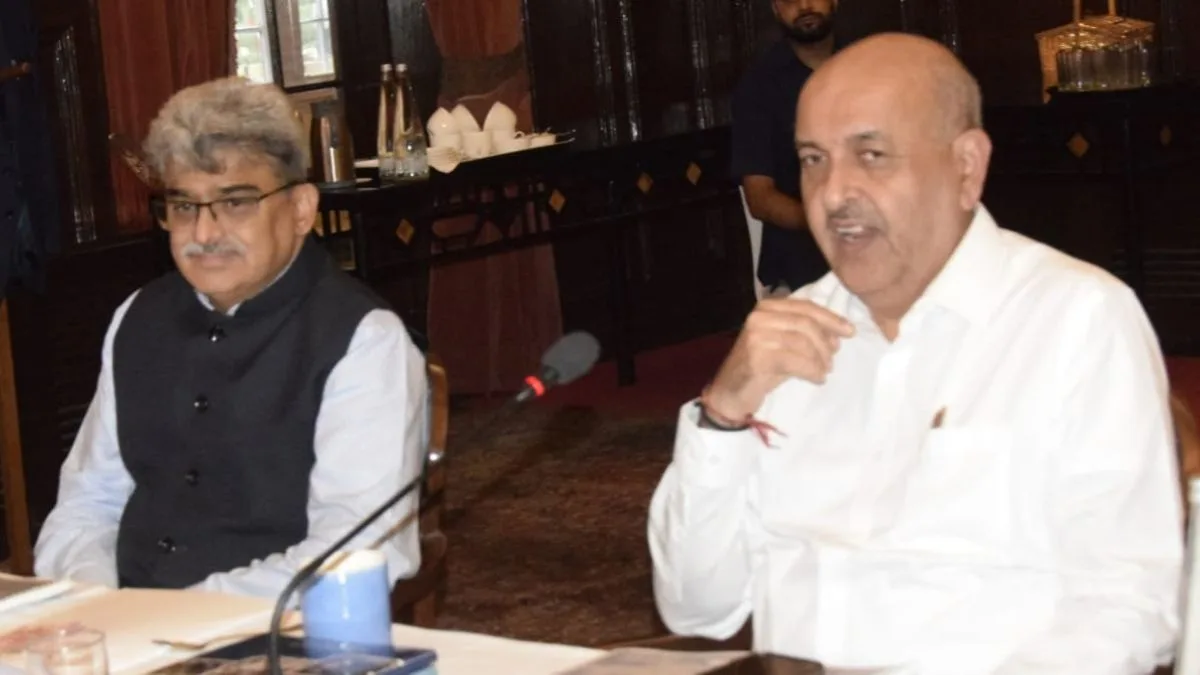
Photo: SNS
In a high-level meeting convened on Monday, Prime Minister’s Advisor Tarun Kapoor undertook a comprehensive review of the development trajectory of Jammu and Kashmir, covering key sectors such as energy, health, infrastructure, urban renewal, connectivity, and governance reforms.
Chief Secretary Atal Dulloo along with other senior officers, was present at the meeting.
Advertisement
The meeting brought together Administrative Secretaries of the Union Territory government and senior officials from various Central agencies implementing mega projects across the region. The Advisor was briefed on the significance, current status, and projected completion timelines of each major project.
Advertisement
The session began with a review of major hydroelectric projects (HEPs), which form the backbone of J&K’s energy strategy. Projects like Pakal Dul (1,000 MW), being developed at a cost of ₹12,757 crore and scheduled for completion by December 2026, were prominently discussed.
Updates were also shared on Kiru (624 MW) with 60 per cent physical progress, Kwar (540 MW) at 22 per cent progress, and Ratle (850 MW) currently at 23 per cent physical progress. Other strategic projects like Sawalkote, Uri Phase-II, Kirthai-II, Bursar, and Tulbul Storage were also reviewed.
Stressing the national strategic importance of these projects, the Advisor called for robust organizational structures and efficient decision-making processes to ensure their timely execution.
The Advisor also reviewed key railway projects, including the landmark Udhampur-Srinagar-Baramulla Rail Link (USBRL) and new corridors such as Qazigund-Budgam double line, Baramulla-Uri, Sopore-Kupwara, Anantnag-Pahalgam, and Jammu-Katra double line. These projects aim to drastically reduce travel time, boost commercial transport, and enhance market access for J&K’s horticultural produce.
Road infrastructure projects being implemented by NHAI, NHIDCL, and BRO were also discussed. The Advisor addressed challenges such as the availability of construction materials and the issuance of short-term permits to address supply gaps.
A detailed review was conducted of the AIIMS campuses in Jammu and Srinagar. While AIIMS-Jammu is already functional, AIIMS-Kashmir is on track for completion by November 2025. The Advisor also reviewed progress on faculty recruitment and procurement of high-end medical equipment to ensure world-class healthcare delivery.
With a vision for a greener future, the Advisor reviewed solar energy initiatives under the PM Surya Ghar: Muft Bijli Yojana, calling for focused efforts on installing grid-connected rooftop solar panels for domestic consumers and government buildings. These efforts are being spearheaded by PDD and the J&K Energy Development Agency (JAKEDA).
The health of Dal Lake was also in focus, with a review of the existing and proposed Sewage Treatment Plants (STPs) aimed at improving water quality and preserving the lake’s ecological balance. Kapoor emphasized the importance of sustainable lake management to protect the valley’s iconic natural heritage.
The Advisor also assessed urban infrastructure projects in Jammu and Srinagar, including the PM eBus Sewa, Intelligent Traffic Management Systems (ITMS), modern parking infrastructure, IMS Katra, water transport, and initiatives under the Smart City and AMRUT schemes. These projects are poised to significantly enhance urban mobility, environmental sustainability, and citizen-centric service delivery.
The Advisor appreciated the UT’s Mission YUVA, which aims to create sustainable livelihood avenues for the youth. He emphasized the need to identify viable local sectors and provide both financial and institutional support to promote nano enterprises, MSMEs, and startups in sunrise sectors through a comprehensive umbrella scheme.
A detailed review was also conducted on telecom connectivity and digital empowerment. The Advisor was informed that under the BharatNet initiative, efforts are underway to extend high-speed internet to every corner of the UT, including its most remote villages.
Simultaneously, IT reforms being executed in collaboration with BISAG-N were reviewed. These reforms focus on making administration more transparent, accountable, and accessible through digital platforms and integrated governance tools.
Summing up the review, the Advisor expressed satisfaction with the scale of progress while underlining the need for timely execution, inter-agency coordination, and people-centric outcomes. He reaffirmed the Centre’s commitment to giving utmost priority to Jammu and Kashmir, with the goal of transforming the region into a model of inclusive development and digital governance.
Advertisement