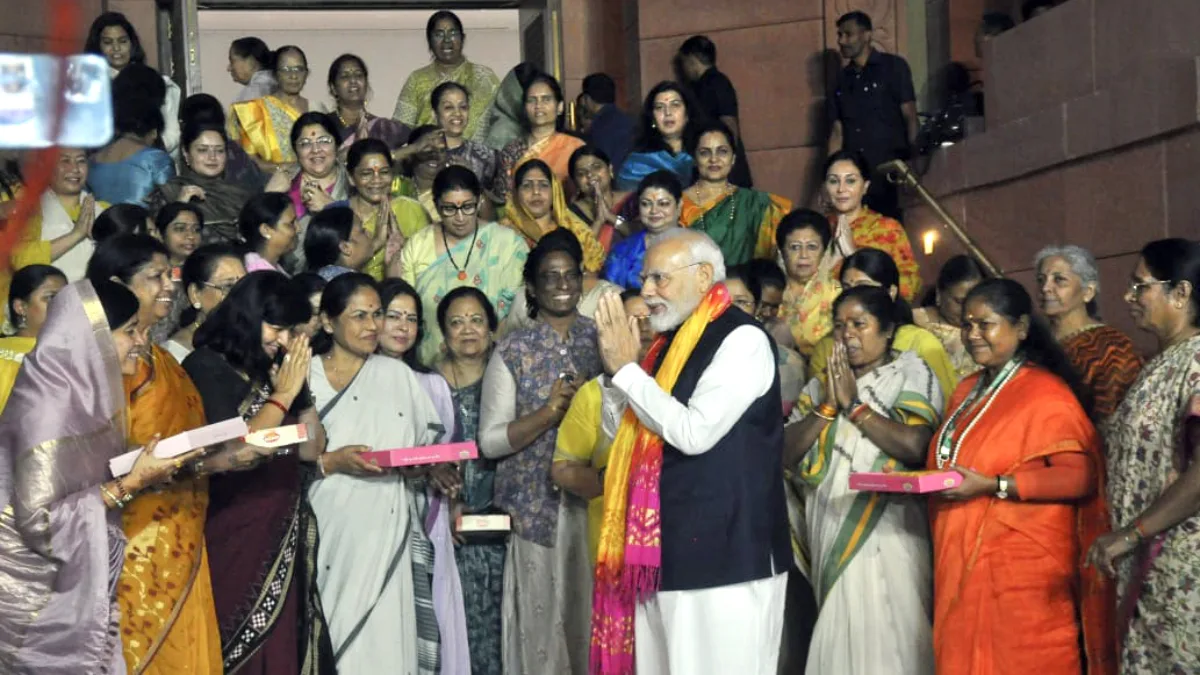
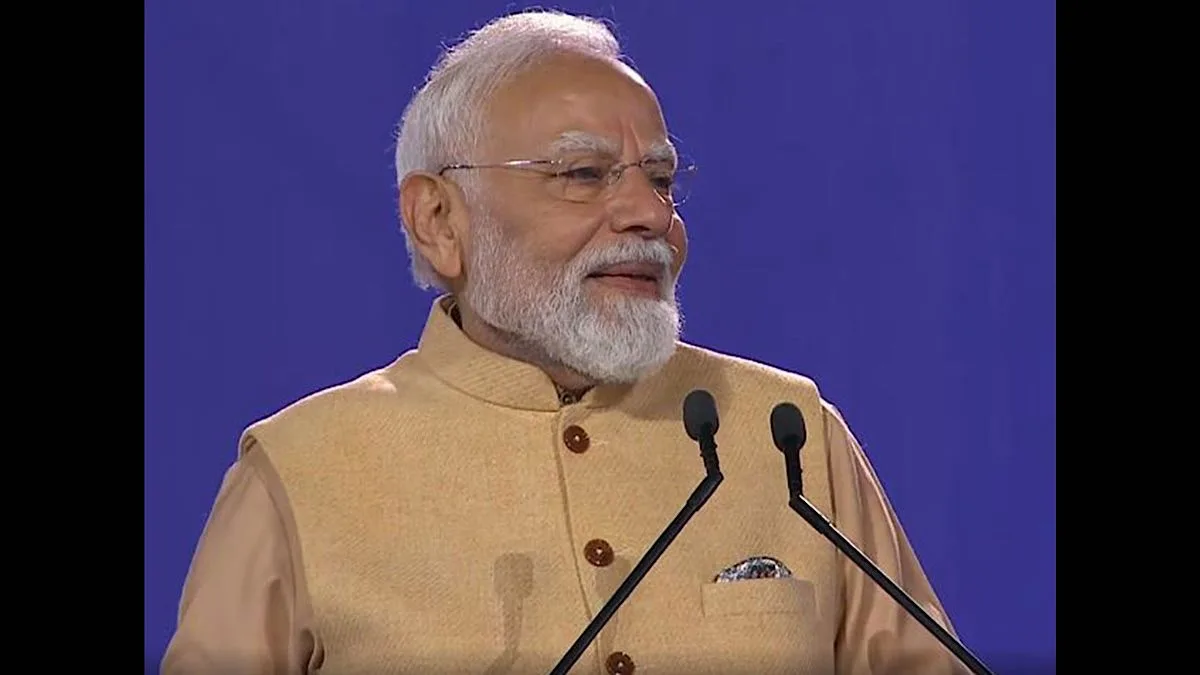
With Parliament gearing up for a crucial session, Prime Minister Narendra Modi said today India stands at the threshold of a transformative decision aimed at empowering women and embedding equality deeper into its democratic framework. During his address at the ‘Nari Shakti Vandan Sammelan’ at Vigyan Bhawan, PM Modi framed the move as a historic correction of “decades of waiting.”
He highlighted that the upcoming special sitting of Parliament from April 16 would be a step toward implementing the Women’s Reservation Bill introduced in the Parliament in 2023.
Advertisement
The Prime Minister underlined how women across sectors are already breaking barriers and reshaping India’s growth story. Here are the key achievements he listed:
1) Women taking to the skies
“Today, our daughters are soaring high as fighters and pilots… India has the highest percentage of female pilots in the world.” The Prime Minister pointed to the growing presence of women in aviation, especially in roles once dominated by men.
2) Surge in higher education
“The number of girls in PhD enrollment has doubled compared to that of boys.” He underscored a sharp rise in women pursuing advanced education, calling it a sign of shifting social norms.
3) Stronger role in governance and policy
“When women’s participation in decision-making increases, it leads to greater sensitivity in the system.” Highlighting grassroots governance, he credited women’s participation in Panchayats for the success of welfare initiatives like the Jal Jeevan Mission.
4) Legacy from freedom struggle to Constitution-making
“From the freedom struggle to the decisions of the Constituent Assembly, Indian women have made immense contributions.” PM Modi placed contemporary achievements in the context of a long historical legacy of women shaping the nation.
5) Leadership at the highest offices
“From the President to the Prime Minister… women have created their own unique legacies.” He noted that women continue to hold key constitutional and economic positions, enhancing India’s global stature.
6) Massive presence in local governance
“Over 1.4 million women are serving in local government bodies… in 21 states, their participation in Panchayats is nearly 50 per cent.” The Prime Minister highlighted the scale of women’s political participation at the grassroots level.
‘A New Chapter in India’s Democracy’
Reiterating that the initiative is not about rhetoric but action, Modi added that the increasing participation of women in public life has surprised global leaders and experts, calling it a matter of pride for India.
With Parliament set for a crucial session, the Prime Minister framed the moment as a turning point, one that could redefine representation and power structures in the world’s largest democracy.