All eyes on NDA’s ‘Mangal Milan’ meeting on Tuesday
The National Democratic Alliance (NDA) Parliamentary Party meeting, now called 'Mangal Milan', will be held on Tuesday at Parliament House.
In a major legislative move, Parliament on Thursday passed the Jan Vishwas (Amendment of Provisions) Bill, 2026, with the Rajya Sabha approving it by voice vote a day after its clearance in the Lok Sabha.




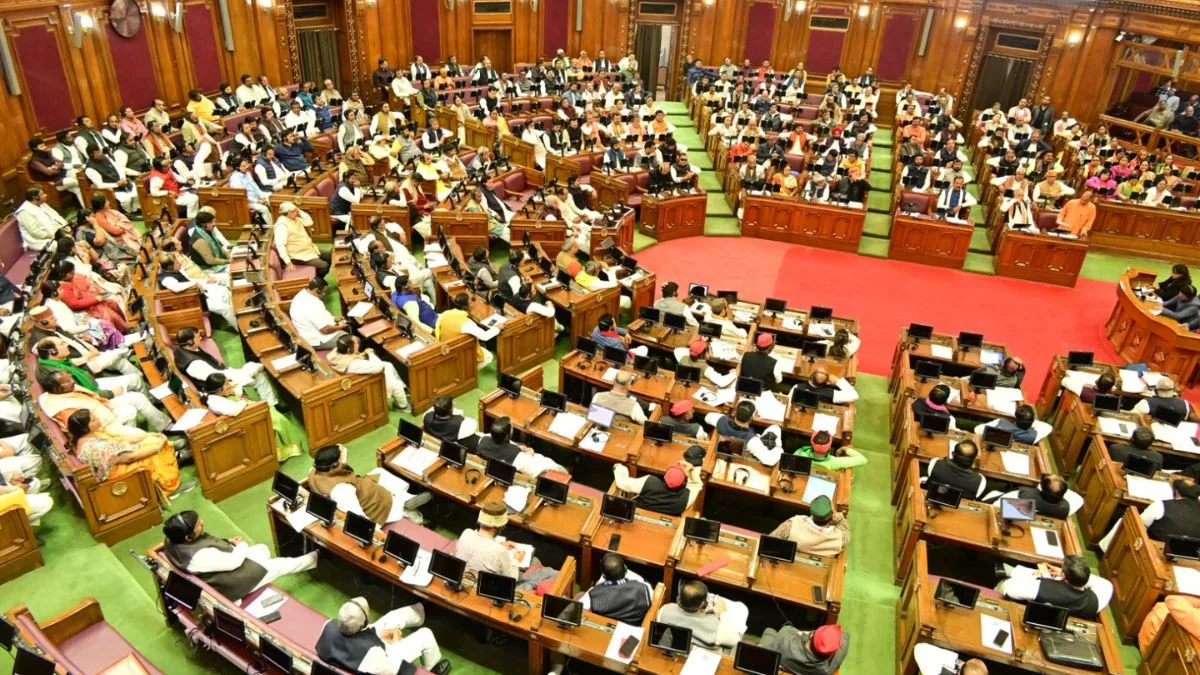
File Photo: IANS
In a major legislative move, Parliament on Thursday passed the Jan Vishwas (Amendment of Provisions) Bill, 2026, with the Rajya Sabha approving it by voice vote a day after its clearance in the Lok Sabha. The law marks a significant step in the government’s effort to decriminalise minor offences and promote a trust-based governance framework aimed at improving ease of living and doing business.
The Bill seeks to decriminalise 717 provisions across 80 Central laws by replacing criminal penalties for minor, technical, or procedural violations with civil measures such as fines, warnings, and advisory notices. The objective is to ease compliance burdens on individuals and businesses while maintaining proportionate enforcement.
Advertisement
Presenting the Bill in the upper house, Commerce and Industry Minister Piyush Goyal highlighted the need to move away from criminal penalties for minor infractions. He said reducing compliance burdens would support business process reforms, improve everyday life for citizens, and boost investor confidence, making India a more attractive destination for investment.
Advertisement
The legislation follows the withdrawal of the earlier Jan Vishwas Bill, 2025, in March. That version had been reviewed by a select committee, whose recommendations led to a broader and more refined framework in the updated bill, introduced on March 27, 2026. The revised version significantly expands the scope by covering more laws and provisions.
According to the Statement of Objects and Reasons, the reforms align with the government’s principle of “Minimum Government, Maximum Governance.” Officials said the bill incorporates extensive stakeholder feedback and aims to balance regulatory enforcement with ease of compliance.
The law introduces wide-ranging changes across sectors by replacing imprisonment clauses with monetary penalties. For instance, offences under the Drugs and Cosmetics Act, 1940, which earlier carried jail terms of up to one year, will now invite civil penalties. Similarly, violations under the National Highways Act, 1956, will shift from criminal punishment to financial penalties. In some cases, including the Indian Succession Act, 1925, and the Electricity Act, 2003, imprisonment provisions have been removed entirely and replaced with higher fines.
The bill also eliminates certain offences altogether, such as giving false fire alarms under the Delhi Police Act, 1978, and failing to report births and deaths under the Delhi Municipal Corporation Act, 1957. It introduces a graded enforcement mechanism in select cases, allowing first- and second-time offenders to receive advisories or warnings before penalties are imposed for repeated violations.
A key feature is the rationalisation of penalties through adjudicating officers who will determine fines based on the nature and severity of offences. Appellate authorities will be set up to handle appeals, creating a more structured and less punitive system. To retain deterrence, fines will automatically increase by 10 percent every three years.
The legislation also introduces “improvement notices” under certain laws, such as the Legal Metrology Act, 2009, giving businesses time to correct non-compliance before penalties apply. Additionally, it revises property taxation rules in the New Delhi municipal area by defining components like building tax and vacant land tax, while removing provisions related to advertisement tax.
The origins of the reform trace back to the Jan Vishwas Bill, 2025, introduced in August last year and examined by a select committee chaired by Tejasvi Surya. In its March 2026 report, the panel recommended expanding the scope of reforms to include more laws. Acting on these suggestions, the government withdrew the earlier bill and introduced the revised version.
Officials say the law reflects a broader push to streamline regulations, reduce litigation, and encourage voluntary compliance. By shifting away from criminalising minor lapses and adopting civil penalties, the government aims to build a more facilitative and trust-based relationship with businesses and citizens while ensuring accountability through transparent enforcement
Advertisement